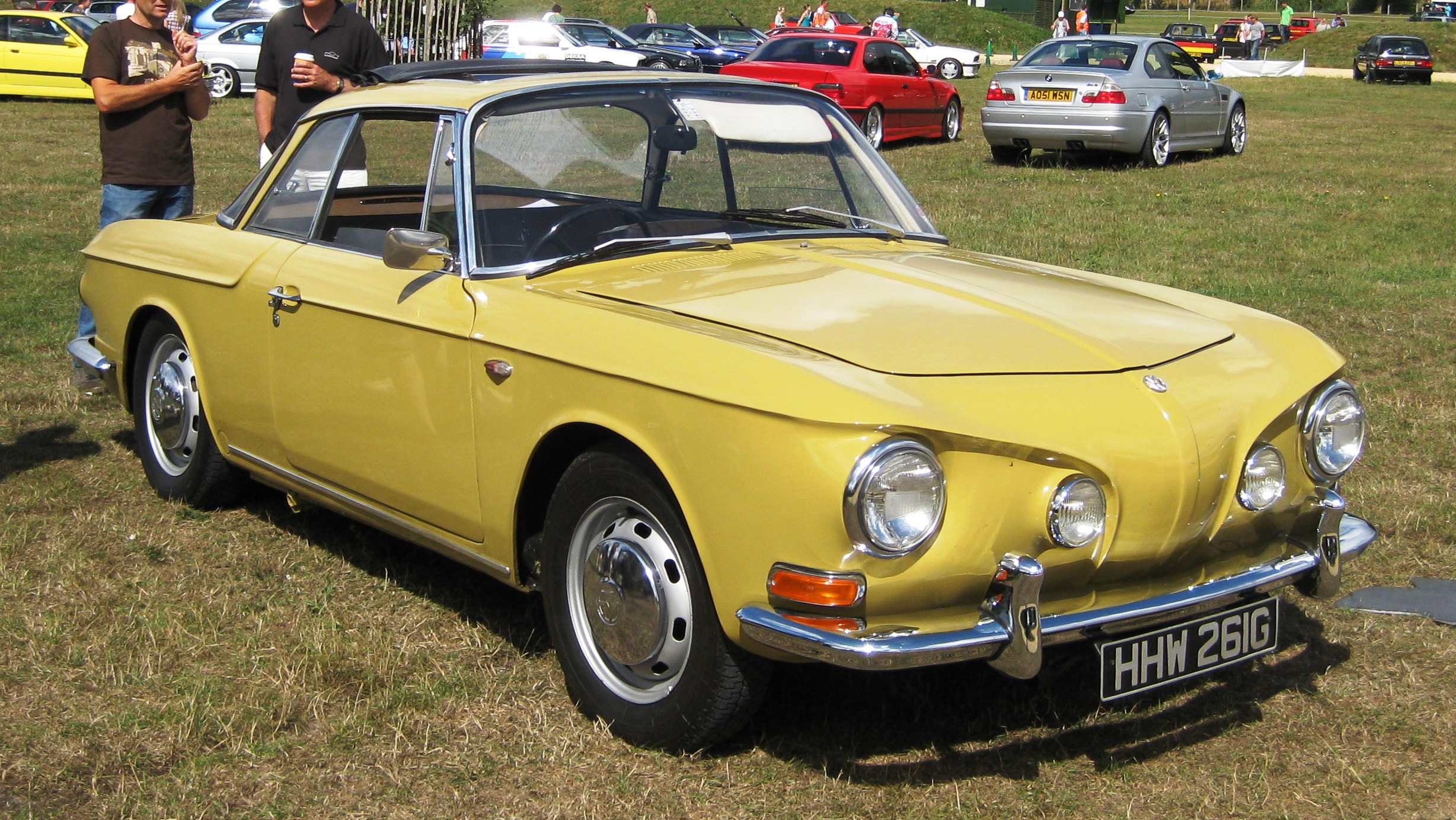
Karmann
If you have ever ridden in a Volkswagen Karmann Ghia, a Beetle convertible, a Golf Cabriolet, a Porsche 914, an Audi A4 Cabriolet, a Chrysler Crossfire, a Mercedes CLK convertible, a 1980s BMW 6 Series, a Ford Escort RS Cosworth, or a vintage AMC Javelin sold in Europe - you have ridden in something welded together in Osnabrück. The Karmann factory at the southern edge of the city built more than three million complete cars across 108 years, almost none of them under its own badge. The company existed to do for other carmakers the work those carmakers did not want to do themselves: the body stamping, the convertible roof, the niche variant. In April 2009, after the global car market collapsed, Karmann filed for insolvency. Eight months later, Volkswagen bought the factory and kept building cars in it.
From Coachbuilder to Cabriolet King
Wilhelm Karmann founded the company in 1901 by buying Klages, an Osnabrück coachbuilder that had been making horse-drawn carriages since 1874, and putting his own name above the door. The automobile arrived in Germany around the same time, and Karmann pivoted to coachwork for the new horseless carriages without changing methods that had served carriage-makers for decades: hand-formed metal over wooden bucks, joined and finished by craftsmen. The Volkswagen partnership that defined the company began in the 1950s. From 1949 onwards Karmann built the Beetle Cabriolet - the open-top Volkswagen that became as iconic in summer photographs as the hardtop was in winter ones. Then came the Karmann Ghia in 1955, designed by the Italian carrozzeria Ghia and built in Osnabrück on a Beetle chassis: the prettiest car Volkswagen ever sold, and one of the few Karmann products to carry the builder's name on the badge.
The Shop That Built Other Brands
Through the 1960s, 1970s and 1980s, Karmann became the contract body shop of choice for European and American automakers who needed a low-volume variant built without setting up their own line. Porsche came calling for help with the 911 and 912, then handed Karmann the entire production of the four-cylinder Porsche 914 starting in 1969. BMW had Karmann build the bodies of its New Class coupé and the larger E9, then later the body shell of the 1980s 6 Series coupé. Ford brought over the Escort Cabriolet and, in the 1990s, the rally-winning Ford Escort RS Cosworth. AMC needed someone to assemble its Javelin pony car for Europe, so Karmann put together the Javelin 79-K in its Rheine plant from American components shipped in by boat - 280 horsepower V8s in a body built by a German company for sale on a continent where AMC had no presence at all. Audi handed over the A4 Cabriolet from 2002. Mercedes handed over the CLK Cabriolet from 2003. Chrysler handed over the Crossfire that same year, built on a Mercedes SLK chassis at the Osnabrück plant.
The Convertible Roof Empire
By the 2000s, Karmann was no longer just an assembler - it had become the world's most important supplier of folding convertible roofs. From plants in Osnabrück, Chorzów in Poland, Yokohama, Sunderland, Puebla in Mexico, and Plymouth Township in Michigan, the company shipped roof systems for the Mercedes CLK, the Renault Mégane CC, the Nissan Micra C+C with its retractable hardtop, the Pontiac G6, the Chrysler Sebring, the Ford Mustang convertible, the Bentley Continental GTC, the BMW 1 Series convertible, and the Volkswagen New Beetle Cabriolet. If a car had a roof that folded, there was a good chance Karmann had engineered the mechanism. The company also built motorhomes on Volkswagen Transporter chassis from 1974, with names like Gipsy, Cheetah, Colorado and Missouri - cult objects today on the camper-van scene, though only a few thousand of each were ever made.
The Convertible Market Collapses
The 2008 financial crisis killed the high-margin niche convertible market almost overnight. Buyers stopped specifying open tops on premium cars they were already nervous about ordering at all. At the same time, the big automakers had been quietly reabsorbing the work Karmann once owned - employment-protection contracts with their own unions meant that any new niche model had to be built inside the parent company's plants, not contracted out. On 8 April 2009, Karmann filed for insolvency. The order book had emptied. The roof business was still profitable, but not profitable enough to carry the empty assembly lines. On 24 October, Volkswagen - Karmann's longest-running partner - announced it would buy the Osnabrück facility. The deal closed on 20 November. Volkswagen took the buildings, the machinery, the press shop, the body shop, the paint shop, the assembly halls, and the technical development centre. The roof divisions were sold separately: Webasto bought the North American operations in August 2010, Magna International took Japan in February, and Finland's Valmet Automotive bought Osnabrück and Żary in November.
Volkswagen Osnabrück
The factory at 52.27°N, 8.08°E never went quiet. As Volkswagen Osnabrück it has built the Porsche Boxster and Cayman under contract, the Volkswagen Golf Cabriolet, the T-Roc Cabriolet, and - in a satisfying continuity with the founder's first VW work - new generations of niche Volkswagens that the Wolfsburg main plant has no spare capacity to make. The company name Karmann survives on the convertible-roof side at Valmet, on the gates of old factory buildings around Lower Saxony, and in the catalogue listings of vintage Karmann Ghias and Porsche 914s that classic-car auctioneers print in italics. Wilhelm Karmann's coachwork shop ran out of orders the year after its 108th birthday. The plant he founded, now wearing the badge of his largest customer, kept building cars.
From the Air
The Karmann/Volkswagen Osnabrück plant sits at 52.27°N, 8.08°E in the city's southeast, beside the railway corridor. EDDG (Münster/Osnabrück International) is 25-30 km north. From 4,000-6,000 feet the long assembly-hall roofs and the test track wedge are easy to pick out against the suburban streets of the Fledder district. The medieval Altstadt is 3 km to the northwest.