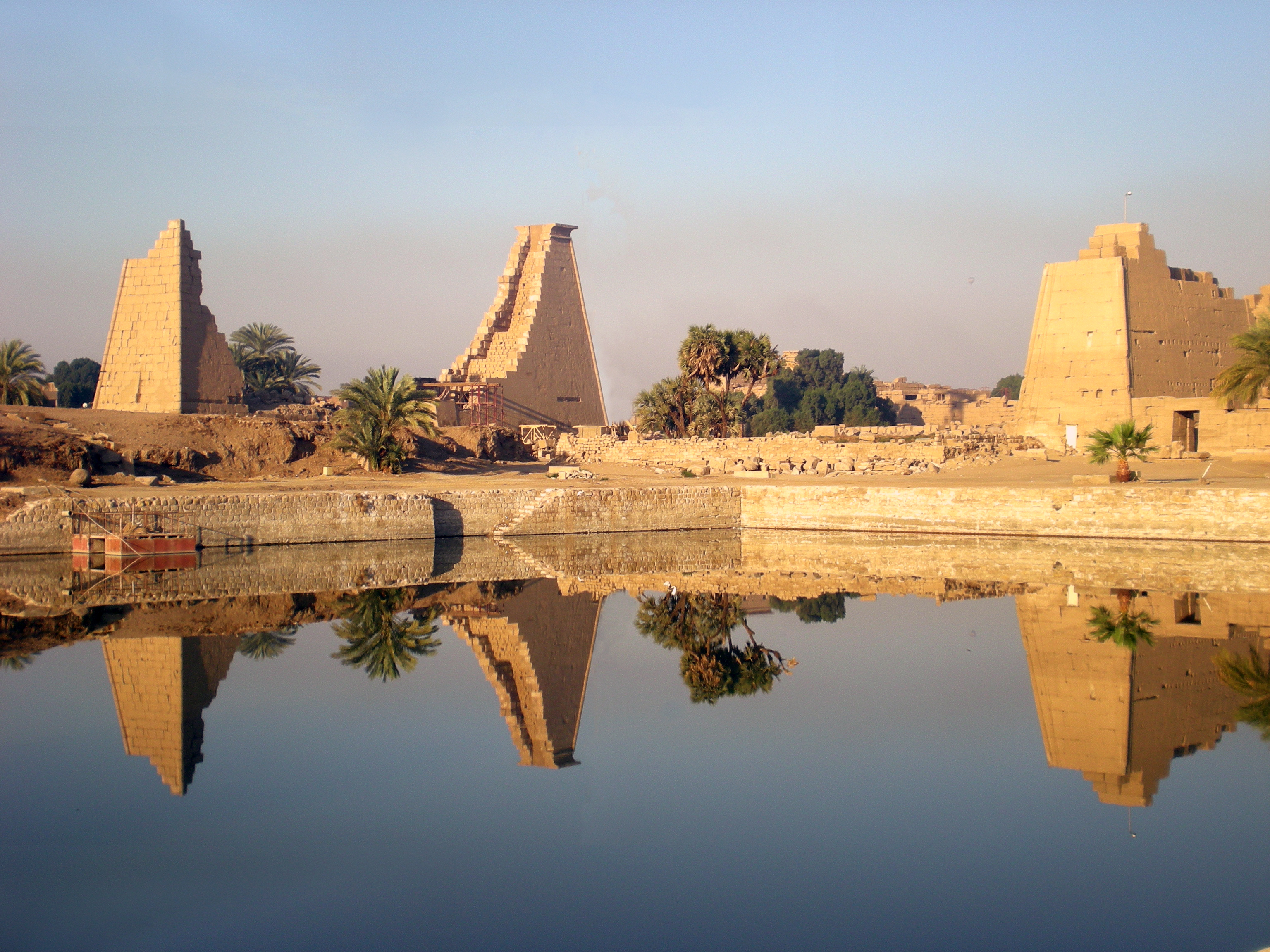
Karnak: The Temple Built by 30 Pharaohs Over 2,000 Years
The Karnak Temple complex wasn't built - it accumulated. For over 2,000 years, every pharaoh who ruled Egypt added to it: a pylon here, an obelisk there, a new chapel to honor the gods and themselves. The result is the largest religious building ever constructed - 200 acres of temples, shrines, and sacred lakes that took 30 pharaohs 2,000 years to complete. The Great Hypostyle Hall alone contains 134 columns, some 70 feet tall, covering an area larger than Notre-Dame Cathedral. Karnak wasn't just a temple; it was an act of devotion spanning two millennia.
The Beginning
Construction at Karnak began around 2055 BC during the Middle Kingdom. A small shrine to the god Amun marked the site. Over the following centuries, each pharaoh expanded the complex, adding structures that glorified both the gods and themselves.
The site's religious significance grew with its size. By the New Kingdom (1550-1070 BC), Karnak was Egypt's most important temple complex. The annual Opet Festival saw the statue of Amun carried in procession from Karnak to Luxor Temple two miles south. The priests of Amun became so powerful they occasionally rivaled the pharaohs themselves.
The Hypostyle Hall
The Great Hypostyle Hall is Karnak's centerpiece - and one of the most impressive architectural achievements in human history. The hall covers 54,000 square feet, supported by 134 massive columns arranged in 16 rows. The central columns, 70 feet tall and 33 feet in circumference, once supported a roof.
The columns are covered with hieroglyphic inscriptions and relief carvings depicting pharaohs making offerings to the gods. Walking through the forest of stone pillars, even in ruin, is overwhelming. Nineteenth-century visitors compared it to experiencing the sublime. Nothing in the ancient world matched its scale.
The Obelisks
Karnak once held dozens of obelisks - massive granite needles carved from single blocks and erected to honor the sun god. Most were removed by conquering empires. One stands in Paris (the Luxor Obelisk), another in Rome, another in Istanbul.
The tallest remaining obelisk at Karnak was erected by Queen Hatshepsut around 1457 BC. It stands 97 feet tall and weighs 320 tons. A second Hatshepsut obelisk lies broken nearby. Raising these massive stones with Bronze Age technology remains an engineering puzzle. The Egyptians left no records of their methods.
The Sacred Lake
Behind the main temples lies the Sacred Lake - a rectangular pool 393 by 252 feet, where priests purified themselves before performing rituals. The lake was fed by groundwater and represented the primordial waters from which creation emerged.
Priests lived in complexes surrounding the temple, serving the gods through daily rituals: washing and dressing the divine statues, offering food, reciting prayers. At its peak, Karnak employed 80,000 people - priests, scribes, farmers, craftsmen - making it one of the largest employers in the ancient world.
The Legacy
Karnak fell into disuse after Egypt became a Roman province. Sand buried the temples. Locals scavenged stones for building material. European explorers rediscovered the site in the 17th century, sparking modern Egyptology.
Today, Karnak is a UNESCO World Heritage Site and Egypt's second-most visited destination after the Giza pyramids. The Sound and Light Show draws thousands of visitors nightly. Conservation efforts continue, but the scale of the complex - a temple built by 30 pharaohs over 2,000 years - makes preservation an endless task. Karnak remains, as it was intended, a testament to the power of accumulated devotion.
From the Air
Karnak Temple (25.72N, 32.66E) lies on the east bank of the Nile in Luxor, Egypt. Luxor International Airport (HELX) is 6km east. The temple complex is visible from the air as a massive rectangular compound with pylons and columns. The Sacred Lake is identifiable. Luxor Temple lies 2km south along the Nile. The Valley of the Kings is 5km west across the river. Weather is desert - extremely hot in summer, mild in winter.