Karuizawa Distillery: The Ghost That Became a Legend
Six hundred and thirty-eight thousand dollars for a single bottle of whisky. That is the asking price for the 1960 vintage from a distillery that no longer exists, in a building that has been razed to bare ground, on the slopes of an active volcano in Nagano Prefecture. The Karuizawa distillery operated from 1955 to 2000 -- forty-five years of quiet production at 850 meters above sea level on the southern flanks of Mount Asama, Japan's most active volcano. It was the smallest whisky distillery in the country and, for most of its life, almost entirely unknown outside Japan. The spirit it produced was used mainly for blending. Only a handful of single malt releases reached the market in the 1980s and 1990s. Then the distillery closed, was mothballed, and in 2016, was demolished completely. Nothing remains at the site. But the whisky -- the liquid that survived in its sherry casks after the buildings were gone -- became the most coveted in the world.
Spirit in the Shadow of a Volcano
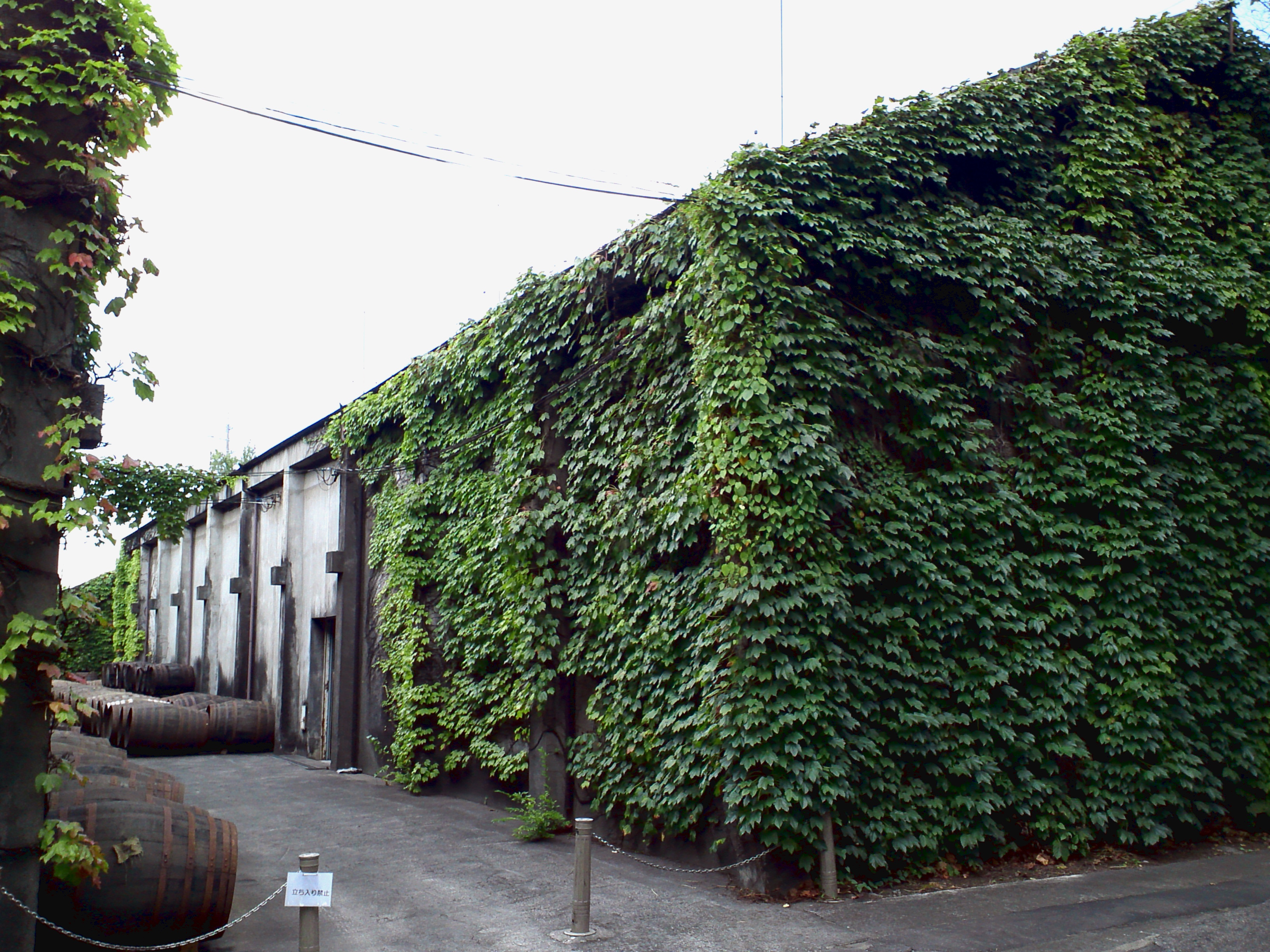
The distillery was built in 1955 in the town of Miyota, Kitasaku District, where a local wine and spirits company already operated a winery. The location was chosen for its cool highland climate, ideal for slow maturation, and for the pure mountain water filtered through volcanic rock. At 850 meters, Karuizawa sat higher than any other distillery in Japan. Mount Asama, looming to the north, is one of Japan's most active volcanoes and has erupted repeatedly through recorded history. The distillery was tiny -- its output was a fraction of what the larger Japanese producers like Suntory and Nikka could manage. When Japan relaxed import restrictions in 1958, Karuizawa began importing Golden Promise barley from Scotland, the same richly flavored spring variety that Macallan used. By 1959, the distillery was producing a distinctly Scotch-style spirit, matured almost exclusively in sherry casks sourced from Spain.
The Quiet Decline
Japanese whisky demand peaked in the early 1980s and then fell sharply. By the late 1980s, the domestic market was contracting, and small producers like Karuizawa felt the pressure most acutely. Production was scaled back through the 1990s. On December 31, 2000, the distillery ceased operations. Its owner, Mercian Corporation, mothballed the facility. In 2006, drinks giant Kirin acquired Mercian, and in 2011, Karuizawa's distilling license was formally surrendered. The decision was final. To ensure no revival was possible, the distillery buildings were systematically demolished. By March 15, 2016, the site was empty ground. The stills, the mash tuns, the warehouses where casks had slumbered in volcanic air for decades -- all gone. It was an extraordinarily thorough erasure. From 1994 onward, the distillery had used exclusively Golden Promise barley, and those final vintages, distilled in the last years before closure, would prove to be among the most prized.
364 Barrels and a Second Life
The story might have ended with demolition, but for a pair of whisky enthusiasts named Marcin Miller and David Croll. Their company, Number One Drinks, purchased the final 364 casks of Karuizawa whisky and became the sole distributor. Beginning in 2007, they started bottling individual casks and exporting them to Europe. The timing was perfect: global interest in Japanese whisky was surging, driven by international competition wins and a growing appreciation for the country's craftsmanship. Karuizawa, with its tiny production runs, its sherry-cask character, and above all its finality -- there would never be more -- became a collector's obsession. The Geisha series, featuring labels with reproductions of traditional Japanese woodblock prints, became the most iconic. Auction prices climbed from hundreds to thousands to tens of thousands of dollars per bottle. The 1960 vintage, distilled in the distillery's fifth year and aged for over half a century, reached an asking price of $638,000.
A Name Returns to the Mountain
In December 2022, a new Karuizawa distillery opened in the town of Karuizawa itself, near the original site. Workers from the old distillery were involved in setting up the new facility, carrying forward some of the founding principles and techniques. The new Karuizawa Whisky Co. is a separate entity from the original, but it occupies the same highland landscape, uses the same volcanic water, and breathes the same cool mountain air. Whether the new spirit can approach the legend of the old remains an open question -- the original Karuizawa's reputation was built as much by scarcity and time as by craft. What is certain is that every remaining bottle from the original distillery grows rarer by the year. Each one opened is one fewer in existence, a sip drawn from a finite and diminishing supply. The volcano still smokes on the horizon. The barley fields are long gone. And somewhere, in a collector's vault or an auction house catalog, a bottle of 1960 Karuizawa waits.
From the Air
Located at 36.32°N, 138.51°E in the town of Miyota, Kitasaku District, Nagano Prefecture, on the southern slopes of Mount Asama (2,568 m). The original distillery site has been cleared -- no structures remain. Mount Asama's smoking cone is the dominant visual landmark. Best viewed at 5,000-8,000 feet AGL with Mount Asama as the reference point. The Hokuriku Shinkansen line passes through the valley. Matsumoto Airport (RJAF) lies approximately 30 nautical miles to the southwest. The terrain is mountainous highland with the resort town of Karuizawa visible to the east.