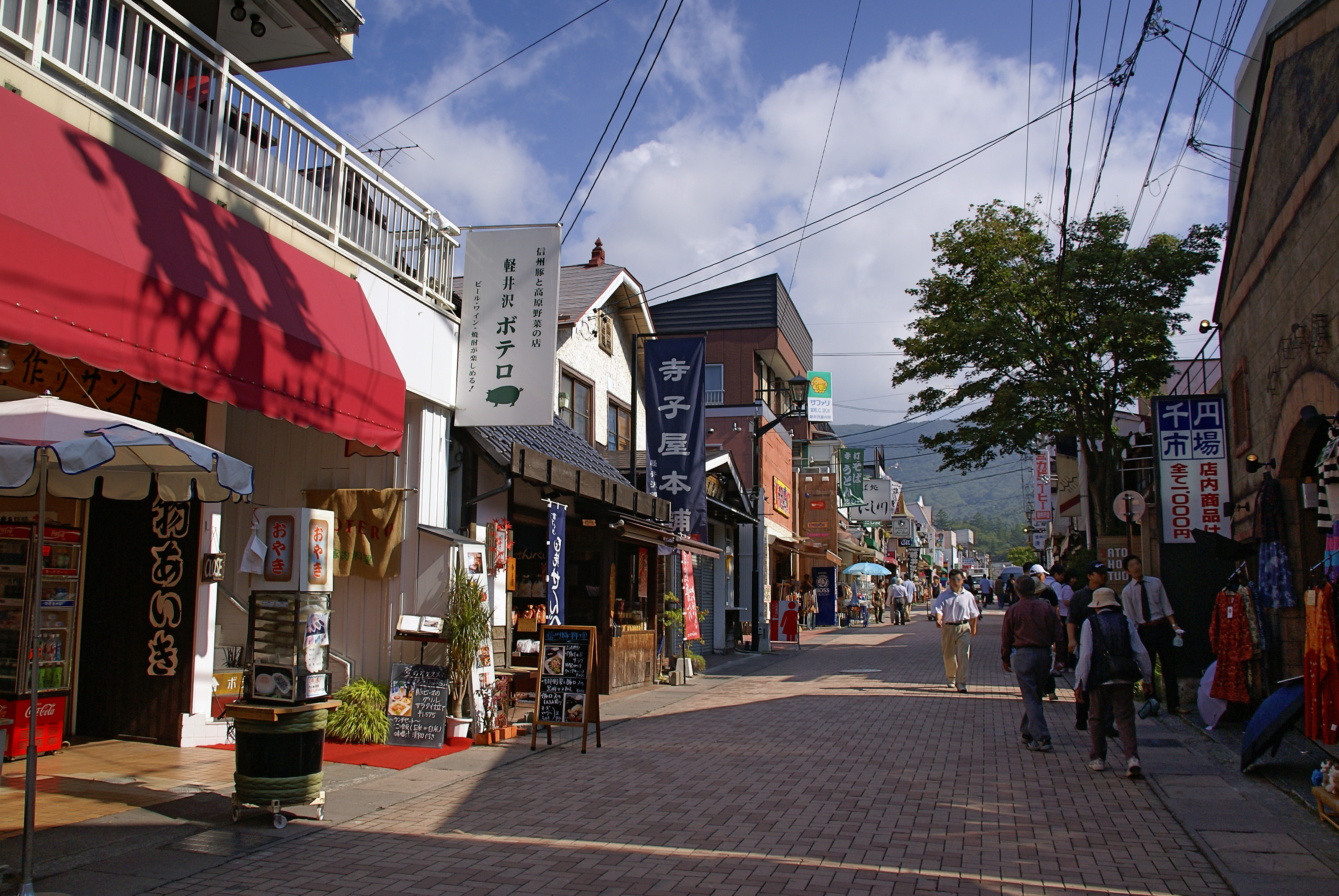
Karuizawa, Nagano
In the summer of 1886, a Canadian Anglican missionary named Alexander Croft Shaw hiked into a highland village on the old Nakasendo road and saw something that stopped him cold. The cool air, the birch forests, the mist settling into the valleys -- it looked like Scotland. Two years later, Shaw built the first Western-style summer cottage in Karuizawa, and an unlikely transformation began. Within decades, this former post town on the ancient highway between Edo and Kyoto had become one of Japan's most fashionable retreats, drawing emperors and prime ministers, Nobel laureates and rock stars, foreign diplomats and Zen monks -- all of them seeking the same thing Shaw had found: a mountain escape that felt like another world entirely.
Where East Met West on the Veranda
What set Karuizawa apart from other hill stations across Asia was its openness. While British colonial retreats in India and Southeast Asia often excluded local populations, Karuizawa welcomed Japanese aristocrats from the start. By the early twentieth century, members of the Kazoku nobility had built Western-style villas alongside those of foreign missionaries and diplomats. The two communities mingled naturally -- over tennis matches, garden parties, and strolls along the shopping street known as Ginza-dori, or the Old Road. This cultural cross-pollination produced something rare: a Japanese town with deep Western roots where the exchange flowed genuinely in both directions. Czech-American architect Antonin Raymond designed modernist homes here. British potter Bernard Leach found inspiration in the highlands. Japanese writers Ryunosuke Akutagawa and Yasunari Kawabata came to work in the cool quiet.
The Tennis Court and the Turntable
Two moments define Karuizawa in the popular imagination. The first happened in August 1957, when Crown Prince Akihito met Michiko Shoda on a tennis court here -- a match that would lead to a marriage that transformed the Japanese imperial family by bringing in its first commoner bride. The former emperor and empress returned to that same court decades later, a pilgrimage that captured the national imagination all over again. The second belongs to John Lennon, who discovered Karuizawa in the late 1970s and returned summer after summer with Yoko Ono and their son Sean. Lennon reportedly loved the anonymity the town offered -- cycling to a local bakery for croissants, browsing antique shops on the Old Road, spending long afternoons doing nothing in particular. These two stories, imperial and rock-and-roll, capture the peculiar magic of a place where fame goes to rest.
Olympic Ground, Twice Over
Karuizawa holds a distinction no other city in the world can claim: it has hosted events in both the Summer and Winter Olympic Games. In 1964, equestrian competitions for the Tokyo Olympics were held on the cool highland plateau, the organizers having decided that Tokyo's August heat was unfit for horses and riders alike. Thirty-four years later, the town welcomed curling for the 1998 Nagano Winter Olympics. The leap from summer dressage to winter curling stone captures the town's year-round appeal -- warm enough in summer for outdoor sport, cold enough in winter for ice. Since 1997, the Nagano Shinkansen has brought Karuizawa within roughly an hour of central Tokyo, turning what was once a seasonal escape into a commutable weekend destination. Outlet malls and resort hotels have multiplied, but the birch forests and the mountain air remain unchanged.
A Refuge in Wartime, a Stage for Art
Karuizawa's story has a darker chapter that few visitors know. During World War II, the town became an internment and evacuation site for foreign nationals stranded in Japan. Swedish diplomat Widar Bagge, Russian painter Varvara Bubnova, German harpsichordist Eta Harich-Schneider, and Polish-born conductor Joseph Rosenstock were among those who waited out the war in Karuizawa's villas. The town's international character, born of missionary hospitality, became a lifeline. In peacetime, that same character attracted artists of every kind. Composer Olivier Messiaen wrote 'The Birds of Karuizawa' as part of his Sept haikai suite, inspired by the birdsong in these highland forests. Studio Ghibli set scenes of The Wind Rises and When Marnie Was There in the town. Today, Karuizawa remains what Shaw recognized in 1886 -- a place where the Japanese highlands open a door to somewhere else entirely.
From the Air
Located at 36.35N, 138.60E in the highlands of Nagano Prefecture at approximately 1,000 meters (3,280 feet) elevation. The town sits on a plateau at the foot of the active volcano Mount Asama, visible as a prominent cone to the northwest. The Shinkansen line and expressway corridor are visible running east-west through the valley. Nearest major airports: Matsumoto Airport (RJAF) approximately 80nm west, Tokyo Haneda (RJTT) approximately 75nm southeast, and Tokyo Narita (RJAA) approximately 90nm east. Expect cool, clear conditions in summer with occasional afternoon clouds building around Mount Asama. Winter brings snow cover and reduced visibility.