Kashan
Seven thousand years is a difficult number to hold in your mind. But standing at the Sialk ziggurat on the western outskirts of Kashan, with the Dasht-e Kavir desert shimmering to the east and a green oasis spreading behind you, the number starts to feel real. This stepped platform of sun-dried brick is among the oldest human-built structures on Earth, evidence that people were building cities here when most of the world's civilizations had not yet been imagined. Kashan dates to the Elamite period, and the archaeological layers at Sialk -- pottery, metal tools, skeletal remains -- tell a story of continuous settlement that makes even Persepolis look recent.
Palaces Sunk Against the Heat
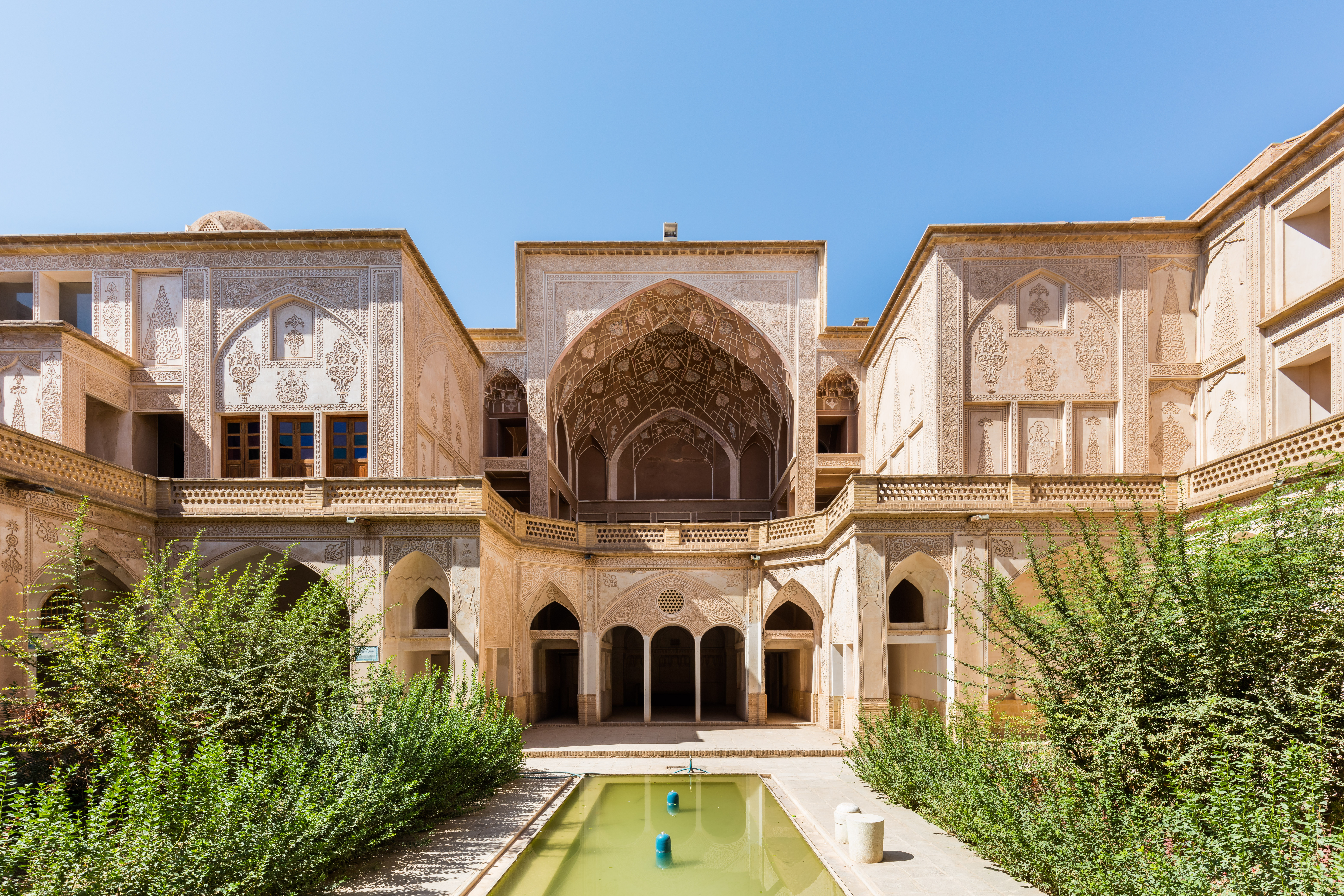
Kashan's wealthy 19th-century merchants solved the desert's punishing heat with architecture. The Tabatabaei House, built by a prosperous carpet trader, contains 40 rooms arranged around four courtyards, and much of it sits below ground level. This was not a basement but a deliberate technique: sinking living spaces into the earth insulated them from summer temperatures, dampened sound, and strengthened the structure against earthquakes. Stained glass, carved plaster, painted ceilings, and mirror work fill the rooms with filtered light and geometric pattern. The nearby Borujerdi House was built by a merchant who married into the Tabatabaei family, and the architectural rivalry between the two houses produced some of the finest residential design in Persian history. Walking through these houses feels less like visiting a museum and more like understanding a philosophy -- one in which beauty, comfort, and the desert's constraints were negotiated into something extraordinary.
Water in the Garden of the Shah
Fin Garden, a UNESCO World Heritage Site, is the purest expression of the Persian garden ideal in Kashan. Commissioned during the Safavid era under Shah Abbas, the garden channels spring water through a network of turquoise-tiled pools and channels that flow without pumps, using only the natural slope of the terrain. Cypress trees line the waterways. Pavilions punctuate the greenery. The contrast with the desert outside the garden walls is total and intentional -- the Persian garden was always a walled paradise, its very name derived from the Old Persian word for enclosure. But Fin Garden also carries a darker history: it was here in 1852 that Amir Kabir, the reformist prime minister, was murdered in the bathhouse on the orders of the Qajar court. The bathhouse still stands, a place where beauty and political violence share the same stone floor.
The Rose Water Season
Each spring, from late April into early May, the fields around Kashan fill with Damask roses. The annual Golab Giri -- the rose water distillation season -- transforms the surrounding towns into fragrant workshops. Families gather petals at dawn, when the essential oils are strongest, then boil them in copper stills to extract the pale, aromatic liquid that has been central to Persian cooking, medicine, and ceremony for centuries. The town of Qamsar, south of Kashan, is the largest rose water production center in the Middle East. The scent during Golab Giri is pervasive and disorienting, hanging over entire villages in a sweet haze. In Kashan's bazaar, rose water competes for shelf space with carpets -- the city's other famous export -- and traditional cookies like nan-e berenji, made with rice flour and flavored with, naturally, rose water.
Desert at the Doorstep
Kashan perches on the edge. East of the city, the Maranjab desert unfolds in sand dunes, salt flats, and silence. A caravanserai from the Safavid era still stands among the dunes, once a waystation on trade routes crossing the Dasht-e Kavir, now an overnight stop for travelers who come for the emptiness. Near the desert's edge, the small town of Noushabad conceals an underground city -- a network of tunnels and chambers originally dug during the Sassanid era and later used as a refuge from Mongol invaders. The passages are narrow, the ceilings low, the air cool and still. People hid here when the horsemen came. In Aran va Bidgol, a mud castle and the Holy Shrine of Helal Ali anchor another desert-edge settlement. This is what Kashan has always been: a green interruption in the brown, a city that exists because water surfaces here and people learned, seven millennia ago, to stay.
From the Air
Located at 33.99°N, 51.44°E on the western edge of Iran's Dasht-e Kavir central desert. Kashan has a small airport but limited flights; Isfahan International Airport (OIFM) is 220 km south, and Tehran Imam Khomeini Airport (OIIE) is 250 km north. The city sits along the Tehran-Isfahan highway corridor. From altitude, the sharp contrast between the green oasis and the surrounding desert terrain is clearly visible. The Maranjab sand dunes and salt lake east of the city are identifiable landmarks. The Sialk archaeological mound lies 4 km west of the city center.