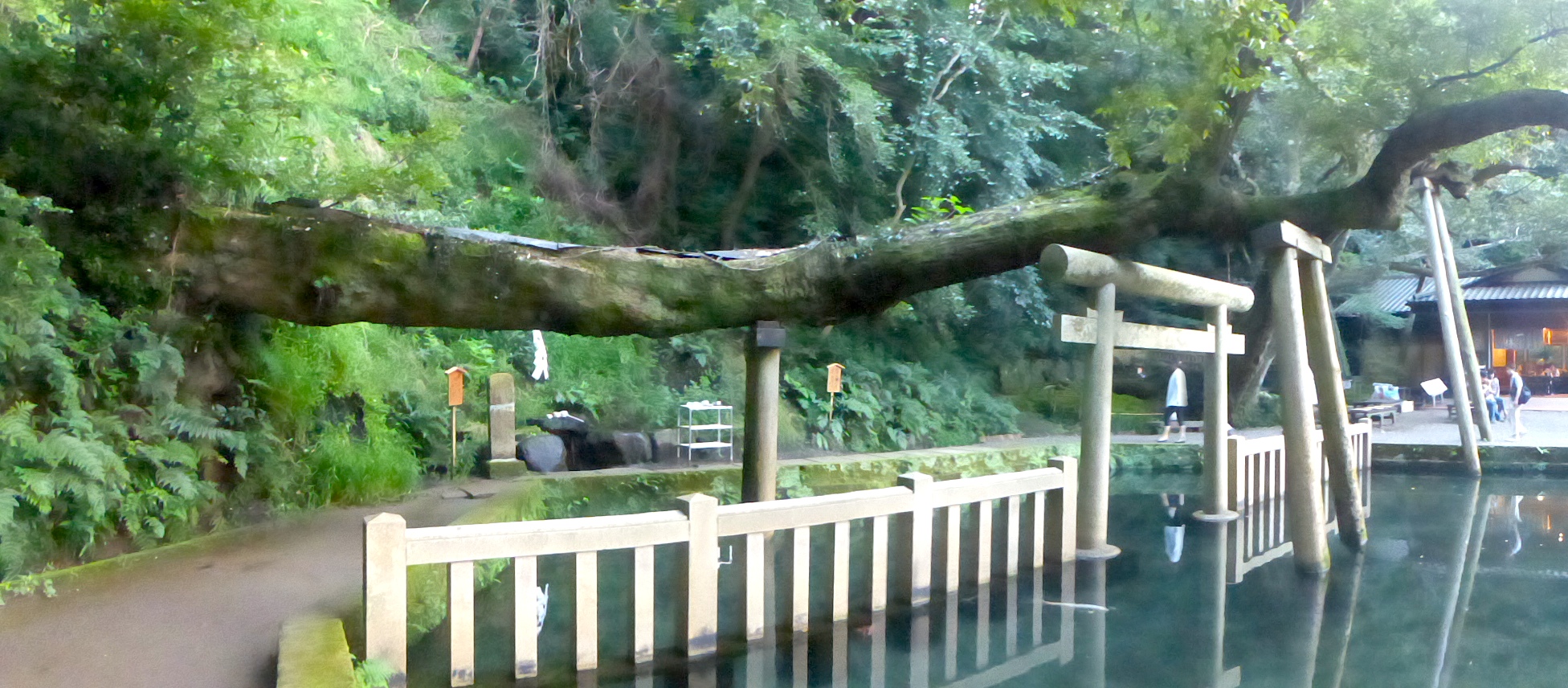
Kashima Shrine
Beneath the grounds of Kashima Shrine, according to Japanese myth, a giant catfish called Onamazu writhes in the earth. When the creature stirs, earthquakes shake the islands of Japan. Only the god Takemikazuchi -- the thunder deity enshrined here -- keeps the catfish pinned in place, pressing a sacred keystone deep into the ground. This is the kind of place Kashima Jingu is: a shrine where the boundary between legend and landscape dissolves entirely. Located on a forested plateau in southeastern Ibaraki Prefecture, overlooking Lake Kitaura and Kashima Bay, it has stood at the spiritual crossroads of power, war, and devotion for over a thousand years.
Where Swords Were Sacred
Kashima Shrine is the birthplace and spiritual home of Japanese martial arts. The shrine houses the Futsu-no-Mitama Sword, a large blade designated a National Treasure, and its forest paths have been walked by some of history's greatest swordmasters. The shrine is home to the Kashima-Shinryu school of Japanese swordsmanship, and kenjutsu and kendo dojos across Japan display hanging scrolls bearing the name of the shrine's deity, Takemikazuchi-no-Okami. Before World War II, Kashima Shrine was ranked alongside Ise Grand Shrine and Katori Shrine as one of the three most important imperial shrines in the Shinto hierarchy. During the first three days of January, over 600,000 pilgrims visit from across Japan, making it the second most visited shrine in Ibaraki Prefecture for New Year worship.
Blood on the Rocks Below
The mythology of Kashima Shrine reaches back to the creation stories of Japan. According to legend, the god Izanagi beheaded his own son Kagutsuchi, the fire deity, as punishment for burning his mother to death during childbirth. As Izanagi struck, blood dripped from his sword and splashed onto the rocks, giving birth to several kami -- among them Takemikazuchi, the thunder god who would become Kashima's enshrined deity. Per the Nihon Shoki, Takemikazuchi later provided Emperor Jimmu with a sword as the emperor departed to conquer Yamato, cementing the shrine's identity as patron of warriors. The deer that wander the shrine grounds are considered divine messengers, sharing a sacred connection with the famous deer of Nara.
Shoguns and Poets at the Gate
The shrine claims a legendary founding in 660 BC, during the reign of Emperor Jimmu, though the earliest written records appear in the Asuka-period Fudoki of Hitachi Province, noting a ritual house rebuilt in 649 AD. Through the centuries, Kashima's fortunes rose with the Nakatomi clan -- later the powerful Fujiwara -- who used the shrine to project imperial authority over eastern Japan. Samurai governments and local daimyo lavished support on the shrine through the Kamakura and Edo periods. Tokugawa Ieyasu sponsored reconstruction of the main shrine in 1605. Tokugawa Hidetada rebuilt the current main buildings in 1619, and Tokugawa Yorifusa contributed the massive tower gate in 1634. In 1687, the poet Matsuo Basho traveled here and recorded the journey in his haibun travel journal, Kashima Kiko. The Honden, Haiden, and Romon gate that survive today are all Edo-period structures designated as National Important Cultural Properties.
The Dragon Boats of the Ofuna Festival
Once every twelve years, in the Year of the Horse, Kashima Shrine hosts the Grand Imperial Ofuna Festival, one of the largest traditional celebrations in Japan. The festival honors both Takemikazuchi and Futsunushi, the deity of nearby Katori Shrine. On the second morning, a mikoshi -- a portable shrine -- is carried overland along the edge of Lake Kitaura to a waiting boat adorned with a great dragon-head motif. The vessel joins a fleet of colorful boats, numbering around 90 in recent celebrations, and carries the mikoshi across the lake. A divine procession then escorts it to Katori Shrine for the main ceremony. The tradition dates to the era of Emperor Ojin, was interrupted during the civil wars of the Muromachi period, and was revived with imperial status in 1870.
The Keystone Holds
The 2011 Tohoku earthquake tested the ancient myth quite literally. The massive tremor destroyed the shrine's main torii gate and toppled 64 stone lanterns along its forest pathways. Yet none of the main shrine buildings fell. Repairs cost 107 million yen, and the recovery effort led to the first large-scale archaeological excavation ever conducted on the site, unearthing artifacts dating to the Nara period. The shrine precincts, designated a National Historic Site in 1986, emerged from the disaster with layers of history newly revealed. The keystone of Takemikazuchi, it seems, held firm enough.
From the Air
Located at 35.97N, 140.63E on the Kashima Plateau in southeastern Ibaraki Prefecture, between Lake Kitaura and Kashima Bay. The shrine's dense forest canopy is visible from altitude as a dark green patch amid agricultural and urban development. Ibaraki Airport (RJAH) is approximately 50 km to the northwest. Narita International Airport (RJAA) lies about 60 km to the south-southwest. The nearby coastline and Lake Kasumigaura provide strong visual navigation references. Best viewed at lower altitudes where the torii gate and forest paths become visible.