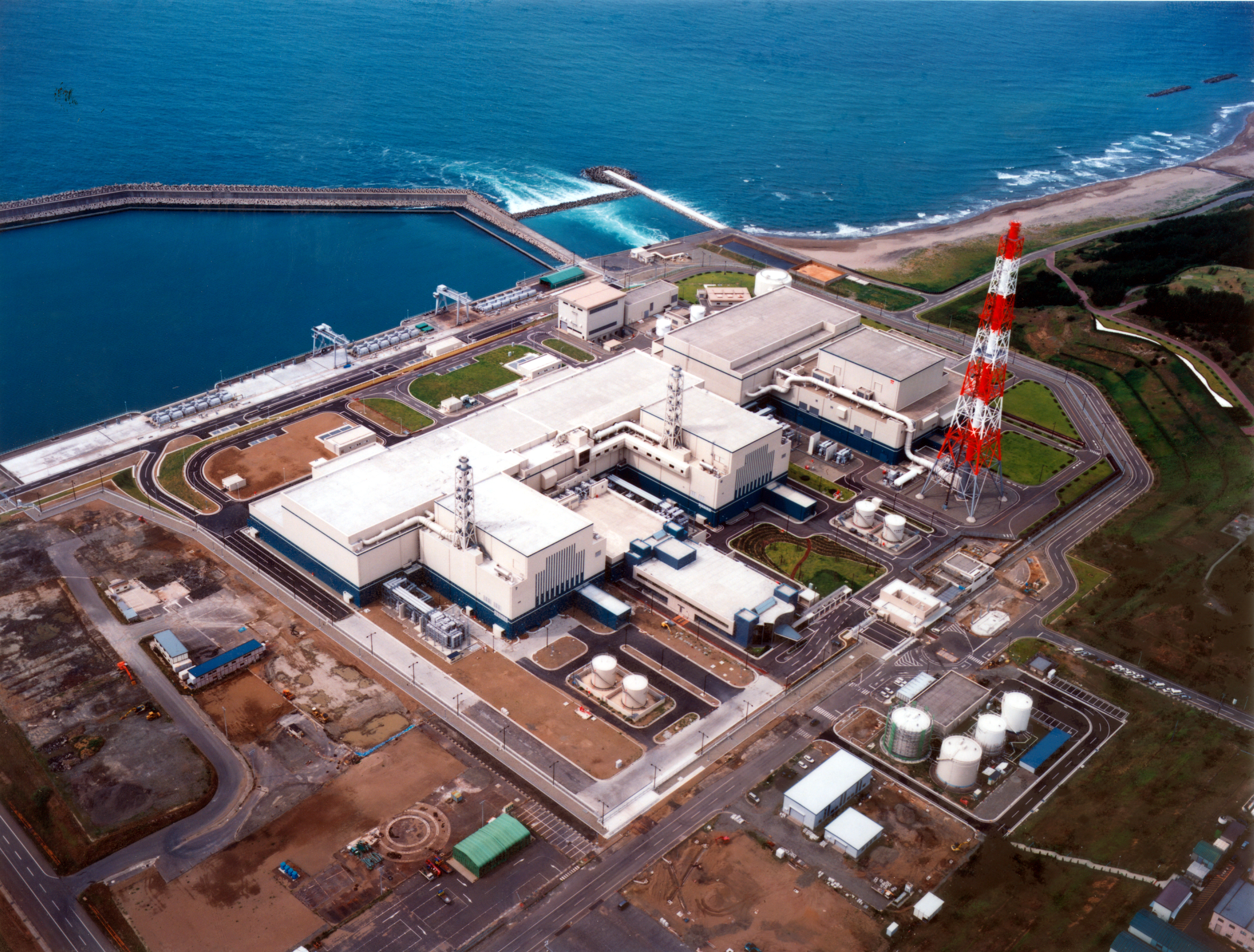
Kashiwazaki-Kariwa Nuclear Power Plant
Seven reactors sit silent on the Niigata coastline, their cooling towers facing the gray waters of the Sea of Japan. The Kashiwazaki-Kariwa Nuclear Power Plant holds a record no facility wants to own twice: it is the largest nuclear generating station on Earth by net electrical power rating, and it has been shut down more often, more dramatically, and for longer stretches than any comparable installation. Built across the towns of Kashiwazaki and Kariwa beginning in the 1980s, the plant was designed to be a triumph of nuclear engineering. Its final two units were the first Advanced Boiling Water Reactors ever constructed anywhere. Instead, this sprawling complex became a cautionary tale about what happens when the ground itself refuses to cooperate.
Built on Shifting Ground
The engineers who designed Kashiwazaki-Kariwa dug deep. Sand was stripped away and the reactors were anchored to firm bedrock, with basements extending up to 42 meters below grade to dampen resonance vibrations during earthquakes. Japan's nuclear safety standards required earthquake resistance, and the plant's builders followed them. But the standards were written for the earthquakes people expected, not the ones that actually arrived. In 2006, Japan tightened its seismic safety regulations. A year later, the earth delivered its verdict. On July 16, 2007, the magnitude 6.6 Chuetsu offshore earthquake struck just 19 kilometers from the plant. Peak ground acceleration in Unit 1 reached 6.8 meters per second squared, well above the 4.5 m/s2 design specification for safe shutdown. In the turbine building of Unit 3, shaking hit 20.58 m/s2. Black smoke rose from a transformer fire that burned for two hours. After the initial inspections, suspicions emerged that a fault line might run directly beneath the site.
Towels and Trust
The 2007 earthquake's physical damage turned out to be less severe than feared. The IAEA confirmed the plant had shut down safely and that safety-related structures were in far better condition than expected. The real damage was to public trust. Slightly radioactive water leaked from Unit 6 into the Sea of Japan -- 1.3 cubic meters containing radioactivity comparable to natural hot spring water. Radioactive iodine escaped from Unit 7's exhaust pipe, delivering an estimated dose of 0.0002 nanosieverts per person to 10 million people, a figure one ten-millionth of the legal limit. Workers mopped up spills with towels. The numbers were vanishingly small, but TEPCO had a history. In 2002, the company had been caught deliberately falsifying safety inspection data, shutting the entire plant down for months. Every detail that changed in the days after the quake -- and details changed multiple times -- fed public skepticism. Hotels along the Sea of Japan coast reported thousands of cancellations. Inn owners said rumors did more damage than the earthquake itself.
Fukushima's Long Shadow
Kashiwazaki-Kariwa managed a partial comeback. After 16 months of comprehensive upgrades, Unit 7 returned to the grid at full power in June 2009, followed by Unit 6 in August. Units 1 and 5 restarted in 2010. Then the 2011 Tohoku earthquake and tsunami devastated the Fukushima Daiichi plant -- also owned by TEPCO -- and everything stopped again. Every reactor at Kashiwazaki-Kariwa went dark. TEPCO announced plans for a 15-meter seawall spanning more than 800 meters. For the first time in its history, the company conducted surveys of past tsunamis, drilling sediment cores dating back 7,000 years. New fault studies revealed that geological features beneath Reactors 1 through 5 might qualify as active under tightened standards that extended the window of concern from 120,000 to 400,000 years. The Kashiwazaki-Kariwa plant became the seventh Japanese reactor site under active geological investigation.
Security Failures and Borrowed Badges
Even as TEPCO completed physical upgrades, human failures kept piling up. In September 2020, an unauthorized employee used a colleague's ID card to enter the plant's central control room. The intruder detection system, it turned out, had been left broken to cut costs. Japan's Nuclear Regulation Authority issued a scathing report in April 2021, imposing an indefinite ban on restart. TEPCO pledged to invest 20 billion yen in security improvements and hire 30 additional guards. The company began relocating nearly 40 percent of its nuclear division staff to Niigata Prefecture to rebuild community relationships. A 2021 survey by the Niigata Nippo newspaper found that just over half of prefecture residents opposed restarting the plant. In December 2025, the Niigata prefecture assembly voted on the restart of Reactors 6 and 7, and on December 22, Japan approved TEPCO to resume operations at what remains the world's largest nuclear power station.
A Question Written in the Landscape
From the air, Kashiwazaki-Kariwa looks like a small industrial city planted between rice paddies and ocean. Seven reactor buildings, cooling infrastructure, administrative complexes, and a new seawall stretch along the coastline. The Sea of Japan extends flat and featureless to the northwest, while inland the terrain wrinkles into the hills and valleys that mark the convergence of tectonic forces that make this coast both geologically fascinating and dangerously active. The plant embodies a question Japan has been asking for decades: how to balance enormous energy needs with the reality of living on the Pacific Ring of Fire. After nearly two decades of silence, the reactors may hum again. Whether the ground will cooperate remains, as always, uncertain.
From the Air
Located at 37.43N, 138.60E on the Sea of Japan coast in Niigata Prefecture. The plant's seven reactor buildings and new 15-meter seawall are visible from moderate altitude. The nearest airport is Niigata Airport (RJSN), approximately 80 km to the northeast. Approach from over the Sea of Japan for the best perspective of the coastal facility against the rice paddies and hills inland. Elevation at site is near sea level.