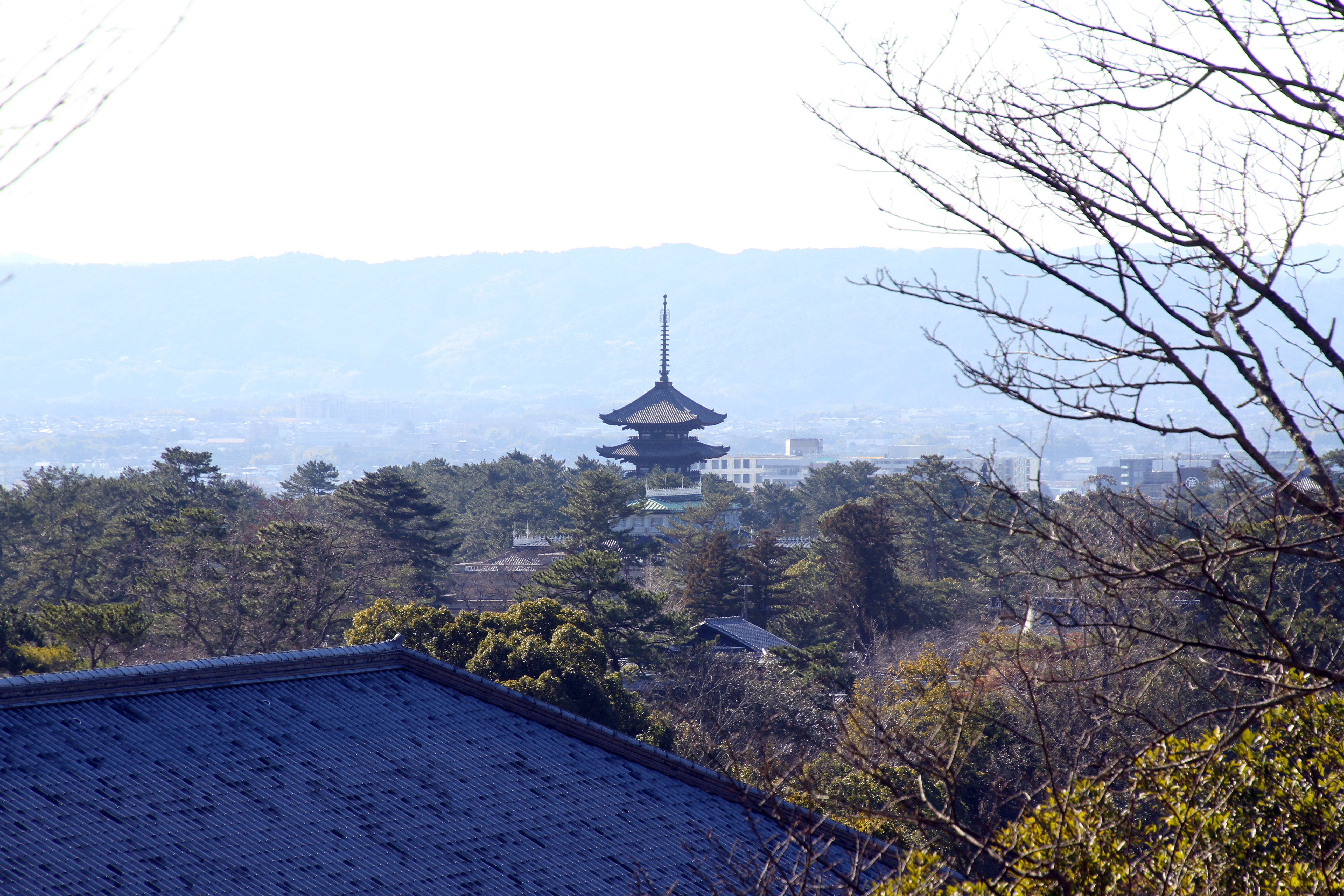
Kasuga-taisha: Where Three Thousand Lanterns Burn at Once
Twice a year, on a February evening marking the turn from winter to spring and again on an August night bridging summer and autumn, three thousand lanterns ignite simultaneously inside Kasuga Grand Shrine. Bronze lanterns suspended from the eaves of crimson corridors. Stone lanterns lining the forest paths in rows so deep they seem to multiply in the darkness. The light flickers across the faces of Nara's sacred deer, who stand among the visitors without fear, descendants -- the faithful believe -- of the white deer that carried the god Takemikazuchi down from Mount Mikasa in 768 CE to protect the ancient capital. For more than twelve centuries, Kasuga-taisha has stood at the edge of a primeval forest that has never been logged, rebuilt sixty times to the same specifications, perpetually new and perpetually ancient.
A God Arrives on Deerback
The founding legend of Kasuga-taisha begins with a journey. The kami Takemikazuchi, summoned from the distant Kashima Shrine in eastern Japan, rode a white deer to the top of Mount Mikasa to serve as guardian of the new capital at Nara. The shrine established at the mountain's base in 768 CE became the spiritual anchor of the Fujiwara family, the most powerful clan of the Heian period, whose influence shaped Japanese court life for centuries. Imperial favor followed Fujiwara power, and Kasuga-taisha rose to the highest rank of government-supported shrines -- a status it held from 1871 through 1946 as a Kanpei-taisha. Four kami are enshrined here: Takemikazuchi, Futsunushi, Ame no Koyane, and Himegami. Together, they are venerated as the syncretic deity Kasuga Daimyojin, a combined divine presence that became a model for worshippers across Japan who wished to address multiple gods at once.
Eternal Renewal in Crimson and Gold
Kasuga-taisha shares with Ise Grand Shrine and Izumo-taisha the tradition of shikinen zotai -- the ritual rebuilding of sacred structures at regular intervals. Every twenty years, for more than a thousand years, the shrine has been reconstructed to identical specifications. The sixtieth rebuilding was completed in 2016. This practice follows the Shinto concept of tokowaka -- perpetual youth -- in which renewal preserves divine power. The architectural style born here, Kasuga-zukuri, lends its name to the shrine's honden sanctuary and is recognized by its sloping gabled roof, rectangular form, and distinctive forked chigi roof structures with decorative katsuogi logs. Four separate halls stand in this style, one for each enshrined kami. The shrine's torii gate is among the oldest in Shinto and helped define the style now seen at shrines across the country. The complex is enclosed by four cloisters and contains halls, gates, a treasure house, and the wisteria trees called Sunazuri-no-Fuji, whose purple blossoms cascade so low in late April and early May that they nearly sweep the ground.
The Lantern Festivals
The Setsubun Mantoro festival on February 3 and the Chugen Mantoro festival on August 14-15 are Kasuga-taisha's most dramatic rituals. All three thousand lanterns -- stone and bronze alike -- are lit at once, transforming the shrine grounds into a corridor of flickering amber light. The Fujinami-no-ya Hall, devoted entirely to the lantern collection, burns brightest of all. Visitors write wishes on ema plaques and attach them to lanterns before the lighting. The Setsubun celebration marks the seasonal boundary between winter and spring; tradition holds that tossing dried beans during the festival wards off bad luck. The Chugen Mantoro, tied to the Obon holiday honoring ancestors, marks the passage from summer toward autumn. The March 13 Kasuga Matsuri adds a different spectacle: gagaku court music, bugaku dance, and Yamato-mai performed by shrine maidens in movements unchanged since the Heian and Nara periods. A sacred horse parades through streets lined with people in costumes spanning a thousand years of Japanese fashion.
The Forest That Has Never Been Cut
Behind the shrine rises Kasugayama, a 498-meter hill crowned by 250 hectares of primeval forest. Hunting and logging have been prohibited here since 841 CE -- nearly twelve hundred years of unbroken protection. The result is a living relic: 175 species of trees, 60 types of birds, and 1,180 species of insects thriving in a woodland that looks today exactly as it did when the shrine's first builders walked beneath its canopy. The forest is registered alongside Kasuga-taisha as a UNESCO World Heritage Site under the designation "Historic Monuments of Ancient Nara." The visual effect is striking -- the shrine's vermilion pillars and gold-leaf details stand against a backdrop of deep green that has not changed since the Nara period. The deer that wander freely between shrine and forest, numbering over a thousand in Nara Park, are considered sacred messengers of the gods, their presence a living thread connecting the modern city to the white deer of 768 CE.
Living Shrine, Living Tradition
Kasuga-taisha is not a museum. The Kasuga Wakamiya Festival runs December 15-18 each year at the adjacent Wakamiya Jinja shrine, featuring kagura performances and ceremonial processions meant to ward off disease and welcome spring growth. Armor laced with red thread, said to have been dedicated by the legendary warrior Minamoto no Yoshitsune during the Kamakura period, is preserved among the shrine's National Treasures. The Man'yo Botanical Garden flourishes next door. Stone lanterns gifted by the shrine now stand in sister cities around the world -- including one presented to Canberra, Australia, in 1997. The tradition of renewal that has kept these buildings standing for sixty generations shows no sign of stopping. The sixty-first rebuilding will come in its time, the lanterns will burn again on schedule, and the deer will continue their unhurried patrol along paths worn smooth by twelve centuries of pilgrims.
From the Air
Located at 34.68°N, 135.85°E on the eastern edge of Nara city, at the base of Mount Mikasa (498m). The shrine complex and adjacent Kasugayama Primeval Forest form a distinct dark-green patch against the urban surroundings, visible from 3,000-5,000 feet AGL. Nara Park and its open grasslands where deer roam are visible to the west of the shrine. The nearest major airports are Kansai International Airport (RJBB), approximately 40 nautical miles to the south-southwest, and Osaka Itami Airport (RJOO), approximately 20 nautical miles to the west-northwest. The torii gate entrance and the long lantern-lined approach path are oriented roughly north-south.