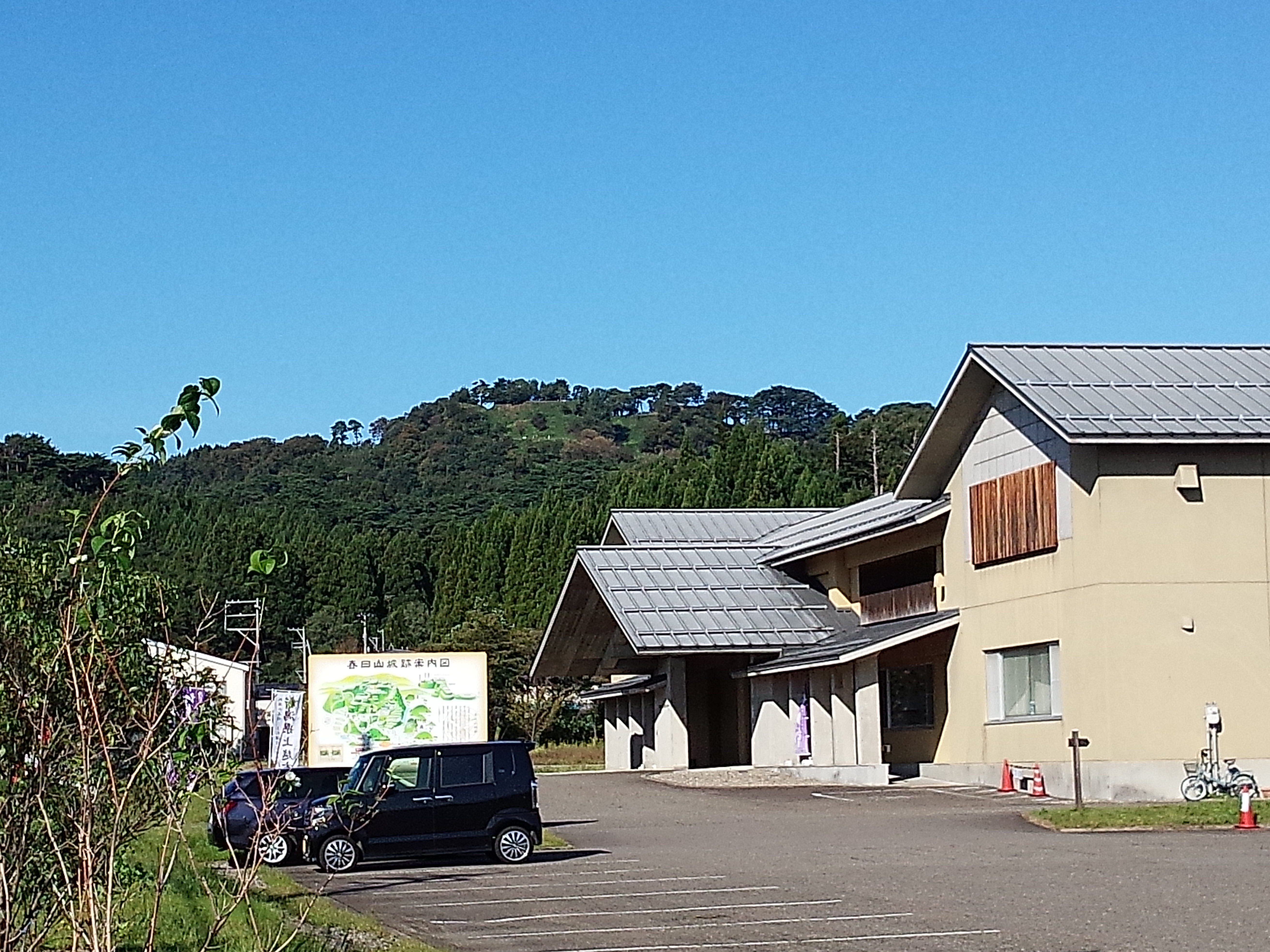
Kasugayama Castle: Fortress of the Dragon of Echigo
No stone walls. No towering keep. Kasugayama Castle conquered through terrain alone. Spread across two ridges on the summit of 180-meter Mount Kasuga in what is now Joetsu, Niigata Prefecture, the fortress relied on earthen ramparts, dry moats, and terraced enclosures carved into the mountainside at staggered elevations -- a defensive geometry so effective that the man who ruled from its summit, Uesugi Kenshin, went undefeated in more than fifty open battles. His followers called him the avatar of Bishamonten, the Buddhist deity of war. History remembers him as the Dragon of Echigo. And this mountain was his lair.
A Mountain Built for War
The castle's genius was its architecture of absence. Where other Sengoku-era fortresses stacked stone upon stone, Kasugayama used the mountain itself as its primary defense. Dozens of enclosures -- called kuruwa -- occupied terraces at varying elevations across the two ridges, each separated by dry moats and clay ramparts. The inner bailey sat just below the peak, housing a watchtower, a Buddhist temple that doubled as Kenshin's personal residence, and a garden. The south ridge held the fortified residence of Uesugi Kagekatsu, Kenshin's adopted son and eventual heir. Below him lived Kakizaki Kageie, one of Kenshin's most trusted retainers. The north ridge belonged to Naoe Kagetsuna, another key vassal. Smaller enclosures for lesser retainers, soldier barracks, and warehouses filled every available shelf of land. Beyond the castle walls, a network of smaller forts extended in a two-to-six-kilometer radius, creating a defensive web across the landscape.
The Dragon's Throne
Uesugi Kenshin was born Nagao Kagetora in 1530, the younger brother of Nagao Harukage, who had inherited Kasugayama from their father Nagao Tamekage. By 1548, the younger brother had taken the castle -- and with it, control of Echigo Province. From this mountaintop, Kenshin launched the campaigns that would define the Sengoku period's fiercest rivalry: five confrontations with Takeda Shingen at the Battles of Kawanakajima, the most famous occurring in 1561. That battle began with Kenshin marching his army down from Kasugayama, crossing the Echigo plains to meet Shingen's forces. Kenshin was not merely a warrior. He fostered trade and local industries, raising living standards across Echigo. He took Buddhist vows, changing his name to Kenshin -- meaning 'modest truth.' The contradiction of a monk who fought fifty battles and never lost became central to his legend.
Inheritance and Abandonment
Kenshin's sudden death in 1578 -- likely from a stroke -- shattered the peace he had imposed. He left no clear successor, and two adopted sons, Kagekatsu and Kagetora, plunged the clan into civil war. Kagekatsu seized the main keep and treasury of Kasugayama immediately after Kenshin's death. Kagetora retreated to the nearby Otate residence, where the fighting that followed became known as the Siege of Otate. Kagekatsu eventually prevailed, but the Uesugi clan emerged weakened, ground down by wars against Oda Nobunaga and the Odawara Hojo clan. In 1598, Toyotomi Hideyoshi transferred the Uesugi to Aizu, and Kasugayama passed to Hori Hideharu. The new lord built a water moat around the castle town -- the local populace was so angry about the Uesugi departure that Hideharu feared unrest. By 1600, he had abandoned the mountain entirely for the coastal Fukushima Castle near the port of Naoetsu. By 1607, Kasugayama stood empty.
What the Mountain Remembers
No structures survive on the mountain today. The timber buildings, the watchtower, the temple where Kenshin meditated between campaigns -- all have returned to earth. What remains are the terraces themselves: the shaped contours of ridgelines, the cuts of dry moats, the platforms where retainers once lived within shouting distance of their lord. A single gate has been preserved at the nearby Rinsen-ji Temple, which houses a small museum. The Kasugayama Shrine, founded at the mountain's base in 1901, honors Kenshin's memory. A twenty-minute walk uphill from the shrine brings visitors to the ruins of the inner bailey at 180 meters above sea level, where the view stretches across the city of Joetsu, the broad Kubiki Plain, and out to the gray shimmer of the Sea of Japan. The castle has been a protected National Historic Site since 1935 and holds a place on Japan's Top 100 Castles list -- a distinction shared with only four other mountain castles in the country.
From the Air
Located at 37.147N, 138.206E on Mount Kasuga, a 180-meter hill rising above the Kubiki Plain near the Sea of Japan coast. From altitude, look for the distinctive twin-ridge profile northwest of central Joetsu. The terraced ruins are subtle from the air but the Kasugayama Shrine complex at the base provides a visual reference. The nearest major airport is Niigata Airport (RJSN), approximately 120 km to the northeast. Toyama Airport (RJNT) lies roughly 130 km to the southwest. The Sea of Japan coastline runs parallel just a few kilometers to the northwest.