Kathiri
In the court of the Kathiri sultans, the language of diplomacy was not Arabic. It was Malay. So many Hadhrami families had migrated to Southeast Asia over the centuries, and sent so many of their sons back for education, that the tongue of the Malay Archipelago became the common speech of Seiyun's educated classes. This single detail captures the improbable reach of a sultanate that most maps of Arabia do not bother to show: the Kathiri State of Seiyun, a kingdom wedged into the Hadhramaut valley in what is now Yemen, which for nearly six hundred years punched far above its geographic weight.
A Valley Kingdom Takes Shape
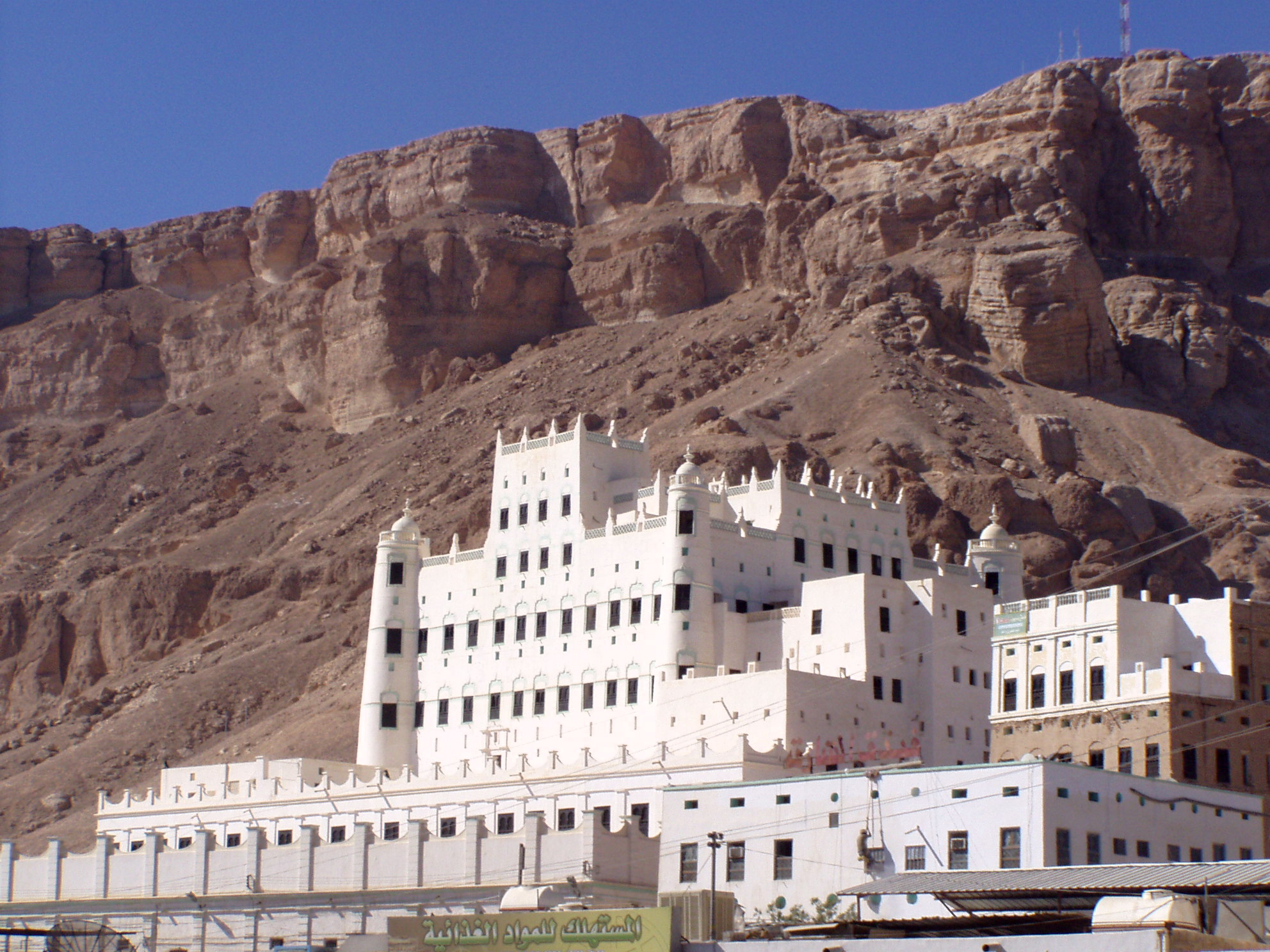
The Kathiri state was established in 1395 by Badr as-Sahab ibn al-Habrali Bu Tuwairik in the Hadhramaut, the dramatic canyon system that cuts through the southern Arabian Peninsula. At its peak, the sultanate's territory stretched from Dhofar in the east to Sharura at the edge of the Empty Quarter in the north, a domain that included the vital seaports of Mukalla and Ash-Shihr. In 1414, Sultan Ali bin Omar bin Jaafar bin Badr al-Kathiri seized Dhofar with the backing of Hadhramaut's religious scholars. The Kathiri had conquered Ash-Shihr by the 1460s. But power in the Hadhramaut was never stable. Civil wars invited interference from the Yafai, and through the 19th century the rival Qu'aiti dynasty steadily absorbed Kathiri lands, while the Omani Empire and the Mahra Sultanate claimed the eastern territories. By the late 1800s, the Kathiris had been pushed back to a small inland portion of the valley, with their capital at Seiyun and its magnificent palace as the surviving symbol of diminished authority.
The Sultan, the Queen, and the Resident
In late 1883, Sultan Abdulla bin Salih made a revealing journey. He traveled to Aden to meet the British Resident, hoping to learn whether the British would support a Kathiri attempt to recapture the ports of Shihr and Mukalla from the Qu'aiti. The British offered no such assurance. Undeterred, Abdulla bin Salih continued to Zanzibar to seek aid from the exiled former Naqib of Mukalla, but returned empty-handed. The episode illustrates the Kathiri predicament in miniature: a dynasty with long memory and diminished means, navigating between British imperial interests and local rivals who had already outmaneuvered them. By the mid-1950s, the Kathiri state was absorbed into the British Protectorate of South Arabia, where it remained until the 14 October Revolution of 1967 swept away the sultanates entirely, unifying them into the People's Republic of South Yemen.
A Society Written in Layers
Kathiri society operated through a rigid system of social stratification, every tier defined at birth. At the summit stood the Sada, or Sayyids, who claimed direct descent from the Prophet Muhammad and held a monopoly on formal education, serving as religious advisers and mediators in tribal disputes. Below them, the Mashayikh earned prestige through religious scholarship without claiming prophetic lineage. The Qaba'il, armed tribesmen who traced their ancestry to the legendary Qahtan, held the monopoly on force, their identity bound to the defense of tribal land. Town-dwelling merchants and craftsmen, known as Masakin or Hadhar, occupied the next tier, their ranks spanning everything from wealthy trading families to manual laborers. Below these primary groups, farmers and sharecroppers called Harthan worked the land. People of African origin, categorized as Abid, were socially stigmatized yet could rise to high administrative rank as governors or magistrates within the sultanate's military forces. Religious life centered on the Shafi'i school of Sunni Islam, deeply influenced by the Ba 'Alawi Sufi tradition, with its veneration of saints and ritual pilgrimages to tombs such as that of the Prophet Hud.
A Diaspora That Changed Nations
The Kathiri legacy lives most vividly not in the Hadhramaut but thousands of miles away. In the 19th and 20th centuries, a significant wave of Hadhrami migration carried families from the Kathiri territories to Southeast Asia, where they became merchants, scholars, and political leaders. The most remarkable example is Mari Alkatiri, whose very surname announces his origins: he became the first prime minister of East Timor. The Indonesian human rights activist Munir Said Thalib also traced his ancestry to Kathiri immigrants. That a small sultanate squeezed into a Yemeni canyon could produce a diaspora that shaped the politics of nations on the far side of the Indian Ocean speaks to something the Kathiri understood instinctively: when your territory shrinks, you expand through people. The palace at Seiyun still stands, a towering white mud-brick structure that dominates the valley floor, a reminder that even in its diminished years the Kathiri state projected ambition that far exceeded the confines of its walls.
From the Air
The Kathiri heartland is centered on Seiyun (Say'un) at approximately 15.94N, 48.78E in Yemen's Hadhramaut valley, though the article coordinates place the broader sultanate at 17.17N, 50.25E. From altitude, the Hadhramaut is unmistakable: a deep wadi system cutting through the south Arabian plateau, with flat-topped cliffs and green irrigated valley floors. Seiyun's white palace is a prominent landmark. Nearest airport is Seiyun Airport (OYSY). Mukalla Airport (OYMK) on the coast is another reference point. The region is arid with generally good visibility, though dust storms can reduce it significantly.