Katsura Imperial Villa: The Novel Made Real
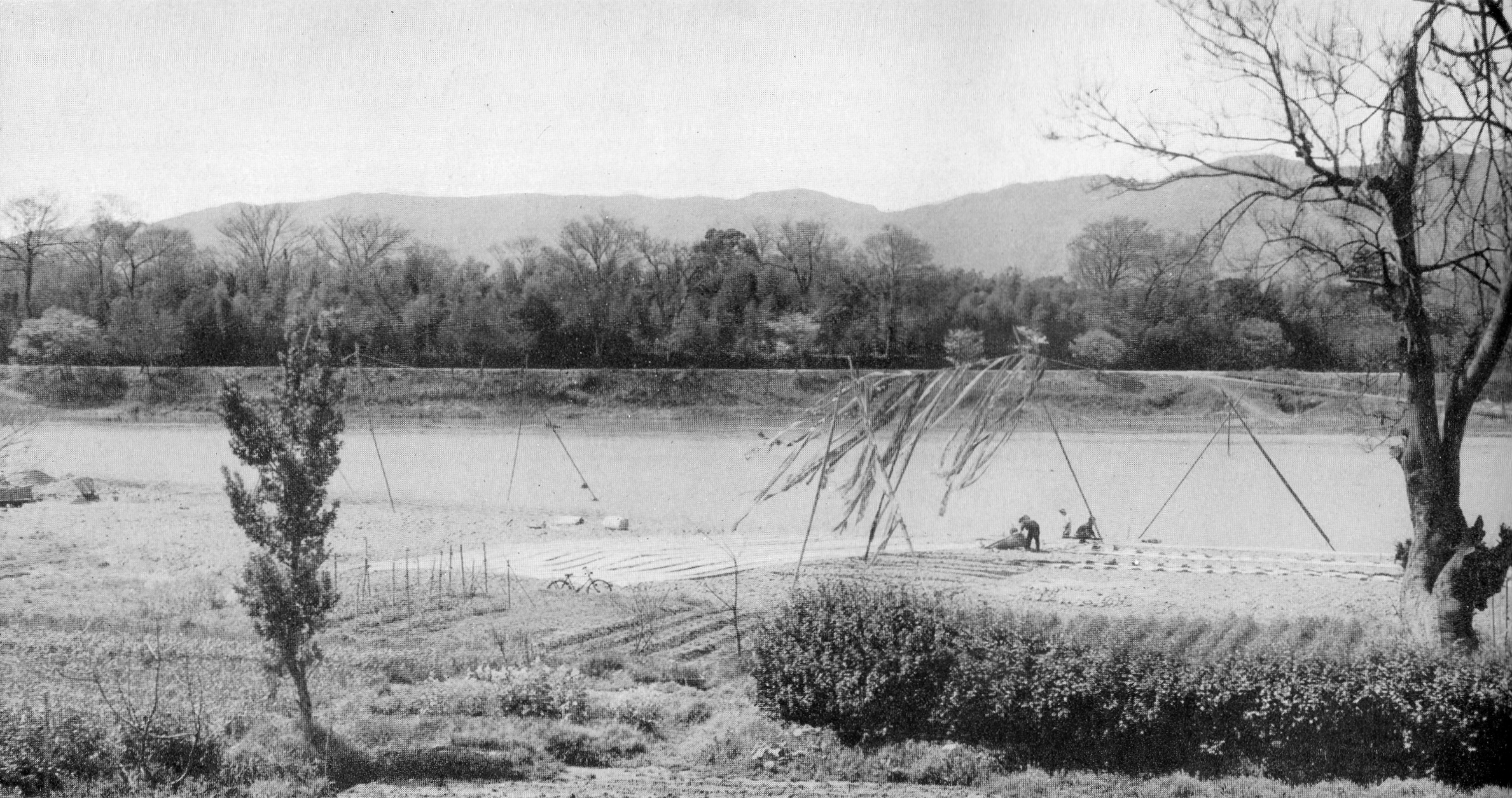
Prince Hachijo Toshihito spent his youth copying passages from The Tale of Genji for pleasure. When he acquired land along the south bank of the Katsura River -- the very setting of Murasaki Shikibu's thousand-year-old novel -- he decided to build the story into reality. He lacked money. The first villa, begun around 1615, was described as little better than 'a teahouse in the melon patch.' But Toshihito kept building, and by 1624 a visiting priest declared the property possessed 'the finest view in Japan.' By 1631, people were calling it a palace. What began as one prince's literary obsession would become, over four centuries, one of the most influential works of architecture in the world -- a place where 20th-century modernists found their own ideals already perfected in 17th-century wood and paper.
A Prince Between Worlds
Toshihito was born on February 13, 1579, the sixth son of Prince Sanehito and a descendant of Emperor Ogimachi. In 1586, the warlord Toyotomi Hideyoshi adopted the boy -- but cast him aside three years later when his own biological son arrived. Hideyoshi compensated Toshihito with land yielding 3,000 koku and allowed him to establish the Hachijo family line within the imperial house. It was an ambiguous position: royal blood, military patronage, but limited resources. Toshihito channeled his energies into literature and gardens. He was intimately familiar with the Tales of Genji, the Poems of Past and Present, and the works of the Chinese poet Bai Juyi, and he poured that literary sensibility into shaping the land along the Katsura River, eight kilometers from the main Kyoto Imperial Palace.
Father and Son, Old Shoin and New
Toshihito died in 1629 when his son Toshitada was only ten. The villa fell into disrepair during Toshitada's childhood, but the boy inherited his father's passions and returned by 1641 to begin renovations. Marriage to the daughter of Lord Kaga dramatically increased his income, and Toshitada set to work expanding what became the Middle Shoin and adding teahouses along the pond his father had dug. When ex-Emperor Go-Mizunoo announced a visit in the 1650s, Toshitada constructed the New Palace to receive him. The result was three interconnected structures -- Old Shoin, Middle Shoin, and New Palace -- each in the shoin style with hipped roofs, their rooms defined by tatami mats in sprawling, pinwheel-like plans. Sliding fusuma screens allowed entire walls to vanish, merging interior rooms with exterior decks and framing views of the garden beyond.
Four Pavilions and a Strolling Pond
The garden was designed not as a view garden but as a journey. Visitors walk its paths, encountering four surviving teahouses -- each with a distinct character. The Geppa-ro, or Moon-wave Tower, perches on higher ground overlooking the pond, its exposed ceiling beams creating a dramatic spatial effect within a structure only fifteen by twenty-four feet. Across the water, the Shokin-tei, the Pine-Lute Pavilion, sits barely above the waterline, its most unusual feature being an unfloored loggia facing the pond where tea ceremonies were held in full view -- an arrangement considered remarkable. Higher up a 'mountain path' stands the Shoka-tei, the Flower-Appreciation Pavilion, surrounded by cherry trees at the garden's highest point. And the Shoiken, the Laughing Thoughts Pavilion, earned its nickname from six round windows that give approaching visitors the impression the building is grinning at them. A small room with a shoin window faces outward to the surrounding farmlands -- a deliberate connection to the real world beyond the garden's curated beauty.
Where Moonlight Meets Modernism
The Old Shoin's bamboo moon-viewing platform, extending beyond the veranda, was designed for one purpose: watching moonrise over the garden. The Katsura district had been prized for lunar viewing since the Heian period, when the great courtier Fujiwara no Michinaga kept a villa here. But it was the villa's architectural principles -- not its moonlight -- that conquered the 20th century. German architect Bruno Taut arrived in Japan on May 3, 1934, and on his second day was taken to Katsura. He declared it an unparalleled modernist archetype. Le Corbusier and Walter Gropius, who visited in 1953, found inspiration in its minimal, orthogonal design. Australian architects Philip Cox, Peter Muller, and Neville Gruzman followed in the late 1950s and 1960s. Irish architect Ronnie Tallon described his pilgrimages to Katsura as 'like going to Lourdes for a cure.' Even Larry Ellison, the Oracle co-founder, built a twenty-three-acre replica of the entire villa at his estate in Woodside, California. A prince's literary fantasy, born from limited means and boundless imagination, had become the global standard for architectural harmony between structure and nature.
From the Air
Located at 34.98N, 135.71E on the western bank of the Katsura River in Kyoto's Nishikyo-ku district. The villa grounds are visible from 2,000-4,000 feet AGL as a distinctive walled garden compound with pond and tree canopy amid suburban development, approximately 8 kilometers southwest of central Kyoto. The Katsura River, a major tributary flowing south, serves as a clear landmark. Nearest airport is Osaka Itami (RJOO), approximately 25 nautical miles to the south-southwest. Kyoto's grid street pattern provides excellent orientation references.