Kauri Museum
It started with a tram. In 1956, a tram enthusiast named Graham Stewart approached the Auckland Transport Board hoping to save one of the city's last streetcars. Nobody else wanted it, so the board handed it over. Stewart trucked the tram north to a plot of land in Matakohe, a small village in Northland, owned by his cousin-in-law Merv Sterling. Together they founded the Old Time Transport Preservation League. But the collection outgrew its home, and most of the vehicles eventually migrated south to become Auckland's Museum of Transport and Technology. What remained in Matakohe took a different turn. A kauri log felled from the Waipoua Forest in 1960 was too fragile to leave outside, so it was brought indoors. Then came more kauri artifacts, then gum, then furniture, then the full weight of a vanished industry. The Kauri Museum, as it is known today, holds the largest collection of kauri gum in the world.
The Gum and the Glory
Kauri gum is fossilized resin, sometimes tens of thousands of years old, dug from the ground where ancient kauri forests once stood. In the late 19th and early 20th centuries, gumdiggers, many of them Dalmatian immigrants, worked the clay fields of Northland extracting lumps of amber-like resin that was shipped around the world for use in varnish and linoleum. The museum houses a staggering quantity of the stuff: polished and raw, in chunks and in jewelry, in every shade from pale honey to deep cognac. Alongside the gum sits the largest collection of kauri furniture in the world, pieces crafted from timber that took centuries to grow and days to fell. Full-scale circumference outlines painted on the museum walls show the size of trees that no longer exist, including one larger than Tane Mahuta, the biggest living kauri in New Zealand.
A Pioneer Museum Born Twice
The museum formally opened on 29 January 1962, inaugurated by Gilbert Archey, director of the Auckland War Memorial Museum. A committee in Matakohe had formed the previous year to celebrate the centennial of the Albertland settlers, the English immigrants who had colonized the area in the 1860s. The museum was the second district museum established in Northland, after the Russell Museum in the Bay of Islands. Merv Sterling stayed on as curator. In 1966, it was renamed the Otamatea Kauri and Pioneer Museum. The Tudor Collins wing opened in 1967, the Graeme Smith wing in 1969. That same year, the museum built a replica of the Kauauranga kauri dam with the help of Herman Lennan, who had worked on the original in 1921. The New Zealand Forest Service donated three kauri logs from the Waipoua Forest in 1970, anchoring the timber story at the museum's heart.
Steam, Sweat, and Sawdust
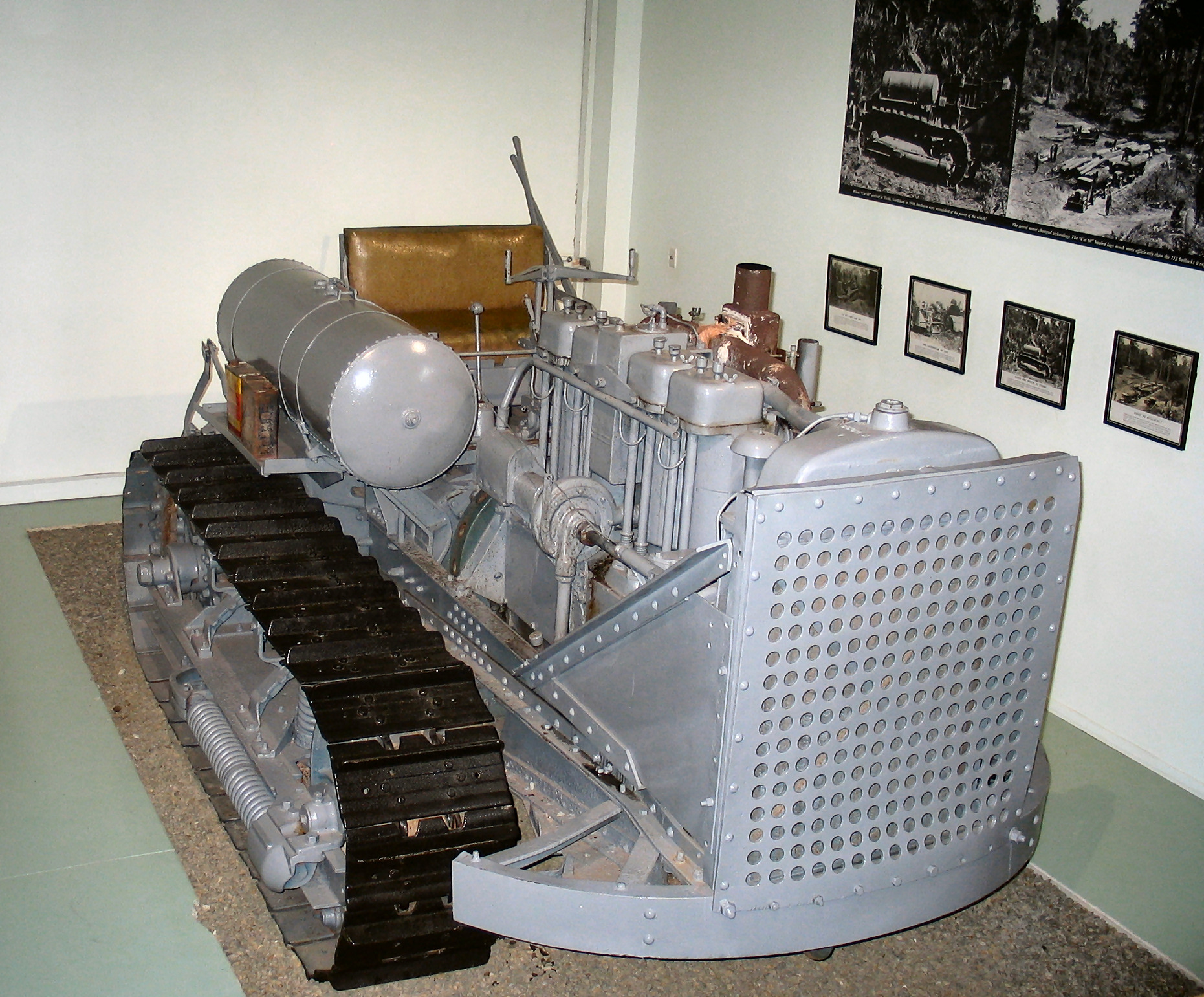
A working mock-up of a steam sawmill sits inside the museum, its belts and blades demonstrating how kauri logs were reduced to the boards that built colonial New Zealand. Nearby, a 1929 Caterpillar Sixty tractor illustrates the scale of the operation: a single machine replaced eight bullock teams, 112 animals, for hauling logs out of the bush. There is a gumdigger's hut, a whare made from trunks and plaited leaves of the nikau palm. There are photographs of men standing on stumps wide enough to serve as dance floors. The museum preserves a model 1900s kauri house, complete with period furniture and mannequins dressed in settler-era clothing. It is a detailed recreation of a world that dismantled a 50-million-year-old ecosystem in the space of a few decades, and the museum presents this history with the pride of the people who did the dismantling.
What the Museum Does Not Say
The Kauri Museum tells its story from the colonial viewpoint, and it has been forthright about that framing. It presents the kauri gum and timber industries as foundational chapters in the creation of New Zealand's European identity, stories of hardship, ingenuity, and community. What it has historically said less about is the impact on the Maori people whose forests these were, the iwi who had lived among the kauri for centuries before the sawmills arrived. Te Roroa, the iwi who are kaitiaki of the nearby Waipoua Forest, saw their ancestral lands stripped of the trees that defined their world. In recent years, the museum has begun to address these gaps. A partnership with the Waipoua Forest Trust produced a display of conservation photographs by Stephen King, shifting the narrative from celebration of extraction toward recognition that what was taken is irreplaceable.
From the Air
The Kauri Museum is located at approximately 36.13S, 174.185E in the village of Matakohe, inland from the Kaipara Harbour on New Zealand's North Island. The village is small and the museum building is the largest structure in town, identifiable from low altitude. State Highway 12 runs through the area. The Kaipara Harbour is visible to the west and south. The Waipoua Forest, whose trees the museum memorializes, lies approximately 80 km to the northwest. Nearest airport is Dargaville Aerodrome (NZDA), approximately 50 km north. Auckland Airport (NZAA) is roughly 130 km to the southeast. Best viewed at 1,000-2,000 feet AGL to spot the museum in its village context.