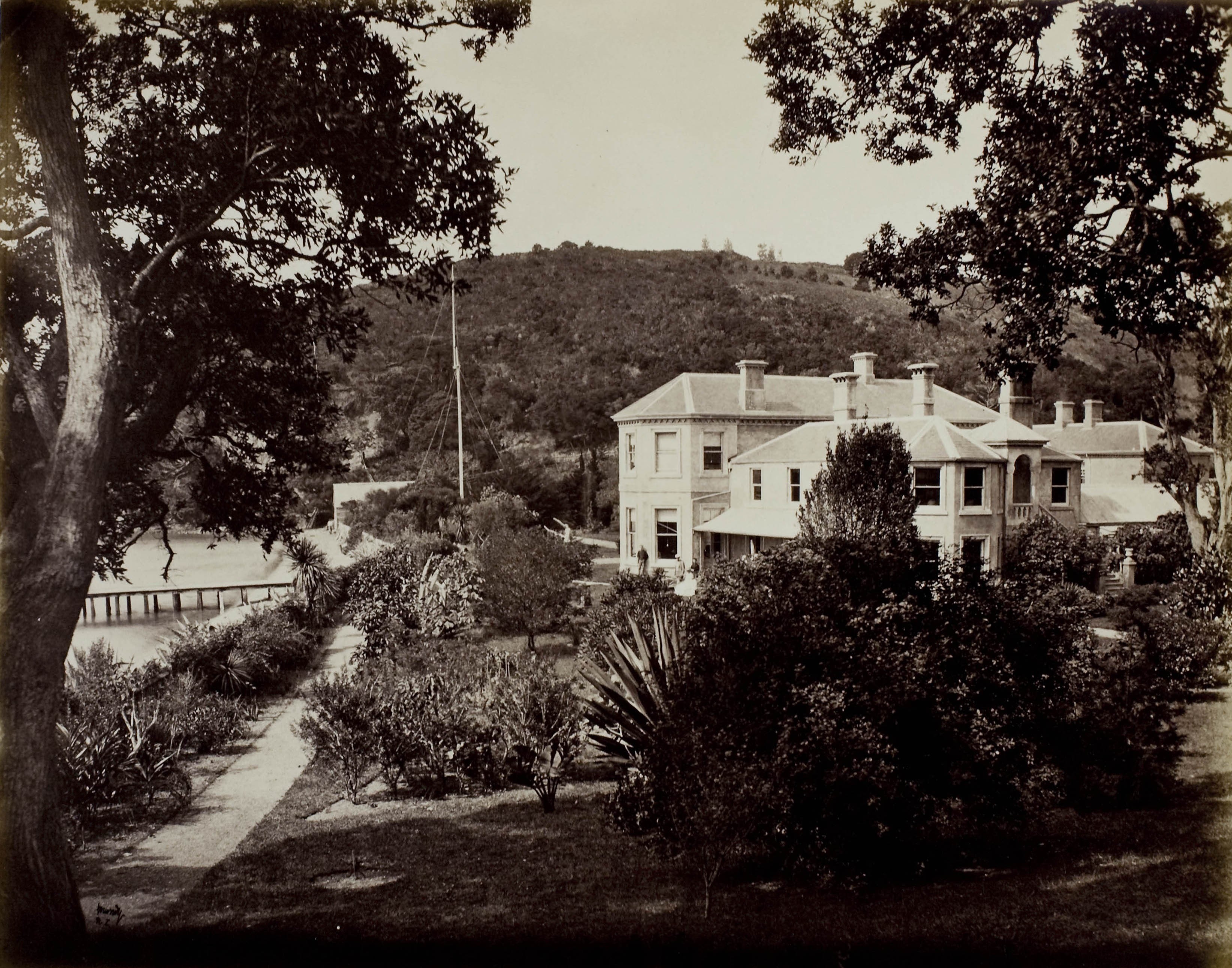
Kawau Island
Five species of wallaby hop through the bush of Kawau Island because a nineteenth-century governor thought they would look nice there. Sir George Grey, who governed New Zealand twice and collected exotic animals the way other men collected stamps, introduced wallabies, kookaburras, and various other species to his private island retreat in the Hauraki Gulf. More than a century later, four wallaby species still roam the island -- brush-tailed rock-wallabies, tammar wallabies, parma wallabies, and swamp wallabies -- methodically destroying the native vegetation that the island's kiwi, weka, and kaka depend on. The Pohutukawa Trust has spent three decades trying to undo what Grey did in a few years of enthusiastic importing.
An Island Named for a Bird
Kawau takes its name from the Maori word for the shag, a cormorant common to New Zealand's coastal waters. The island sits in the Hauraki Gulf, 1.4 kilometers off the Northland Peninsula at its closest point and about 40 kilometers north of Auckland. Almost every property relies on direct sea access -- there are only two short roads serving Schoolhouse Bay and South Cove. Most residents maintain private wharves, stepping from their jetties to their front doors. Ferries run from Sandspit Wharf on the mainland, and water taxis fill the gaps. For more than a century, the sheltered bay has been a favorite anchorage for yachts sailing the Gulf. Like Great Barrier Island nearby, Kawau was connected to the North Island during the Last Glacial Maximum 17,000 years ago, when sea levels dropped over 100 meters and the Hauraki Gulf was a low-lying coastal plain.
Cornish Miners and Welsh Smelters
Before Grey turned Kawau into his personal estate, the island had a different kind of value. Copper was discovered, and miners from Falmouth in Cornwall were brought to New Zealand to work the deposits. When it turned out that unsmelted ore was a fire hazard aboard ships, smelters from Wales were brought in to process the copper on-site. The ruins of the mine's pumphouse still stand, registered as a Category I heritage structure -- one of New Zealand's most significant historical buildings. Maori had fought over Kawau from the seventeenth century onward, drawn not by its limited arable land but by the rich waters surrounding it. The island has always been valued more for what is around it than what grows on it.
The Governor's Menagerie
Grey's legacy on Kawau is complicated. He was a significant figure in New Zealand's colonial history, but his habit of importing exotic animals to his island retreat created an ecological disaster that has outlasted him by more than a century. The wallabies he introduced -- five species in total -- multiplied without natural predators and devastated the native bush. Possums reached plague proportions. Stoats preyed on young kiwi. Kookaburras, an Australian species with no natural place in New Zealand's ecosystem, added another layer of disruption. For decades, the ecological damage was considered irreversible, and Kawau was described as being of historical importance rather than botanical significance. The island's conservation story was essentially written off.
Undoing a Century of Damage
The Pohutukawa Trust, founded in 1992 and chaired by Ray Weaver until his death in 2015, has been methodically reversing Grey's legacy. The strategy is staged eradication: wallabies and possums first, then stoats, then feral cats and ship rats. Progress has been real. Possum numbers dropped from plague levels to near-zero on private properties. In early 2024, trained detection dogs swept the island for stoats and found no trace -- though the Trust is cautious about declaring full eradication. The removal of stoats has been transformative for kiwi: populations have exploded since the early 2000s. Brown teal, kaka, kereru, and bellbirds have all increased. The brush-tailed rock-wallabies posed a unique problem -- they are endangered in their native Australia. The Trust captured as many as possible for relocation to a breeding program at Wahroonga in Australia before humanely eradicating the rest.
The Pohutukawa's Second Chance
The coastal pohutukawa tree, one of New Zealand's most iconic species with its crimson summer flowers, was being stripped bare by possums and wallabies when the Trust began its work. With sustained pest control since 1985, the trees have recovered. Rare indigenous plant species have been rediscovered during habitat surveys, and an inventory compiled in 1996 is being progressively expanded. The irony is that exotic plants the wallabies refused to eat have become serious invasive weeds now that the wallabies are gone -- one problem replacing another in the long chain of ecological consequences that began with a governor and his enthusiasm for foreign animals. The Trust received a Green Ribbon Award from the Ministry for the Environment in 2003. About ten percent of Kawau is controlled by the Department of Conservation, and as of 2002, the island held the largest population of North Island weka anywhere.
From the Air
Located at 36.42S, 174.85E in the Hauraki Gulf, 40 kilometers north of Auckland. Kawau Island is roughly 8 kilometers long and lies close to the mainland near Tawharanui Peninsula. Look for the sheltered bays on the western side -- Schoolhouse Bay, South Cove, and Bon Accord Harbour where Grey's Mansion House sits. Private wharves line the waterfront. No airstrip on the island. Nearest airports: Auckland (NZAA) to the south, Whangarei (NZWR) to the north. Sandspit Wharf on the mainland is the ferry departure point, visible as a small harbor east of Warkworth. Kawau Bay between the island and mainland is typically dotted with yachts.