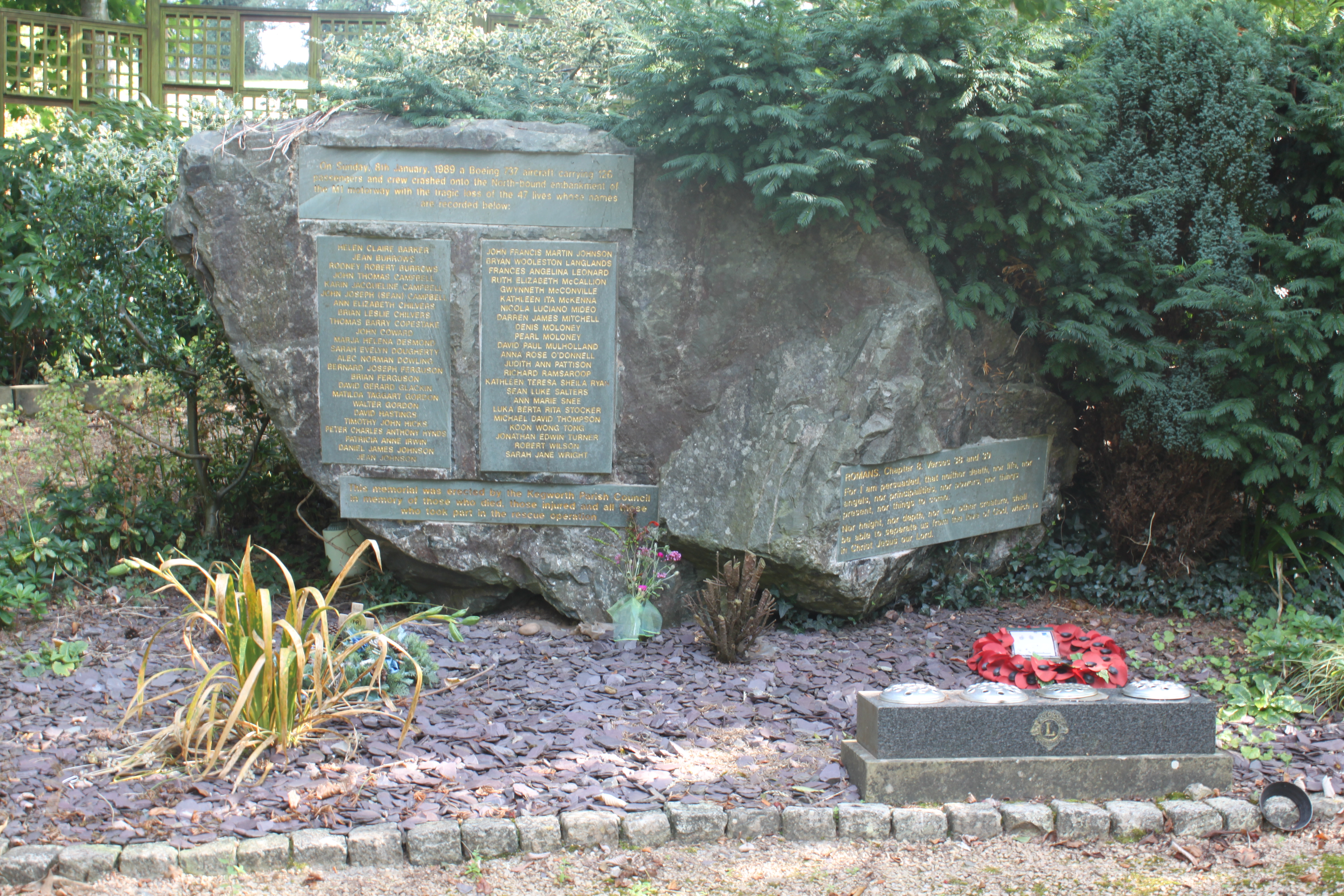
Kegworth Air Disaster
At 20:24 on a January evening in 1989, First Officer David McClelland started to identify which engine was failing. "It's the le..." he began, then corrected himself: "It's the right one." It was, in fact, the left. That hesitation -- a fraction of a second, a syllable swallowed -- captures the terrifying fragility of the chain of assumptions, design changes, and missed communication that would, twenty minutes later, send British Midland Flight 092 crashing onto the embankment of the M1 motorway near the village of Kegworth, Leicestershire. Forty-seven people died. The disaster became a landmark case study in how human factors, cockpit design, and organizational failures can converge to lethal effect.
The Wrong Engine
Flight 092 was a routine service from London Heathrow to Belfast International, carrying 118 passengers and 8 crew aboard a Boeing 737-400. Twenty minutes into the flight, a fan blade in the left engine fractured due to aerodynamic flutter, sending vibrations through the airframe and drawing smoke into the cabin through the air conditioning system. Captain Kevin Hunt smelled the smoke and assumed it came from the right engine -- because on every previous 737 variant he had flown, the right engine supplied bleed air to the flight deck. Boeing had redesigned the system for the 737-400 to use air from both engines, but neither pilot had been trained on this change. No simulator for the 737-400 existed in the UK at the time. When Hunt throttled back the right engine, the smoke and vibration faded -- not because the fault had been addressed, but because reducing power to both engines (via the autothrottle disengagement) decreased fuel flow to the damaged left engine, temporarily calming the fire.
Confirmation and Silence
Several passengers and cabin crew members saw flames streaming from the left engine. None of them told the pilots. The cabin crew had not heard Hunt's announcement identifying the right engine as the problem, but they assumed the flight deck knew what was happening. In the cockpit, Hunt began a systematic review of instruments to verify his decision -- standard procedure after an engine shutdown. But a radio transmission from East Midlands Airport interrupted him, clearing the aircraft to descend. He never resumed the check. The vibration gauges on the 737-400 were smaller than on previous models, with LED needles running around the outside of the dial instead of the inside. Vibration indicators had historically been unreliable and were routinely ignored by pilots, but this was one of the first aircraft with an accurate readout. The information that could have saved 47 lives was displayed on the instrument panel. Nobody read it correctly.
475 Metres Short
On final approach to East Midlands Airport, the pilots increased thrust to the damaged left engine. The broken fan blade tip, lodged in the engine cowling since the initial failure, dislodged and was drawn into the core, causing a catastrophic engine fire. Both engines were now useless. At 900 feet, flying too slowly for a windmill restart of the right engine, Captain Hunt broadcast seven words to his passengers: "Prepare for crash landing." The aircraft crossed the M1 motorway at 213 km/h, struck the ground, bounced over the road, knocked down trees and a lamp post, and broke into three sections on the far embankment -- 475 metres short of the runway. By extraordinary chance, no vehicles were in that stretch of motorway at the moment of impact. Among the first responders were eight SAS soldiers, four of them qualified paramedics, who happened to be driving a truck on the M1 nearby.
The Questions That Remain
Of the 118 passengers, 39 died in the crash and 8 more succumbed to injuries, for a total of 47 fatalities. Seventy-four survivors suffered serious injuries. A memorial now stands in Kegworth village cemetery, built with soil from the crash site, dedicated to "those who died, those who were injured and those who took part in the rescue operation." Captain Hunt and First Officer McClelland were dismissed after the Air Accidents Investigation Branch report criticized their actions. Hunt, who suffered spinal and leg injuries in the crash, later told the BBC: "We were the easy option -- the cheap option if you wish. We made a mistake -- we both made mistakes -- but the question we would like answered is why we made those mistakes." The disaster led to fundamental changes in cockpit instrument design, crew training requirements, and the understanding of how experienced pilots can be misled by assumptions carried over from older aircraft types.
From the Air
The crash site lies at approximately 52.83°N, 1.30°W, on the western embankment of the M1 motorway near its junction with the A453. East Midlands Airport (EGNX) is immediately adjacent -- the aircraft was on final approach to Runway 27. The M1 motorway and the village of Kegworth are clearly visible from altitude. This is a busy airspace corridor for traffic into and out of EGNX.