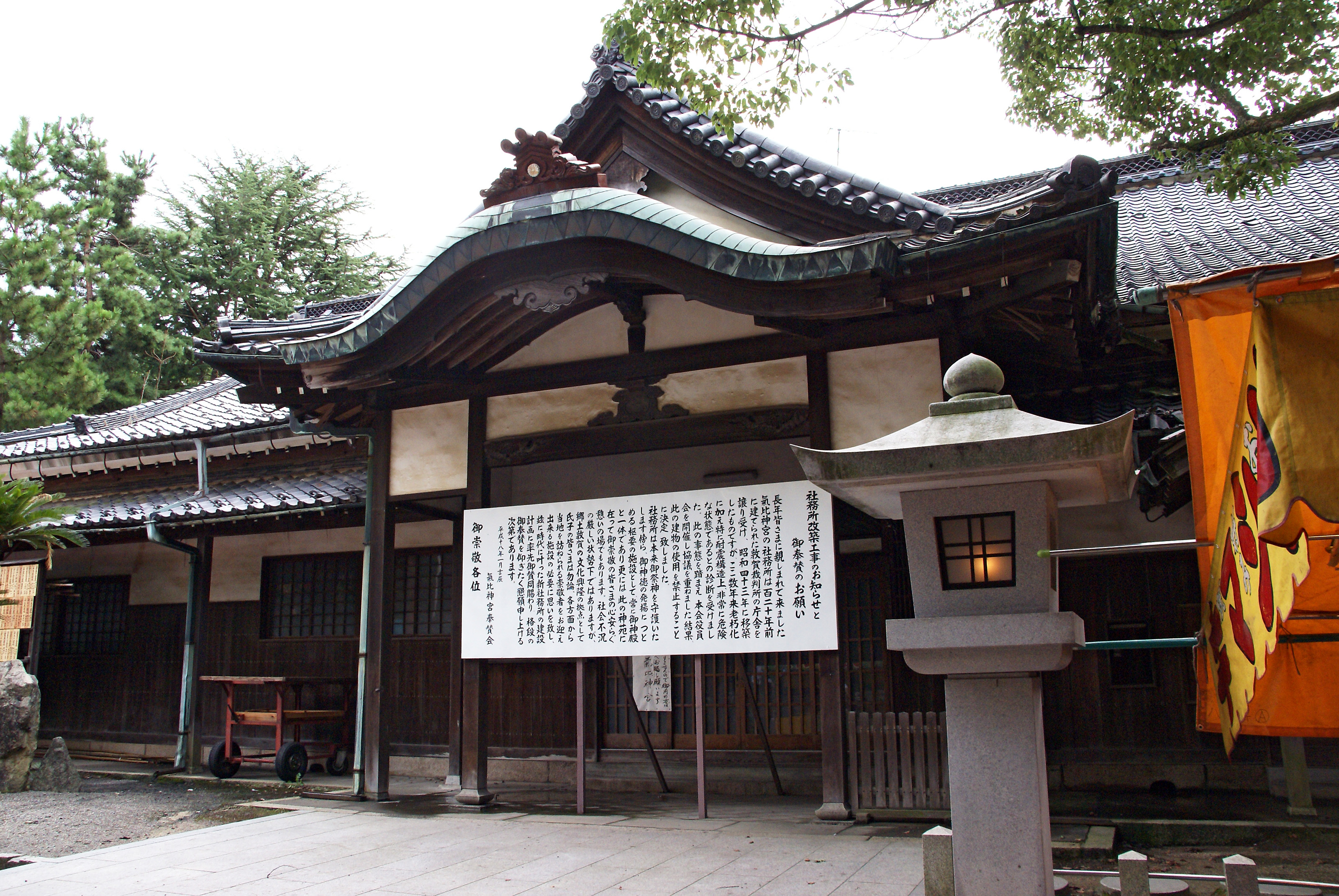
Kehi Shrine
The name Tsuruga itself is a gift from this shrine. According to the Nihon Shoki, the semi-legendary Prince Tsunuga Arashito sailed from the Korean kingdom of Silla to Japan during the reign of Emperor Sujin, arriving at this very port. The prince, the chronicle says, had horns growing from his head, and the locals named the place Tsunuga -- literally "horn-deer" -- which softened over the centuries into Tsuruga. Whether or not you believe in horned princes, Kehi Jingu has anchored this port city's identity since before written records began. As the ichinomiya -- the highest-ranking shrine -- of old Echizen Province and the chief guardian shrine of the entire Hokuriku region, it has witnessed every convulsion of Japanese history from its perch at the edge of the Sea of Japan.
Gateway to the Continent
Tsuruga's natural harbor made it Japan's front door to the Asian mainland for centuries. Ships from the Korean Peninsula and beyond docked here, and the shrine grew powerful as the spiritual guardian of that vital link. The Kojiki and Nihon Shoki -- Japan's oldest chronicles -- mention Kehi Jingu repeatedly, tying it to the semi-legendary Emperor Chuai, Empress Jingu, and Emperor Ojin, and to the Japanese campaigns across the Korean strait. The shrine's foundation predates reliable records; its first documented mention comes from around 692 AD, during the reign of Empress Jito. By the Heian period, imperial messengers traveled regularly to Kehi, and court documents like the Shoku Nihon Koki and Nihon Kiryaku track its steady rise through the official hierarchy. The 927 Engishiki -- the great inventory of Shinto practice -- lists it as a myojin taisha, one of the most honored designations a shrine could receive.
From Vast Estates to Ashes
At its peak, Kehi Jingu commanded territory stretching from Echizen Province through Echigo and as far as Sado Island in the Sea of Japan, with a staggering kokudaka of 240,000 koku -- a measure of rice production that reflected enormous wealth and influence. The shrine sided with the Southern Court during the Nanboku-cho wars, and even after the Northern Court's victory, maintained much of its power. That changed during the Sengoku period, when the shrine backed the Asakura clan against Oda Nobunaga. Nobunaga's forces largely destroyed the complex. In 1604, Yuki Hideyasu restored the shrine, but on a drastically reduced scale -- a mere 100 koku, a fraction of its former grandeur. Later donations from Tokugawa Iemitsu and the lords of Ono Domain helped, but Kehi Jingu never recovered the sprawling wealth of its medieval heyday.
Basho's Moonlit Visit
In September 1689, the wandering poet Matsuo Basho arrived at Kehi Jingu during his famous journey through northern Japan, later immortalized in his masterwork Oku no Hosomichi (The Narrow Road to the Deep North). Basho composed haiku inspired by the shrine and its surroundings, capturing in spare syllables what centuries of court documents could not -- the feeling of standing at this ancient threshold between Japan and the wider world. Today, a statue of Basho and a stone monument inscribed with his haiku still mark the visit, connecting the literary pilgrimage to the physical place. For travelers who know Basho's work, arriving at Kehi is like stepping into a poem that has been waiting three centuries for you to read it in person.
The Gate That Survived
The Bombing of Tsuruga in 1945 destroyed nearly everything. American firebombs consumed the shrine's National Treasure honden -- the main sanctuary hall, originally built during the Edo period under Yuki Hideyasu's patronage. Centuries of accumulated sacred architecture vanished in a single night. But one structure endured: the shrine's massive vermillion torii gate, standing 11 meters tall, built in 1645 during the Edo period, and painted the deep red that defines Shinto sacred space. It is now registered as a National Important Cultural Property, and it ranks as the third largest wooden torii gate in Japan, sharing that distinction with the gates at Nara's Kasuga Taisha and Hiroshima's Itsukushima Shrine. The inscription on the gate was written by Prince Arisugawa Takehito. Walking through it today, you pass beneath a survivor -- a wooden archway that outlasted the bombs, the fires, and the destruction of everything it once protected.
From the Air
Located at 35.655N, 136.075E in the northeastern part of Tsuruga city, Fukui Prefecture, Japan. The shrine grounds sit near the coast of Tsuruga Bay on the Sea of Japan side of Honshu. Look for the large vermillion torii gate and wooded shrine precinct in the urban area near the port. Nearest airports: Komatsu Airport (RJNK) approximately 70 km northeast, Fukui Airport (RJNF) about 50 km north. Best viewed at 1,500-2,500 feet AGL. The shrine's annual festival is held September 4.