Keio University: The School That Taught Japan to Think Differently
The face on Japan's 10,000-yen note -- the highest denomination in everyday circulation -- belongs to Fukuzawa Yukichi, and the institution he built still stands in the Mita district of Tokyo where he moved it in 1868 while civil war raged through Edo. Keio University began in 1858 as a small Dutch studies school for domain vassals in a Tsukiji mansion house. It became Japan's first private institution of higher learning, a seedbed for the country's modernization, and eventually one of Asia's most influential universities. Four of Japan's prime ministers graduated from Keio. So did the chairman of Samsung, the creator of Sailor Moon, and the man known as the Father of the Internet in Japan.
A Samurai's Classroom
Fukuzawa Yukichi arrived in Edo in 1858 under orders from the Nakatsu domain to establish a school of Western studies for the domain's vassals. He started with Dutch -- the language of European science that had trickled into isolationist Japan through the port of Nagasaki. But when Fukuzawa visited the foreign settlement in Yokohama, he realized the wider world spoke English, and he pivoted. His philosophy, which he called jitsugaku -- empirical science grounded in reason, observation, and verification -- was a deliberate break from the Confucian scholarship that dominated Japanese education. When the Boshin War swept through Edo in 1868, Fukuzawa purchased a large estate in the Mita district and relocated his school there, renaming it Keio Gijuku after the Keio era name. He continued lecturing through the fighting. The decision to prioritize education over politics in the middle of a revolution defined the institution's character for the next century and a half.
The Rivalry That Built Japanese Baseball
Keio's love affair with baseball predates the sport's professional era in Japan. In 1913, an American touring team from the New York Giants and Chicago White Sox played an exhibition game against Keio's students. By 1932, the Keio team had grown strong enough to beat the visiting University of Michigan squad. These early matches helped establish baseball as Japan's favorite sport, and Keio's team still competes in the prestigious Tokyo Big6 Baseball League. But the deepest current runs through the Kei-So rivalry with Waseda University -- a contest spanning more than a century and touching baseball, rugby, rowing, lacrosse, American football, and over a dozen other sports. The Japanese call these matches So-Kei Sen. A game played on October 16, 1943, amid wartime austerity, became so legendary that it was dramatized in the 2008 film The Last Game. The rivalry is not merely athletic; it is a cultural fault line between two philosophies of Japanese higher education.
Corridors of Power
Keio's alumni network reads like a directory of Japanese leadership. Four prime ministers -- Tsuyoshi Inukai (1931-1932), Ryutaro Hashimoto (1996-1998), Junichiro Koizumi (2001-2006), and Shigeru Ishiba (2024-2025) -- walked its halls. Yukio Ozaki, the 'Father of parliamentary politics' in Japan, was a Keio man. The university ranks second in the country for alumni holding CEO positions at Fortune Global 500 companies. Two governors of the Bank of Japan graduated from Keio, as did the governor of the Bank of Thailand. The Law School ranked highest among all Japanese universities for bar exam passage rates in both 2010 and 2015. With over 320,000 alumni organized into 866 alumni associations worldwide, Keio's influence extends through government ministries, corporate boardrooms, and international organizations -- including two WHO regional directors and a president of the World Medical Association.
From Manga to Medicine
The range of Keio's contributions defies easy summary. Naoko Takeuchi, creator of the globally beloved Sailor Moon manga, studied at Keio. Hidetaka Miyazaki, president of FromSoftware and the game designer behind Dark Souls and Elden Ring, is an alumnus. Jun Murai, who earned the title 'Father of the Internet in Japan,' received his PhD in Engineering from Keio and was awarded the French Legion of Honor in 2018. Yoshio Taniguchi, who redesigned the Museum of Modern Art in New York, graduated from Keio's engineering department. On the medical side, Keio University Hospital, established in 1920, operates over 1,000 beds and ranks among the largest and most prestigious teaching hospitals in the country. The university also hosts the National High Magnetic Field Laboratory partnership and has produced two JAXA astronauts: Chiaki Mukai and Akihiko Hoshide. Lee Jae-yong, the executive chairman of Samsung Electronics, earned his MBA at Keio in 1995.
Six Campuses, One Motto
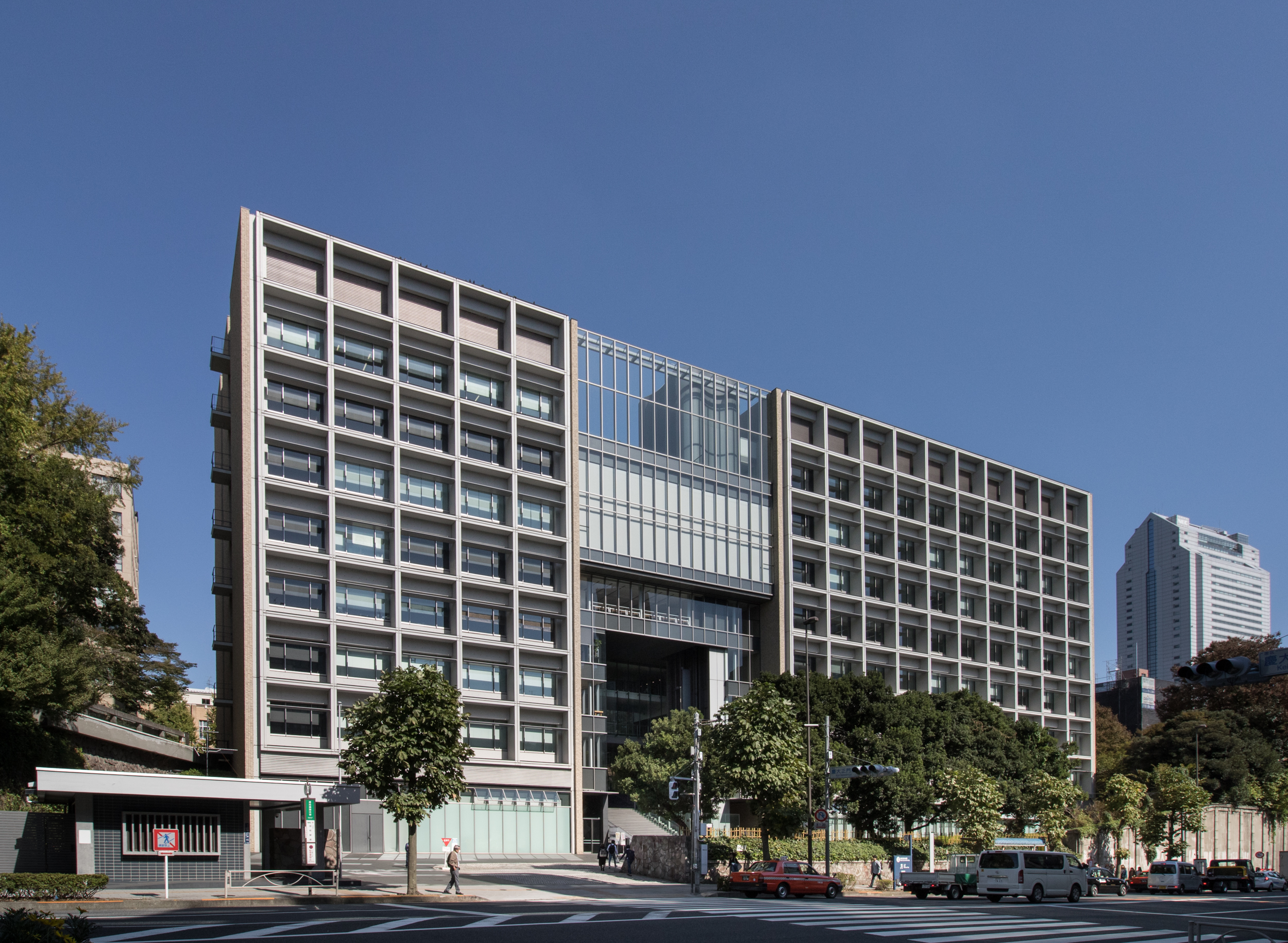
Today Keio spreads across six campuses in the Tokyo-Kanagawa corridor. The historic Mita campus in Minato anchors the university's identity, its red-brick buildings standing in the same district Fukuzawa chose in 1868. Hiyoshi hosts undergraduate programs, Shinanomachi holds the medical school and hospital, and the Shonan Fujisawa Campus -- designed in part by Pritzker Prize-winning architect Fumihiko Maki, himself a Keio alumnus -- houses interdisciplinary programs in environmental and information studies. With nearly 29,000 undergraduates, 4,800 graduate students, and close to 1,900 international students as of 2021, Keio remains one of the most selective private universities in Japan. Nikkei BP's brand rankings placed it first in the Greater Tokyo Area in 2014. Fukuzawa's motto of jitsugaku -- learning through empirical investigation rather than received wisdom -- still guides an institution that has spent more than 160 years proving that independent thought can reshape a nation.
From the Air
Located at 35.649°N, 139.743°E in the Mita district of Minato, central Tokyo. The Mita campus is identifiable from the air by its cluster of buildings in the dense urban grid south of Tokyo Tower. From altitude, the campus sits between the Sumida River corridor and the rail lines converging at Tamachi and Mita stations. Best viewed at 2,000-3,000 feet AGL. Tokyo Haneda Airport (RJTT) lies approximately 7 nautical miles to the south. The Hiyoshi campus in Yokohama and Shonan Fujisawa Campus are additional Keio locations visible from higher altitudes along the Tokyo-Kanagawa corridor.