KEK: Japan's Atom Smasher That Launched the Country's First Website
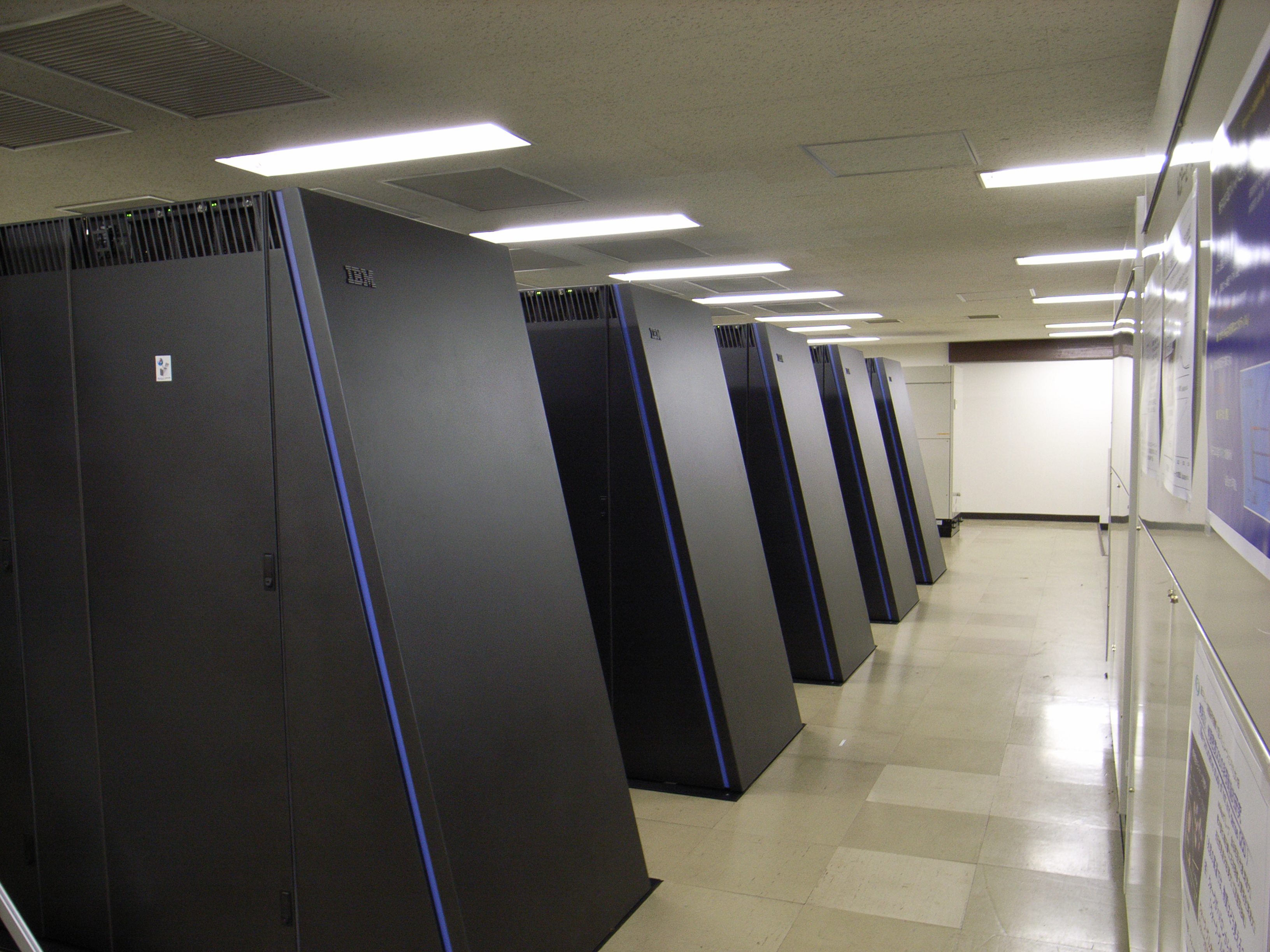
On September 30, 1992, a computer at a particle physics laboratory in Tsukuba served up the first website ever hosted in Japan. The original page can still be visited. That the birthplace of Japan's internet presence was a high-energy physics lab rather than a tech company is no accident -- KEK, the High Energy Accelerator Research Organization, has been at the frontier of Japanese science for decades, operating particle accelerators that smash electrons and positrons together at nearly the speed of light beneath the Ibaraki countryside. With approximately 695 employees and collaborators from hundreds of institutions worldwide, KEK's campus is one of those places where the questions being asked are so fundamental -- why does matter exist at all? -- that the machines built to answer them stretch for kilometers underground.
Three Labs Become One
KEK was formally established in 1997, but its roots reach back decades further. It emerged from the merger of three institutions: the Institute of Nuclear Study at the University of Tokyo, founded in 1955; the National Laboratory for High Energy Physics, established in 1971; and the University of Tokyo's Meson Science Laboratory, dating to 1988. The consolidation brought accelerator expertise, nuclear research, and meson science under a single organizational umbrella in Tsukuba, creating Japan's answer to CERN and Fermilab. Today KEK operates four main laboratories: the Accelerator Laboratory, the Institute of Particle and Nuclear Studies, the Institute of Materials Structure Science, and the Applied Research Laboratory. The organization also trains doctoral students through the Graduate University for Advanced Studies.
The Ring Beneath the Fields
KEK's crown jewel is SuperKEKB, an electron-positron collider with a circumference of about 3.016 kilometers. Two storage rings -- one pushing electrons to 7 GeV, the other accelerating positrons to 4 GeV -- send particles hurtling in opposite directions before smashing them together at a single interaction point. The collisions generate enormous quantities of B-mesons and their antimatter counterparts, providing data for the Belle II experiment. SuperKEKB achieved its first collisions inside the Belle II detector in 2018, and its target luminosity is set at approximately 30 times higher than its predecessor KEKB -- an upgrade that required adopting a nano-beam scheme, where beams are focused to impossibly small cross-sections at the collision point. The Japanese government approved the project in October 2010 with a total budget of roughly 315 million dollars.
The Nobel Connection
Makoto Kobayashi, emeritus professor at KEK, shared the 2008 Nobel Prize in Physics for his theoretical work on CP-violation -- the subtle asymmetry between matter and antimatter that helps explain why the universe contains matter at all rather than having annihilated itself in the first moments after the Big Bang. The experimental verification of Kobayashi's theory was one of the driving purposes behind KEK's B-factory accelerators, which produced the B-mesons needed to observe CP-violation in action. KEK also fires neutrinos 250 kilometers across Japan to the Super-Kamiokande detector buried deep in a mine in Kamioka, studying neutrino oscillations through experiments named K2K and later T2K using the J-PARC proton accelerator complex co-operated with the Japan Atomic Energy Agency.
From TRISTAN to the Future
Before SuperKEKB, the same tunnel housed TRISTAN -- the Transposable Ring Intersecting Storage Accelerator in Nippon -- an electron-positron collider that operated from 1987 to 1995 hunting for the top quark at energies up to 30 GeV. TRISTAN never found the top quark (Fermilab claimed that prize), but its tunnel became the foundation for KEKB and then SuperKEKB, each generation of accelerator inheriting and upgrading the infrastructure of the last. Beyond the main collider, KEK operates the Photon Factory synchrotron light sources for materials science and structural biology, and is deeply involved in planning for the International Linear Collider -- a proposed 31-kilometer-long machine that would collide particles at up to 1 TeV, a project involving 300 laboratories and universities worldwide.
From the Air
Located at 36.149N, 140.077E in the Tsukuba Science City area of Ibaraki Prefecture. The KEK campus is identifiable from altitude as a large institutional complex with distinctive circular features marking the accelerator ring footprints. The 3-kilometer SuperKEKB ring traces a rough circle beneath the campus grounds. Best viewed at 3,000-5,000 feet AGL. Ibaraki Airport (RJAH) lies approximately 22 nautical miles northeast. Mount Tsukuba (877m) is visible 5 kilometers to the north. The Tsukuba Express rail corridor runs southwest toward Tokyo.