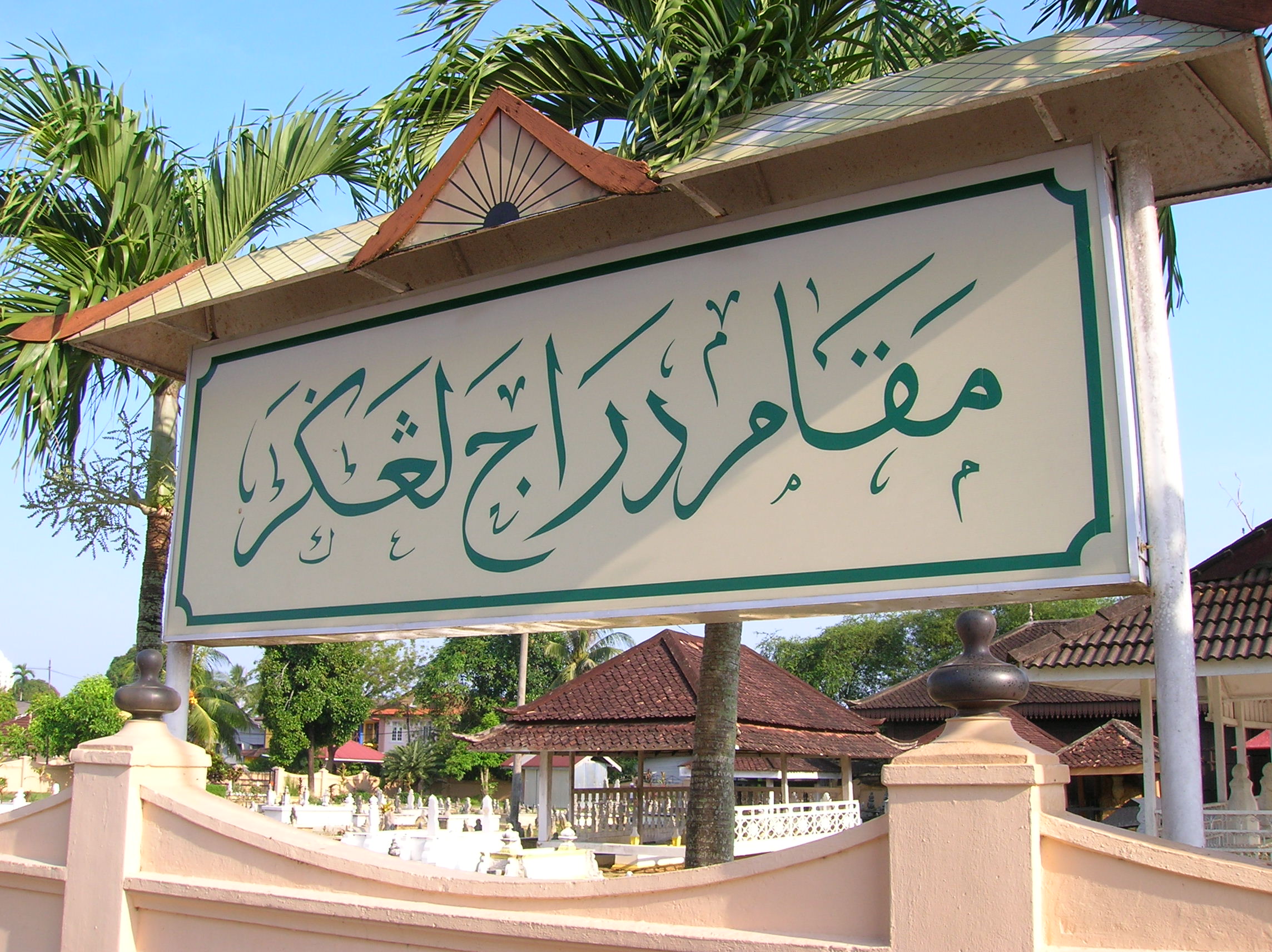
Kelantan Royal Mausoleum
Eleven sultans share the same patch of earth. At Kampung Langgar, a quiet subdistrict near Kota Bharu on Malaysia's northeastern coast, the Kelantan Royal Mausoleum sits in the shade of the Langgar Mosque on Jalan Langgar. The graves here stretch back to the late eighteenth century, beginning with Long Yunus, who died in 1798, and continuing through the centuries to Sultan Ismail Petra, who was laid to rest in September 2019. For the royal house of Kelantan, this is not merely a cemetery. It is the family chronicle written in stone.
A Dynasty Beneath the Soil
The mausoleum holds the remains of every Kelantan sultan from Long Yunus through to Sultan Ismail Petra, spanning more than two hundred years of continuous rule. Sultan Muhammad I, who died in 1835, rests near Sultan Muhammad II, who followed him half a century later in 1886. Three more Muhammads -- the third, fourth, and a Sultan Mansur -- fill the years between 1890 and 1920. The density of names and numerals tells a story of dynastic persistence in a corner of the Malay world that maintained its own sultanate even as colonial powers reshaped the peninsula. Sultan Yahya Petra, who died in 1979, held the distinction of being the sixth Yang di-Pertuan Agong, the paramount ruler of all Malaysia -- one of the few Kelantan sultans to serve in the rotating national kingship.
Queens and Consorts
Beside the sultans lie their consorts. Three women bearing the name Zainab rest here across different generations: Sultanah Zainab binti Muhammad Amin, who died in 1928; Raja Perempuan Zainab I, who died in 1985; and Raja Perempuan Zainab II, who passed in 1993. The last of these served as the sixth Raja Permaisuri Agong, the queen consort of Malaysia's national king. The repetition of the name Zainab across generations reflects a Malay royal tradition of honoring forebears through naming, weaving continuity into the very identity of the household. These were not ceremonial figures alone -- in the complex world of Malay court politics, the queen consorts carried influence and maintained networks that held the sultanate together through periods of British colonial rule and Japanese occupation.
The Last Raja of Pattani
Among the most poignant graves belongs not to a Kelantan sultan but to Tengku Abdul Kadir Kamaruddin, identified in the records as the last Raja of the Pattani Kingdom. He died in Kelantan on 19 May 1933, an exile from the Malay sultanate that once ruled what is now southern Thailand. His presence here speaks to the entangled histories of Kelantan and Pattani, whose populations share language, religion, and kinship ties that predate the borders drawn by colonial-era treaties. That the last Pattani king was buried alongside Kelantan royalty -- rather than in the land his family once governed -- reflects the political upheavals that severed old Malay kingdoms from one another. His descendants, including Tengku Mahmood Mahyideen who died in 1954, also rest in this mausoleum.
Beyond the Royal Bloodline
Two graves in the mausoleum belong to individuals outside the royal family. Dr. Ali Othman Merican, described as a Malay doctor, died on 17 June 1945 -- just weeks before the end of World War II. Captain Dato' Khairi Mohamad, a pioneer civil aviator, died on 12 November 2020. Their inclusion suggests that the mausoleum honors not just bloodlines but service to the state and its people. A doctor during wartime, an aviator who helped connect an isolated corner of the peninsula to the wider world -- these are the individuals Kelantan chose to place beside its kings. The mausoleum continues to receive burials in the present day, with the most recent interments occurring in the 2020s, making it both a historical monument and a living institution.
From the Air
Located at 6.116N, 102.249E, the mausoleum sits in Kampung Langgar near Kota Bharu in northeastern Peninsular Malaysia. Approaching from the South China Sea, the Kelantan River delta and Kota Bharu's urban grid are visible landmarks. Sultan Ismail Petra Airport (ICAO: WMKC) is approximately 9 km northeast. Best viewed at 3,000-5,000 feet altitude. The site is adjacent to the Langgar Mosque, visible among the dense residential neighborhoods south of Kota Bharu's center.