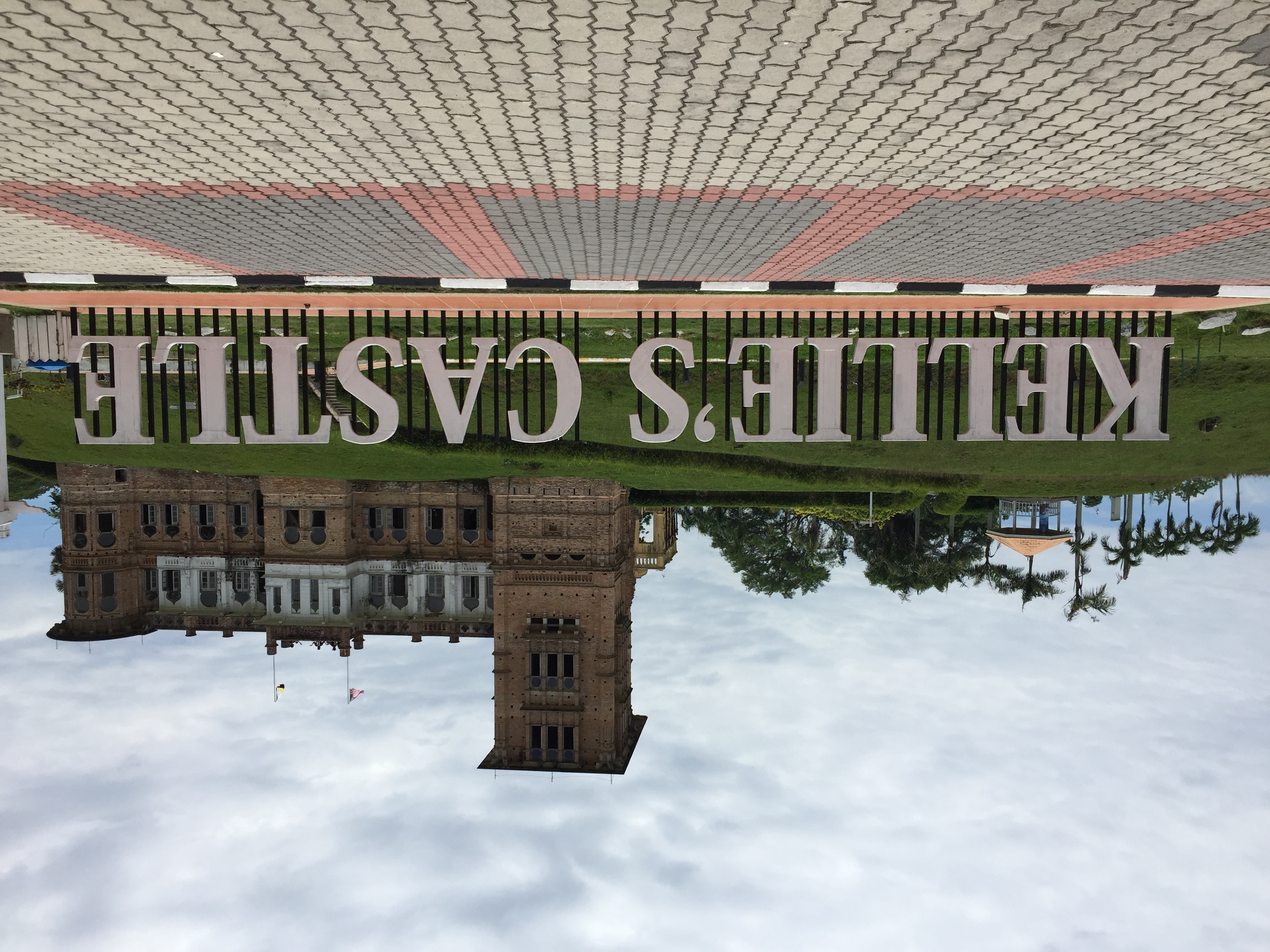
Kellie's Castle
The plan called for Malaya's first elevator. It called for fourteen rooms across four floors, blending Moorish arches with Indo-Saracenic domes and Roman columns. It called for imported Indian marble, bricks shipped from Madras, a wine cellar, secret tunnels, and a rooftop tower overlooking a thousand acres of rubber and tin. What it did not call for was the Spanish flu, or a death in Lisbon, or a century of jungle slowly consuming the walls. Kellie's Castle, rising from the edge of the Kinta River valley in Batu Gajah, Perak, is one of Malaysia's most extraordinary ruins -- not because of what it became, but because of everything it never got to be.
A Scotsman in the Tin Lands
William Kellie-Smith arrived in Malaya in 1890, a twenty-year-old civil engineer from Kellas, a small parish near the Moray Firth in northeastern Scotland. He joined the survey firm of Charles Alma Baker, who held concessions from the Perak state government to clear 9,000 hectares of forest around Batu Gajah. Kellie-Smith saw opportunity in the cleared land. With profits from his work with Baker, he bought a thousand acres of jungle in the Kinta District and planted rubber trees. He founded the Kinta Kellas Tin Dredging Company, naming his estate after Easter Kellas, the farm back home. Rubber and tin were minting fortunes in turn-of-the-century Malaya, and Kellie-Smith's timing was impeccable. By the early 1900s he was one of Perak's wealthiest planters. He returned to Scotland to marry Agnes, bringing her back to Malaya in 1903. A daughter followed the next year.
The Castle That Grew
In 1910, Kellie-Smith began building a mansion he called Kellas House -- comfortable, colonial, but not remarkable. Then, in 1915, Agnes gave him a son. The event triggered something grander. Kellie-Smith envisioned a castle fit for a dynasty: a sprawling structure mixing Moorish horseshoe arches, Indo-Saracenic design, and Roman architectural flourishes. He brought seventy craftsmen from Madras to do the work, importing all the bricks and marble from India as well. The plans were extraordinary for rural Malaya -- an elevator that would have been the first in the country, hidden passageways, a rooftop observation tower. The castle was to sit beside the Raya River, a tributary of the Kinta, surrounded by his plantation lands. Construction progressed through the mid-1910s, the building growing taller against the green wall of the jungle behind it.
The Plague and the Temple
In 1918, the Spanish flu pandemic reached Perak. The virus swept through the Indian workforce with devastating effect, killing many of the craftsmen building the castle. The surviving workers, terrified and grieving, approached Kellie-Smith with a request: they wanted to build a Hindu temple dedicated to Mariamman, the goddess believed to cure disease. Kellie-Smith agreed without hesitation. The temple was constructed on the estate grounds, and legend holds that a tunnel linked it to the castle -- a passage between the Scottish planter's dream and his workers' faith. In gratitude, the craftsmen sculpted a figure of Kellie-Smith himself among the Hindu deities on the temple's roof. It remains there today: a mustachioed Scotsman in a pith helmet, standing in stone alongside the gods, an unlikely member of the pantheon.
Unfinished, Unsold, Unforgotten
Construction resumed after the pandemic, but the castle was never completed. In 1926, Kellie-Smith traveled to Lisbon, Portugal, where he died of pneumonia at the age of 56. Agnes, devastated, returned to Scotland with the children. She never came back to Malaya. The estate, castle and all, was eventually sold to the British trading firm Harrisons and Crosfield. Without its builder, the structure simply stopped. The jungle moved in. Vines crept through the Moorish arches. Trees rooted in the unfinished upper floors. For decades, the castle was known locally as Kellie's Folly -- the monument to a man who reached too far. But folly suggests foolishness, and what Kellie-Smith built was not foolish so much as unfinished. Today the ruin is one of Perak's most visited tourist attractions, its roofless rooms open to the sky, its staircases climbing toward floors that were never laid. In 1999, it served as a filming location for the Oscar-nominated movie Anna and the King. The elevator shaft is still visible, empty and waiting for machinery that will never arrive.
From the Air
Kellie's Castle is located at 4.474N, 101.088E in the Kinta Valley, Perak, beside the Raya River near Batu Gajah. The structure is difficult to spot from high altitude due to jungle canopy, but the Kinta River valley and Batu Gajah township provide good landmarks. Sultan Azlan Shah Airport in Ipoh (WMKI) is about 25 km to the north. The castle sits in rolling plantation country between the limestone karst hills that define the Kinta District. Best viewed below 3,000 ft; the roofless structure and its clearing become visible against the surrounding greenery.