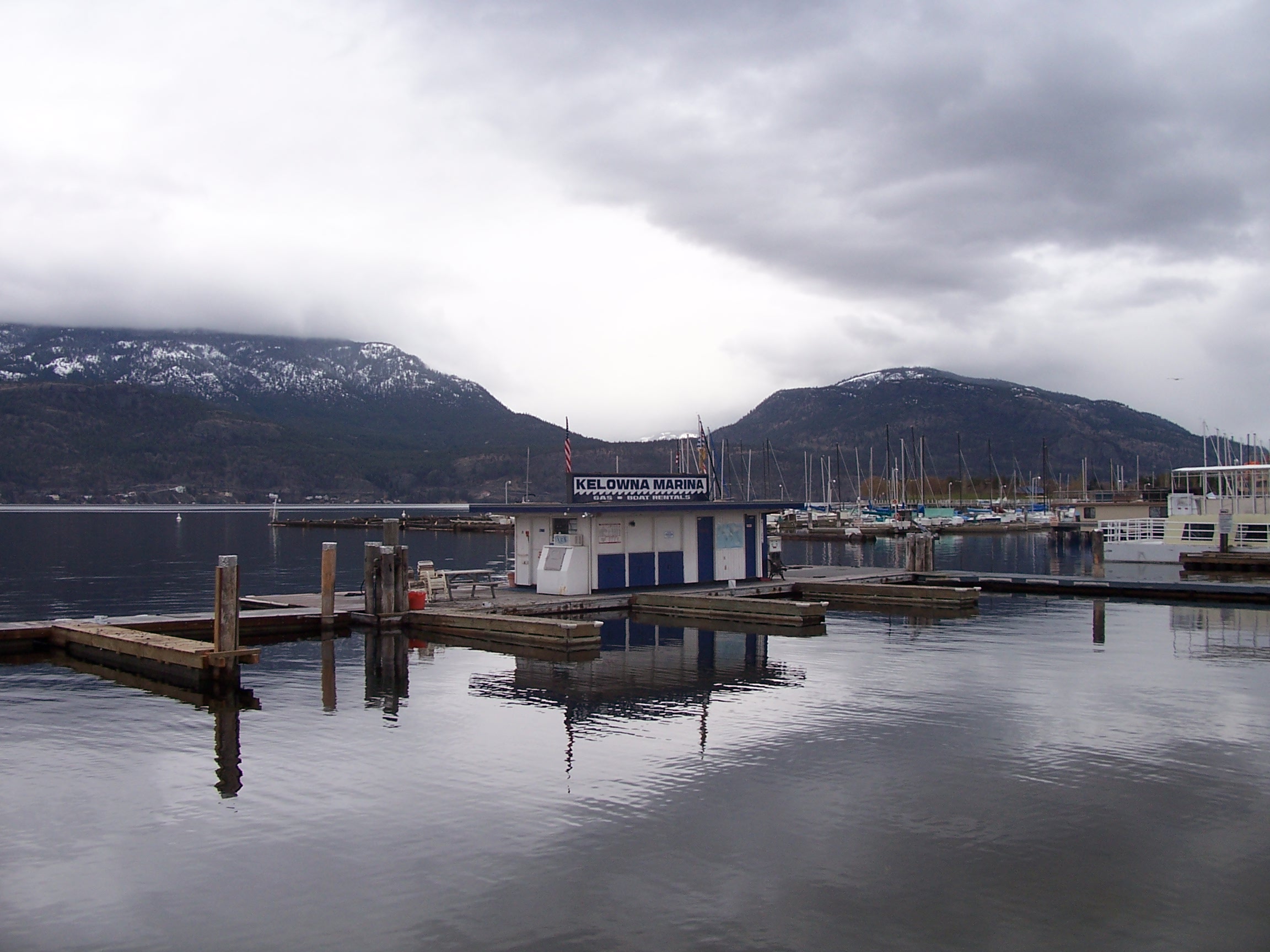
Kelowna
Okanagan Lake stretches 135 kilometers through a valley so suited to grape cultivation that it has become Canada's answer to Napa - and Kelowna sits at its heart. This is the largest inland city in British Columbia, population 215,000 in the metro area, a place where the lake draws summer crowds for swimming and kiteboarding while the surrounding hillsides produce wines that have won international recognition. The same sunshine that ripens Pinot Noir also bakes the beaches, making Kelowna a rare Canadian city where summer heat can reach the mid-30s Celsius and winter rarely drops below -10. It's a four-season destination that somehow manages to be both resort town and real city.
The Lake at the Center
Okanagan Lake dominates everything - a 135-kilometer ribbon of water that never quite freezes, moderating the climate and drawing visitors who come to swim, sail, paddleboard, and kiteboard its sun-warmed surface. The city's downtown hugs the western shore, a pedestrian-friendly waterfront of parks and promenades that fills with activity from May through September.
Boat launches line the lakeshore, and on summer weekends they queue with trailers waiting their turn. Out on the water, the crowds can rival the launches - powerboats, sailboats, jet skis, kayaks, all sharing a lake large enough to absorb them yet busy enough to require attention. A floating bridge crosses the lake, connecting Kelowna to West Kelowna, and traffic backs up at its approaches during rush hour - a small-city problem in what was recently a small town.
Wine Country
Over twenty wineries operate within Kelowna city limits, and many more dot the surrounding area. The hot, dry summers and cool nights create conditions ideal for viticulture, and wines from the Okanagan have earned international recognition. Most wineries offer tastings; the Wine Trails self-guided tour connects them into a circuit through vineyards that step down hillsides toward the lake.
The harvest brings its own tourism - grape picking, wine festivals, and the concentrated flavors of late-season vintages. Many visitors time trips for September through November, when the valley's bounty reaches its peak. The rest of the year, the tasting rooms remain open, pouring wines that range from familiar varietals to the ice wines that cold-weather Canada does better than almost anywhere on earth.
Big White in Winter
When snow blankets the mountains southeast of Kelowna, Big White ski resort comes alive. The resort claims more ski-in ski-out accommodation than any other in British Columbia, drawing skiers and snowboarders from around the world. The drive from Kelowna takes about an hour, climbing from the lake's Mediterranean climate into the heavy snowfall that buries the resort each winter.
The transformation from summer lake town to winter ski destination makes Kelowna a year-round draw. Golf courses that were busy in July become quiet as their clientele heads for the slopes. Hotels fill with different guests - wetsuits replaced by ski jackets, kayak racks replaced by roof boxes. It's the same sunshine that makes both seasons work, over 2,000 hours of it annually, powering both the vines and the smiles of visitors who come for the lake or the snow.
Growing Pains
Kelowna is a city in transition, growing fast enough to strain its infrastructure. Traffic on the floating bridge backs up during rush hour. Housing prices have climbed as retirees, remote workers, and investors discover what locals have long known. Downtown safety concerns have emerged as the population grows - locals advise caution in certain areas after dark, a new development for what was recently a quieter place.
Forest fires have become another concern. Kelowna experienced major burns in 2003, 2009, and 2023, and smoke from regional fires can fill the valley in August and September. Campfire bans are common in summer; parks may close during high-risk periods. It's the price of living in a landscape this beautiful, where the same dry conditions that ripen grapes also turn forests to tinder.
From the Air
Located at 49.88N, 119.44W on the eastern shore of Okanagan Lake in British Columbia's interior. The lake is unmistakable - 135 km long, oriented north-south. The floating bridge crossing the lake is visible connecting Kelowna to West Kelowna. Vineyards are evident on the surrounding hillsides. Kelowna International Airport (CYLW) is north of downtown with commercial service. Big White ski resort is approximately 55 km southeast via Highway 33. Vancouver is 390 km west via the Okanagan Connector (Highway 97C); Calgary is 600 km east. Watch for smoke haze in late summer from regional wildfires.