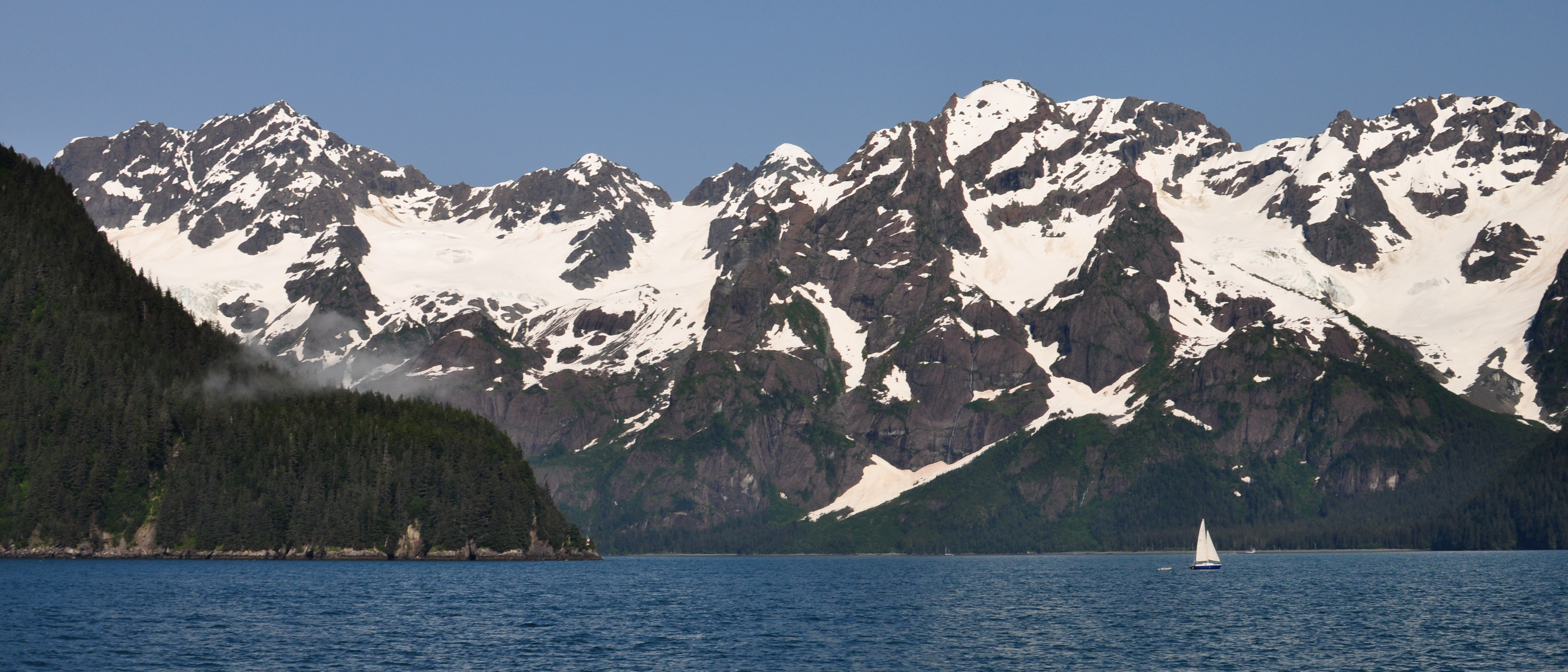
Kenai Fjords National Park
The Harding Icefield remains from an age when glaciers covered this corner of Alaska completely - a remnant ice age that still blankets more than half the park's 670,000 acres. From its frozen heights, dozens of glaciers flow downward toward the sea, carving the steep-sided fjords that give the park its name. Where ice meets salt water, the tidewater glaciers calve continuously, blue fragments crashing into waters so cold they can kill a human in minutes. Yet these same frigid, plankton-rich fjords draw humpback whales on their annual migration, harbor seals by the thousands, and sea lions that haul out on rocky islands to breed.
The Living Icefield
The Harding Icefield is one of only four major ice caps remaining in the United States. Covering more than 700 square miles, it feeds nearly 40 glaciers, some of which have been carving these valleys since the last ice age. The icefield generates its own weather - cold, dense air flows down the glaciers like invisible rivers, creating fierce winds that can materialize even on calm days in Seward below. The only land access is the Harding Icefield Trail, an eight-mile climb from Exit Glacier to a viewpoint overlooking the frozen expanse. Most visitors experience the park's glaciers by boat, touring the fjords on vessels that approach - but never too closely - the calving ice walls. The recommended safe distance is a quarter mile; glaciers shed ice unpredictably, and the resulting waves have capsized vessels that ventured too near.
Creatures of the Cold
The waters of Kenai Fjords support a density of marine life that draws wildlife enthusiasts from around the world. Humpback and orca whales are common summer sightings as the great mammals feast on schooling fish. Harbor seals by the thousands breed on the floating ice in the fjords - one of the few places in Alaska where they raise pups directly on icebergs. Steller sea lions congregate on rocky islands, their barking carrying across the water. Sea otters, once nearly extinct, have rebounded to become a common sight among the kelp forests. Above the waterline, puffins and cormorants nest on cliff faces, mountain goats traverse seemingly vertical terrain, and bald eagles survey their domain from perches overlooking the sea.
Fjord Country
The fjords themselves are geological testimony to glacial power - long, steep-sided valleys drowned by the sea after ice retreated. The collision of the Pacific and North American tectonic plates continues to deepen these cuts and lower the Kenai Mountains, a process measured in geological time but visible in the landscape's dramatic verticality. Climate change is accelerating the glaciers' retreat, transforming the park faster than any human plan could manage. What was ice a decade ago may be open water today; what is glacier terminus now may become forested hillside within a generation. The park preserves not a static landscape but a process - the ongoing negotiation between ice and ocean, mountain and sea.
The Seward Gateway
Access to Kenai Fjords comes almost entirely through Seward, the small port city at the park's edge. No roads penetrate the park beyond the short access to Exit Glacier. Tour boats depart from the Seward waterfront for four-to-six-hour cruises that typically include a tidewater glacier, sea lion haul-outs, seabird rookeries, and whatever whales and other wildlife appear that day. Water taxis transport kayakers and cabin users to remote locations. The maritime climate ensures overcast and cool days even in summer, with temperatures ranging from the mid-40s to low 70s Fahrenheit and rain a constant possibility. Those who venture beyond organized tours must prepare for complete self-reliance - satellite phones and GPS emergency beacons are essential, as mobile service is nonexistent.
Wilderness and Risk
Kenai Fjords offers genuine wilderness, with genuine wilderness dangers. The water temperature can kill an unprotected swimmer in minutes. Winds and tides are fierce and unpredictable - only experienced sea kayakers with wilderness survival skills should attempt float trips. Icebergs can flip without warning; glaciers calve without notice. Black bears patrol the coastal forests. The park's public-use cabins require advance permits and independent transportation to reach; kayaking to them is explicitly not recommended by rangers who understand these waters. Yet for those who accept the risks and prepare accordingly, Kenai Fjords offers an encounter with primary forces - ice and ocean, creation and destruction - that few places can match.
From the Air
Located at 59.92°N, 149.99°W on the Kenai Peninsula in Southcentral Alaska. The Harding Icefield appears as an extensive white expanse covering the mountains above the fjords. Tidewater glaciers are visible as white tongues extending to the sea. Seward Airport has a single short runway with no scheduled service; most visitors arrive via Ted Stevens Anchorage International (PANC), 125nm north. The dramatic contrast between ice, rock, and ocean is best appreciated at lower altitudes in clear conditions.