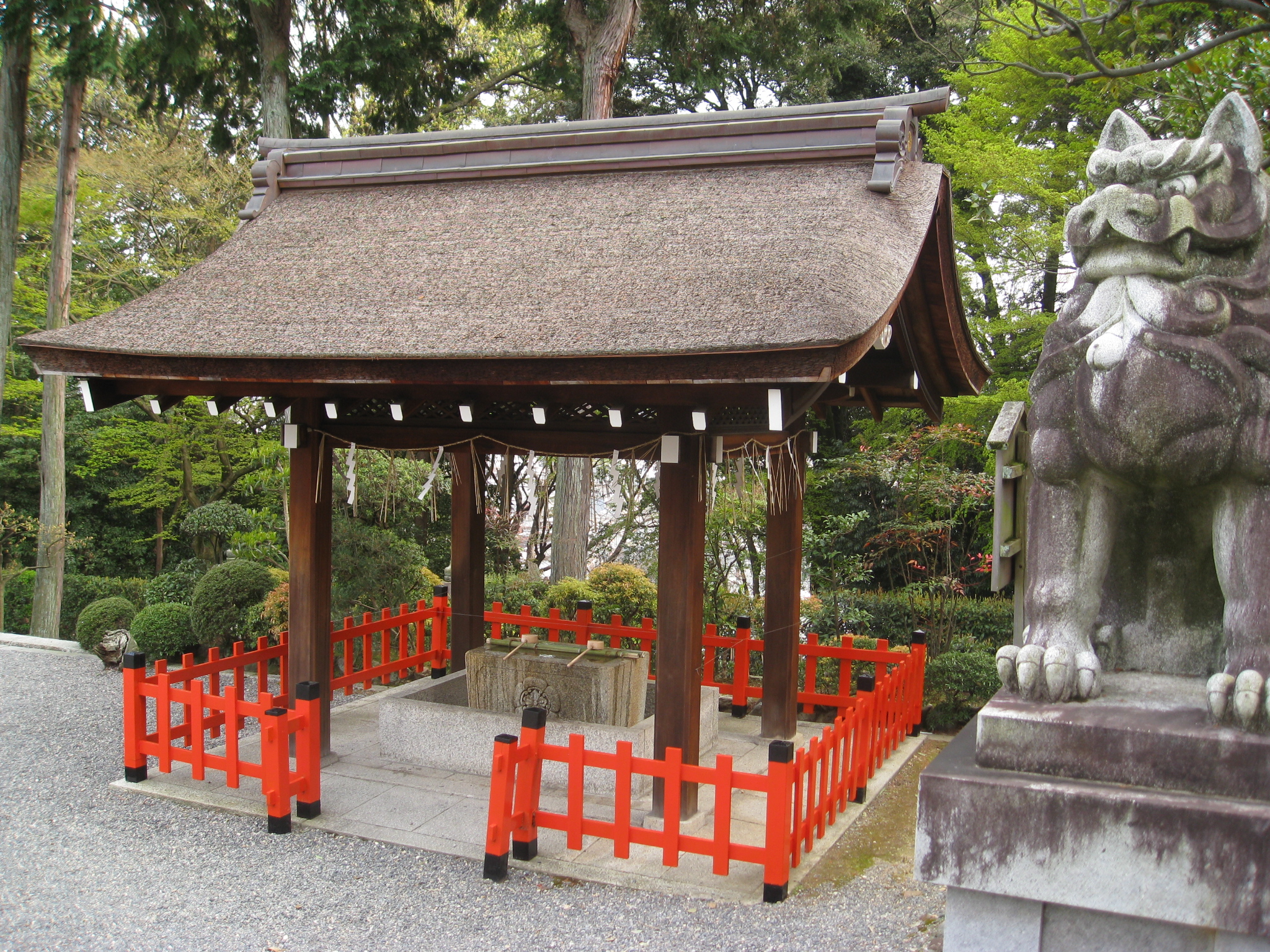
Kenkun Shrine
Every October 19th, young boys dressed in full samurai armor march up the slopes of Mount Funaoka in northern Kyoto, reenacting the day in 1568 when Oda Nobunaga's army swept into the imperial capital and changed the course of Japanese history. The shrine that hosts this spectacle, Kenkun Shrine, exists because Emperor Meiji believed Japan owed its sovereignty to one man. Three centuries after Nobunaga's death, the emperor declared that "Japan was not invaded by foreign countries because of Nobunaga's unification of the country," and ordered a shrine built in his honor. That decree, issued on November 8, 1869, transformed a hill already steeped in a thousand years of myth and bloodshed into a place of pilgrimage for anyone drawn to the story of Japan's most audacious warlord.
A Hill That Remembers Everything
Mount Funaoka is only 111.7 meters tall, but few hills in Japan carry as much history. The 10th-century court lady Sei Shonagon named it in chapter 231 of The Pillow Book as the first hill that came to mind for a Kyoto aristocrat. The monk Yoshida Kenko mentioned it in his Tsurezuregusa as a burial ground for the ancient capital. Some scholars believe the hill served as a surveying reference point for the north-south axis when Heian-kyo was laid out, sitting directly north of Suzaku-oji, the city's central avenue. Another theory holds that it was worshipped as a sacred mountain even before Kyoto existed, its rocky summit corresponding to Genbu, the Black Tortoise, one of four cardinal gods protecting the city according to Chinese geomancy. Neither theory has been proven, but both speak to the hill's gravitational pull on the Japanese imagination.
Executions, Castles, and a Mausoleum That Never Was
The hill's darker chapters run deep. In 1156, after the Hogen Rebellion, the defeated Minamoto no Tameyoshi and his children were executed on its slopes. Three centuries later, during the Onin War of 1467, two provincial governors built Funaokayama Castle on the summit and barricaded themselves inside as part of the Western Army. The surrounding neighborhood still carries the name Nishijin, meaning "western camp," a living echo of that siege. After Nobunaga's death in 1582, Toyotomi Hideyoshi obtained permission from Emperor Ogimachi to build a temple and mausoleum for his fallen lord on this very hill. But the plan was sabotaged by the rival Ishida Mitsunari, and the mausoleum was never constructed. Still, throughout the entire Edo period, Mount Funaoka was regarded as sacred ground connected to Nobunaga's spirit, as though the hill itself had been waiting for the shrine that would eventually come.
From Tokyo to the Mountaintop
Emperor Meiji's 1869 decree set in motion a shrine that would travel before finding its permanent home. The first structure was built on October 17, 1870, at the Tokyo residence of Oda Nobutoshi, a descendant of Nobunaga and former daimyo of Tendo Domain. A companion shrine was erected in the city of Tendo, Yamagata. In 1875, the shrine received an official rank under the State Shinto system. Then in September 1880, it was relocated from Tokyo to the foot of Mount Funaoka in Kyoto, and finally moved uphill to its current mountaintop position in 1910. Today the shrine enshrines both Nobunaga and his son Oda Nobutada as a secondary deity. The grounds offer sweeping views of Mount Daimonji and Mount Hiei, and the approach is marked by the largest unpainted torii gate in all of Kyoto Prefecture.
Swords, Noh, and the Funaoka Matsuri
Kenkun Shrine has become a destination for enthusiasts of Japanese swords and martial culture. The shrine houses artifacts connected to Nobunaga, including charms associated with swords said to have been among his favorites. Each year the Funaoka Matsuri festival on October 19th draws crowds for its reenactment of Nobunaga's triumphal entry into Kyoto. The festival features a performance of the Noh dance Atsumori, which was reportedly a favorite of Nobunaga himself, alongside bugaku court dance and demonstrations of period weaponry, including matchlock rifle displays by men in Sengoku-era armor. The festival transforms the quiet hilltop shrine into a vivid window onto the turbulent 16th century, when a single warlord's ambition reshaped the entire nation.
Kyoto's First Park, Hidden in Plain Sight
The area around the shrine has been developed into Funaokayama Park, Kyoto's first urban park, though the land is technically leased by the city from the Zen temple Daitoku-ji. The park remains one of northern Kyoto's quieter corners, overlooked by tourists streaming toward the more famous temples to the south. From the shrine grounds on clear days, the view stretches across the city's rooftops to the distinctive character burned into Mount Daimonji during the annual Gozan no Okuribi festival. It is a vantage point that Nobunaga himself never enjoyed, but one that Emperor Meiji chose deliberately, placing the warlord's spirit where it could watch over the capital he once conquered.
From the Air
Kenkun Shrine sits at 35.039N, 135.743E on Mount Funaoka in northern Kyoto. The hill rises to 111.7 meters and is visible as a green mound in the dense urban grid of Kita-ku. Look for the large unpainted torii gate on the slope. The nearby Daitoku-ji temple complex to the east is a useful landmark. Nearest airports: Osaka Itami (RJOO) approximately 35 km southwest, Kansai International (RJBB) approximately 90 km south. At lower altitudes, the entire northern Kyoto basin is visible with Mount Hiei and Mount Daimonji framing the eastern skyline.