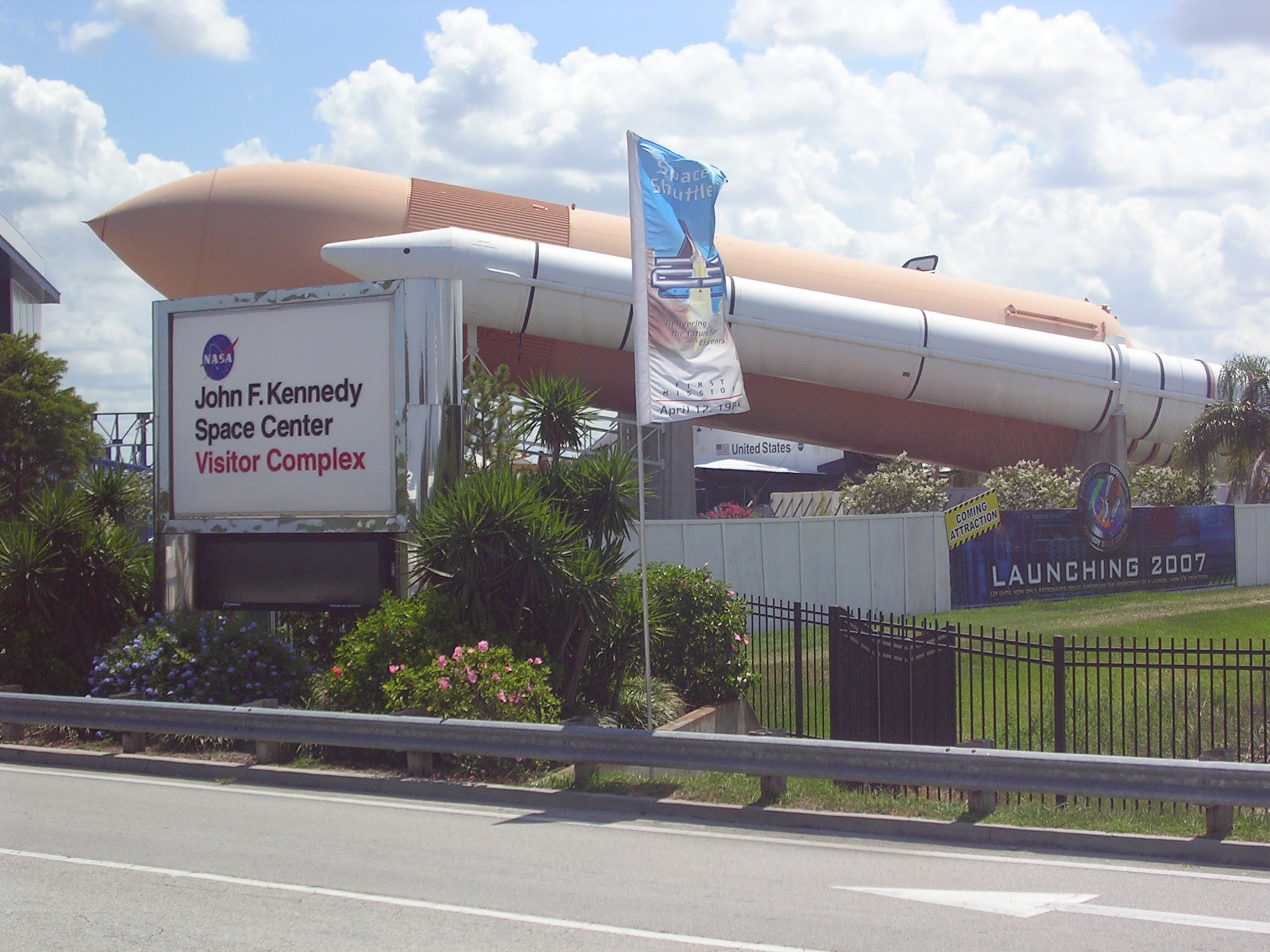
Kennedy Space Center: Where Humanity Left Earth
Every American astronaut who has left Earth did so from Kennedy Space Center. Alan Shepard's Mercury capsule. John Glenn's orbital flight. Armstrong, Aldrin, and Collins heading for the Moon. Every Space Shuttle. The Florida facility has been America's spaceport since 1962, chosen for its southern latitude (which increases rocket efficiency) and its coastal location (which allows failed launches to fall in the ocean). The facility sprawls across 144,000 acres of Merritt Island, much of it wildlife refuge coexisting with launch pads. Rockets still rise from Kennedy, though commercial operators now share the complex. The gateway to space remains open.
The Selection
NASA chose Cape Canaveral for America's human spaceflight program because physics favored it. Rockets launching eastward gain velocity from Earth's rotation; the effect is greatest near the equator. Florida's east coast offered southerly latitude plus Atlantic Ocean for safe disposal of failed launches. Merritt Island, adjacent to the existing Air Force missile range, provided space for the massive facilities Apollo would require. The land was remote, sparsely populated, and available. The mosquito-infested swamp became humanity's departure point for other worlds.
The Apollo Era
Kennedy Space Center was built for the Moon. The Vehicle Assembly Building (VAB) - still one of the world's largest structures - was designed to stack Saturn V rockets. The crawler-transporters that moved rockets to the pad could carry 18 million pounds. Launch Complex 39 sent every Apollo mission toward the Moon. On July 16, 1969, Apollo 11 rose from Pad 39A, carrying Armstrong, Aldrin, and Collins toward a destination no human had reached. The infrastructure built for Apollo remained in use for decades, adapted for the Shuttle and now for Artemis.
The Shuttle Era
The Space Shuttle program (1981-2011) launched 135 missions from Kennedy, including 133 that returned safely. The program built and serviced the International Space Station, deployed satellites and telescopes, and maintained American presence in low Earth orbit. Two disasters - Challenger (1986) and Columbia (2003) - killed 14 astronauts and temporarily halted the program. The Shuttle's complexity and cost eventually ended it; the orbiters now reside in museums. But for 30 years, the Shuttle defined American spaceflight, and Kennedy was its home.
The New Era
Commercial spaceflight has transformed Kennedy. SpaceX leases Launch Complex 39A; their Falcon 9 rockets rise regularly from the historic Apollo pad. United Launch Alliance operates from adjacent facilities. NASA's Space Launch System, intended for lunar return missions, uses the infrastructure built for Apollo. The Kennedy Space Center Visitor Complex offers tours, exhibits, and rocket launches (when scheduled). The facility is simultaneously historic and operational - a museum that still makes history, preserving the past while building the future.
Visiting Kennedy Space Center
Kennedy Space Center Visitor Complex is located roughly 45 miles east of Orlando on Merritt Island. Standard admission includes exhibits, IMAX films, and bus tours to the Apollo/Saturn V Center (with original Apollo hardware). Add-on experiences include astronaut encounters, launch viewing, and special tours. Rocket launches occur irregularly - check schedules and book launch viewing in advance. The Vehicle Assembly Building is visible from miles away. Allow a full day for the standard experience. Orlando has extensive lodging; Titusville and Cocoa Beach are closer. Summer is hot and humid; winter offers comfortable temperatures. Seeing a launch requires flexible scheduling but is worth the effort.
From the Air
Located at 28.52°N, 80.65°W on Merritt Island, Florida's Atlantic coast. From altitude, Kennedy Space Center is visible as a large complex on the barrier island - the Vehicle Assembly Building (one of the world's largest structures) is identifiable, as are the launch pads at the northern end of the facility. The launch pads are distinctive structures surrounded by flame trenches and service equipment. The Banana River and Indian River bracket Merritt Island. The surrounding land is wildlife refuge - the space program and ecosystems coexisting. Cape Canaveral Air Force Station lies to the south. This is where rockets rise; arriving aircraft sometimes witness launches.