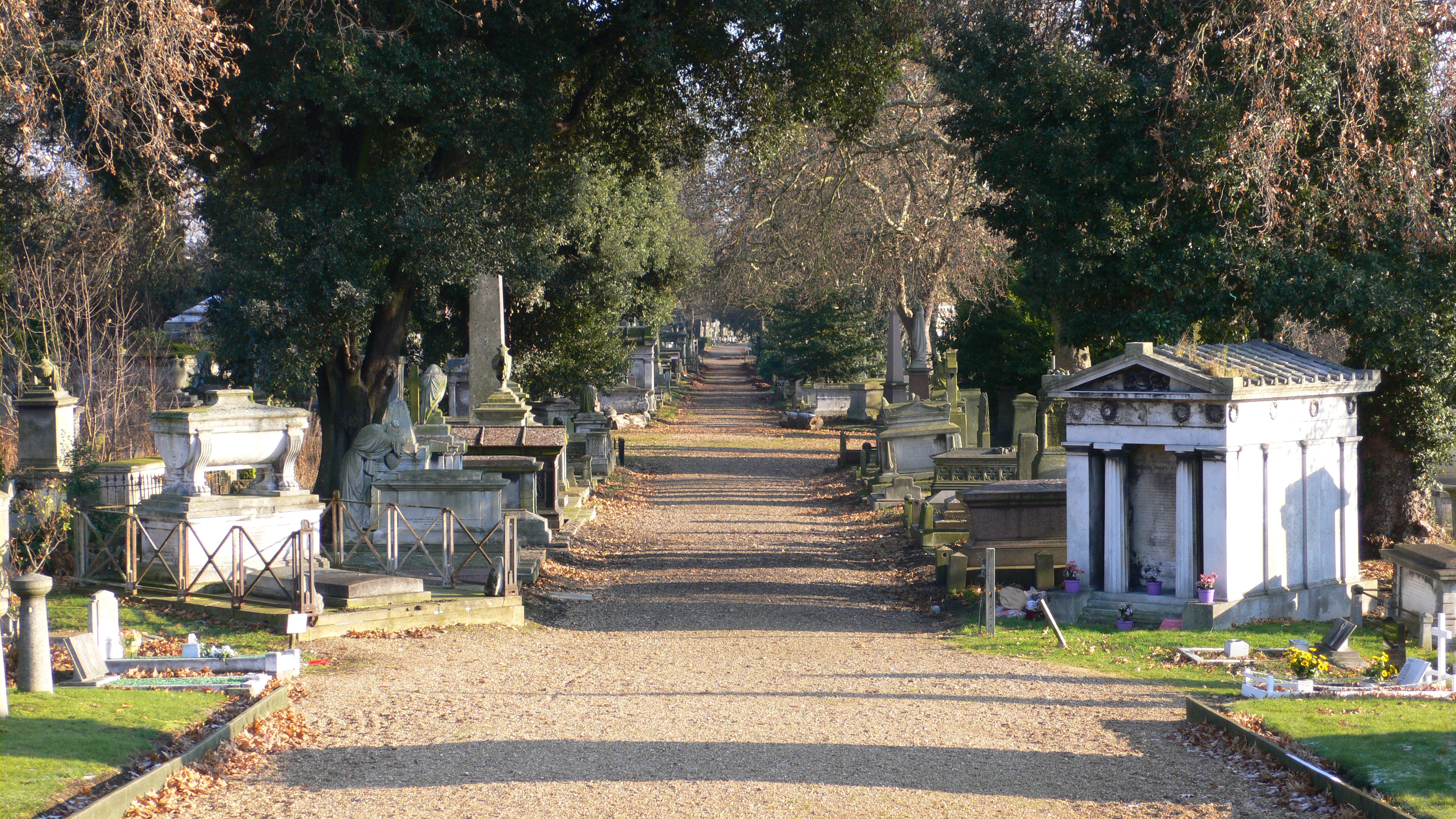
Kensal Green Cemetery: London's First Garden of the Dead
G. K. Chesterton captured something essential about Kensal Green in a single stanza. In 'The Rolling English Road,' he wrote of the place with the affectionate irreverence that only a true Londoner could manage. The cemetery has always invited that kind of response -- grand enough to impress, eccentric enough to charm, and old enough to have acquired the moss-covered melancholy that no landscape architect can design. Opened in 1833, Kensal Green was the first of London's 'Magnificent Seven' private cemeteries, the ring of grand burial grounds built when the city's ancient churchyards could no longer cope with the Victorian dead. It was inspired by Pere Lachaise in Paris, and its founders intended nothing less than a revolution in how London buried its people.
The Crisis of the Dead
By the 1830s, London's churchyards were a public health emergency. Bodies were stacked in shallow graves, disturbed by gravediggers making room for the next burial, and in some cases partially exposed by rain or subsidence. The smell was appalling. Disease was rampant. When the barrister George Frederick Carden visited Pere Lachaise Cemetery in Paris, he saw an alternative: a designed landscape on the outskirts of the city where the dead could rest in peace and the living could visit in dignity. Carden spent years lobbying for a similar institution in London, eventually securing a royal charter and establishing the General Cemetery of All Souls, Kensal Green, on 72 acres of ground in what was then the rural western edge of the city.
Monuments for Eternity
The cemetery's architecture reflects early Victorian ambition at full stretch. The entrance is flanked by Grecian-style buildings, and the main chapel draws on classical models that would not look out of place in Athens. But the private monuments tell a different story. Wealthy families commissioned elaborate Gothic structures -- canopied tombs, broken columns, weeping angels, and full-scale mausoleums -- that give the cemetery a character far more diverse than its Grecian facade suggests. The result is an architectural free-for-all that spans tastes, religions, and levels of ostentation. Some memorials are intimate and restrained. Others could house a small family. The cemetery also contains three chapels and serves all faiths, reflecting its founding principle of non-exclusion.
The Royals and the Radicals
Kensal Green attracted the prominent dead almost immediately. Two children of King George III -- Princess Sophia and the Duke of Sussex -- are buried here, along with the engineer Isambard Kingdom Brunel, the novelist Anthony Trollope, the mathematician Charles Babbage, and the novelist Wilkie Collins. The cemetery holds special areas dedicated to children, some of the most poignant corners of any London burial ground. The catacombs beneath the Anglican chapel contain shelves of lead-lined coffins, visible by flickering gaslight on the guided tours that the Friends of Kensal Green Cemetery conduct monthly. The range of people buried here is as wide as London itself -- empire builders and social reformers, soldiers and suffragists, the famous and the forgotten, all within the same walled acres.
Canals and Conservation
What sets Kensal Green apart from the other Magnificent Seven is its setting alongside the Grand Union Canal, which runs along the cemetery's northern boundary. The combination of water, mature trees, and weathered stone gives the grounds a stillness that the surrounding streets of North Kensington and Hammersmith do not prepare you for. The cemetery includes two conservation areas and is home to at least 33 species of bird, along with foxes, butterflies, and a rich population of invertebrates. It is listed Grade I on the Register of Historic Parks and Gardens and remains an active burial ground. New interments continue, and the cemetery's management balances the needs of the living with the claims of the dead and the demands of a landscape that, after nearly two centuries, has developed its own wild logic. The mausoleums lean. The paths narrow under encroaching green. Chesterton would still recognize the place.
From the Air
Kensal Green Cemetery is in northwest London (51.53N, 0.22W), bounded to the north by the Grand Union Canal and to the south by Harrow Road. From the air, the cemetery is visible as a large green rectangle between Kensal Green and Ladbroke Grove, distinguished from surrounding parkland by its dense pattern of monuments and mature trees. Nearest airports are London Heathrow (EGLL) 18km west and RAF Northolt (EGWU) 12km northwest. The Harrow Road entrance and the Grecian-style buildings are identifiable from lower altitudes.