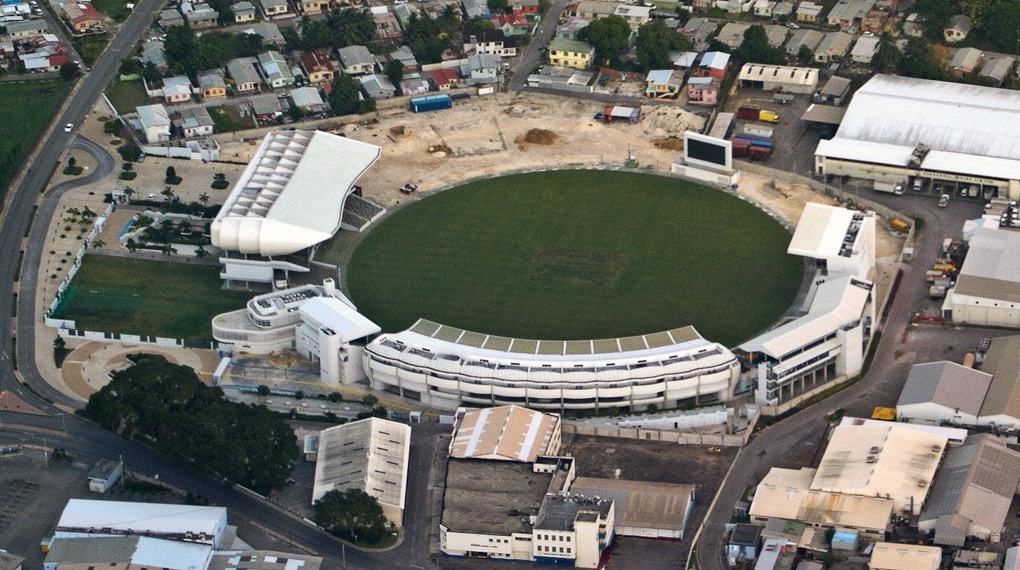
Kensington Oval: Cricket's Caribbean Cathedral
Adam Gilchrist walked to the crease on April 28, 2007, with a squash ball tucked inside his left glove. The improvised grip aid was his secret, and what followed was no secret at all: 149 runs, the highest individual score in a Cricket World Cup final, struck under darkening Barbadian skies that would eventually force the last three overs to be played in near-total darkness. The Kensington Oval had seen plenty of drama in its 125-year history, but the 2007 final, with Australia routing Sri Lanka as the light failed and 20,108 spectators strained to see, may have been its most cinematic. For a ground that began as a club field in western Bridgetown, the Oval had come a long way.
From Pickwick to Test Cricket
The Oval's history begins in 1882, when the Pickwick Cricket Club took formal ownership of the ground. Thirteen years later, it hosted its first international match, a visit by Slade Lucas's touring side in 1895. The first Test match arrived in January 1930, when the West Indies and England played to a draw. Since then, 43 Test matches have been played on the ground, with the West Indian team winning 21 of them, a home record that reflects both the quality of Barbadian cricket and the particular challenges the Oval presents to visiting sides. The island has produced a staggering concentration of world-class players. The Three Ws, Sir Frank Worrell, Sir Everton Weekes, and Sir Clyde Walcott, all played here, and stands at the ground bear their names alongside those of other legends: Sir Garfield Sobers, Wes Hall, Charlie Griffith, Gordon Greenidge, Desmond Haynes.
Coral Limestone and Bermuda Grass
Beneath the outfield lies ancient coral reef limestone, a geological inheritance that created headaches for groundskeepers dealing with Bridgetown's occasional torrential downpours. In 2004, the STRI construction team, fresh from rebuilding the outfield at Lord's Cricket Ground in London, was brought in to solve the drainage problem. They stripped the old sandy clay loam and replaced it with a layered system: 175 millimeters of amended root-zone, 125 millimeters of sand, a blinding layer, and a gravel drainage base. The grass chosen was Tifway 419 hybrid Bermuda, dense and disease-resistant, quick to recover from the punishment a cricket ball inflicts on turf. The pitch square received Princess Bermuda grass over a soil profile of 71 percent clay, 14 percent silt, and 14 percent sand, isolated during construction so it could cure before the outfield was completed.
A $45 Million Transformation
The 2007 Cricket World Cup demanded a stadium that Barbados did not yet have. The old Kensington Oval, beloved and ramshackle, was demolished after a final Test against Pakistan in June 2006, and Arup Associates from the United Kingdom led its redesign. The project cost BDS$90 million, roughly US$45 million, and took 20 months to complete. Roads were ripped up and repaved. Utility poles were replaced. The former stands, named for Challenor, Hall and Griffith, Hewitt, and the Three Ws, gave way to a modern stadium that retained most of those names. The Institution of Structural Engineers awarded it their 2008 prize for Sports or Leisure Structures, praising it as an outstanding addition to the Barbados skyline, already immensely popular with what they called the most enthusiastic cricket audience in the world.
Three Finals and a Homecoming
The rebuilt Oval proved worthy of its stage. After the 2007 World Cup final, it hosted the 2010 ICC World Twenty20 final, where Paul Collingwood's England beat Australia to claim their first global limited-overs trophy, Craig Kieswetter scoring 63 as man of the match. Then in June 2024, the ground hosted the T20 World Cup final again. India defeated South Africa by 7 runs, with Virat Kohli scoring 76 in what proved to be his final T20 international. Between the cricket, Rihanna performed her Loud Tour at the Oval on August 5, 2011, the Barbadian superstar's first concert in her home country. The Oval has also hosted football matches, hockey, inter-school athletics, and Miss Barbados pageants. A jacuzzi viewing area behind the stands lets fans watch from a pool, while a grassy hill beyond it provides space for picnics over a media bunker below.
From the Air
Located at 13.11°N, 59.62°W in the western part of Bridgetown, Barbados. The Oval is visible from altitude as a large stadium structure near the coast, distinguishable by its modern roof canopy and green outfield. It sits within the broader Bridgetown urban area, with the Careenage harbor visible to the east and the Garrison Savannah to the south. Grantley Adams International Airport (TBPB) lies approximately 8 miles to the east. Recommended viewing altitude: 3,000-5,000 feet for stadium detail and city context.