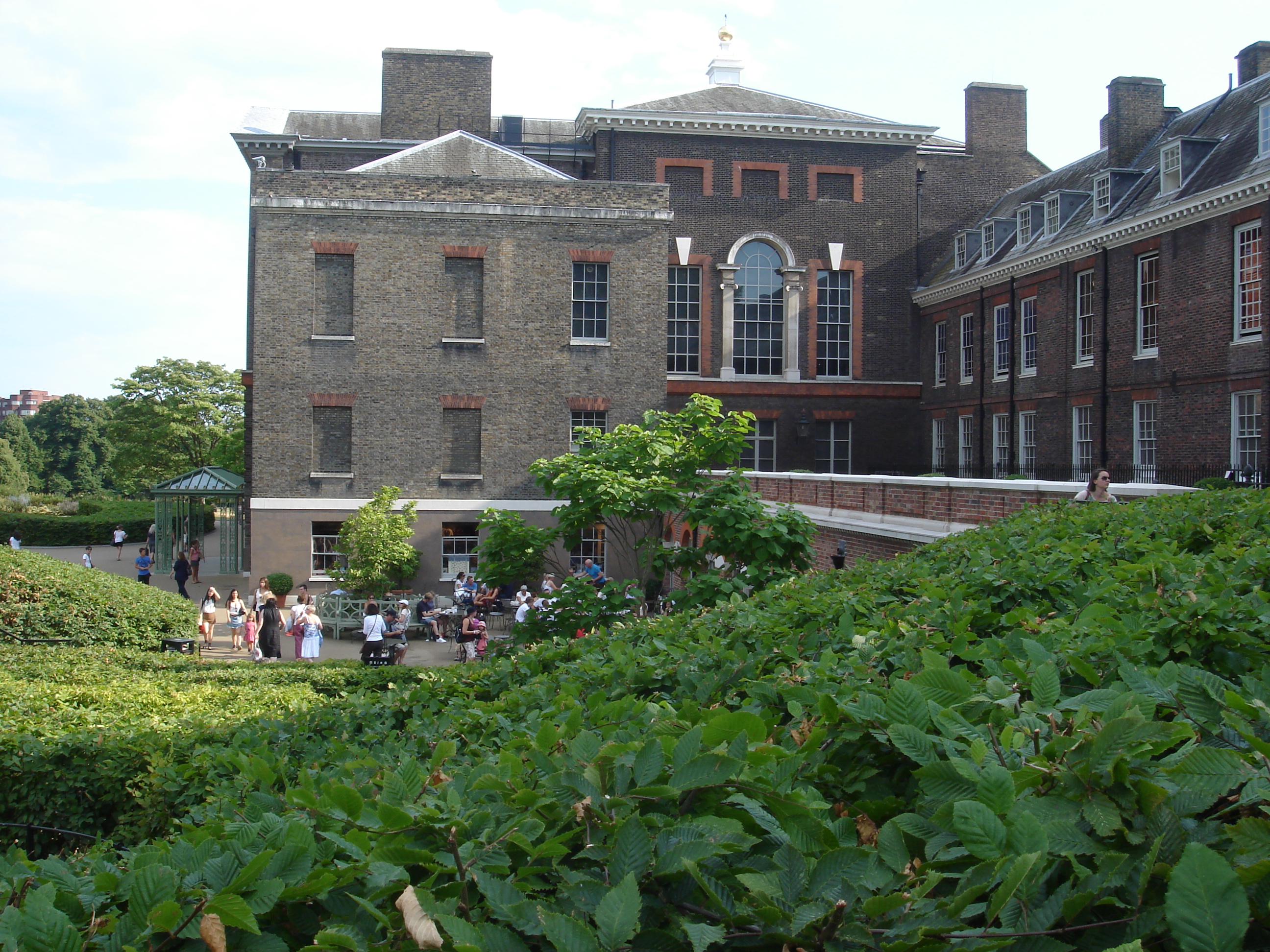
Kensington Palace: The Royal Residence That Rewrote the Rules
William III bought the house because the air at Whitehall was killing him. The king suffered from asthma, and the damp, smoky atmosphere of the old Palace of Whitehall on the banks of the Thames left him struggling to breathe. In 1689, he purchased Nottingham House, a Jacobean mansion in the then-rural village of Kensington, and commissioned Sir Christopher Wren to transform it into a palace. The air was cleaner. The gardens were ample. And the location, far enough from the city to offer escape but close enough for government business, established a pattern that Kensington Palace has followed for over three centuries: it is where the royal family goes to live something approaching a normal life, or at least their version of it.
Wren's Quiet Masterpiece
Christopher Wren's work at Kensington was deliberately modest by royal standards. William and Mary wanted a home, not a statement. Wren added the King's and Queen's State Apartments, the Orangery, and a clocktower, but the result was more country house than Versailles. This suited William, a practical Dutch Calvinist with little taste for ceremony. It also suited Mary, who threw herself into decorating the interiors and laying out the gardens, amassing a collection of Chinese and Delft porcelain that remains one of the palace's defining features. The couple's partnership was genuine if unusual -- Mary ruled as co-monarch in her own right, not merely as consort. When she died of smallpox at Kensington in December 1694, at the age of 32, William was devastated. He continued to live at the palace until his own death in 1702, after a fall from his horse at Hampton Court led to a broken collarbone and fatal fever. He was brought to Kensington Palace, where he died.
The Georgian Palace
Under George I and George II, Kensington Palace became the center of court life. George I commissioned William Kent to paint the ceilings and redesign the State Apartments, creating the elaborate interiors that visitors see today. The King's Staircase, with its trompe-l'oeil paintings depicting courtiers leaning over a balustrade, is Kent's most theatrical achievement at the palace. George II was the last reigning monarch to use Kensington as a primary residence. After his death in 1760, the palace passed from the center of power to its edges, becoming accommodation for members of the extended royal family rather than the seat of the sovereign. This shift proved permanent and gave Kensington its distinctive character: it is not a palace of state but a palace of domestic life, lived in by royals who are prominent but not ruling.
Victoria's Birthplace
On 24 May 1819, Princess Alexandrina Victoria was born at Kensington Palace. She spent her childhood here in what she later described as a 'rather melancholy' environment, raised under the strict 'Kensington System' devised by her mother and her mother's comptroller, Sir John Conroy, which kept the young princess isolated from other children and under constant supervision. On 20 June 1837, the 18-year-old Victoria was awakened at the palace and told that her uncle William IV had died. She was queen. One of her first acts was to request a room of her own -- the first time in her life she had slept outside her mother's bedroom. Victoria moved to Buckingham Palace within weeks, but Kensington had shaped her. The palace where she was born is now the site of a permanent exhibition about her early life.
The Modern Palace
Today, Kensington Palace serves a dual function. The State Rooms, managed by Historic Royal Palaces as an independent charity, are open to the public and display paintings and artifacts from the Royal Collection. The remainder of the palace is private accommodation for several members of the royal family, most notably the Prince and Princess of Wales. The palace became the center of an extraordinary public outpouring in August 1997, when Princess Diana, who had lived at Kensington since her marriage in 1981, died in a car crash in Paris. The gates of the palace were buried in flowers, candles, and handwritten messages in a spontaneous display of grief that surprised the nation and the royal family alike. Kensington Palace sits within Kensington Gardens, a manicured landscape that runs seamlessly into Hyde Park to the east. The palace's red-brick facade, visible through the trees, announces itself modestly. It is not the grandest royal residence, nor the oldest, nor the most visited. But it may be the most human -- a place where monarchs were born, marriages failed, and the gap between royal life and ordinary life narrowed, however slightly, across three hundred years.
From the Air
Kensington Palace is situated in Kensington Gardens, central-west London (51.505N, 0.188W). From the air, the red-brick palace is visible on the western edge of Kensington Gardens, which merges with Hyde Park to the east. The Round Pond, directly east of the palace, is a useful aerial landmark. The palace is approximately 2km west of Buckingham Palace and 1km south of Notting Hill Gate. Nearest airports are London Heathrow (EGLL) 20km west and London City (EGLC) 15km east.