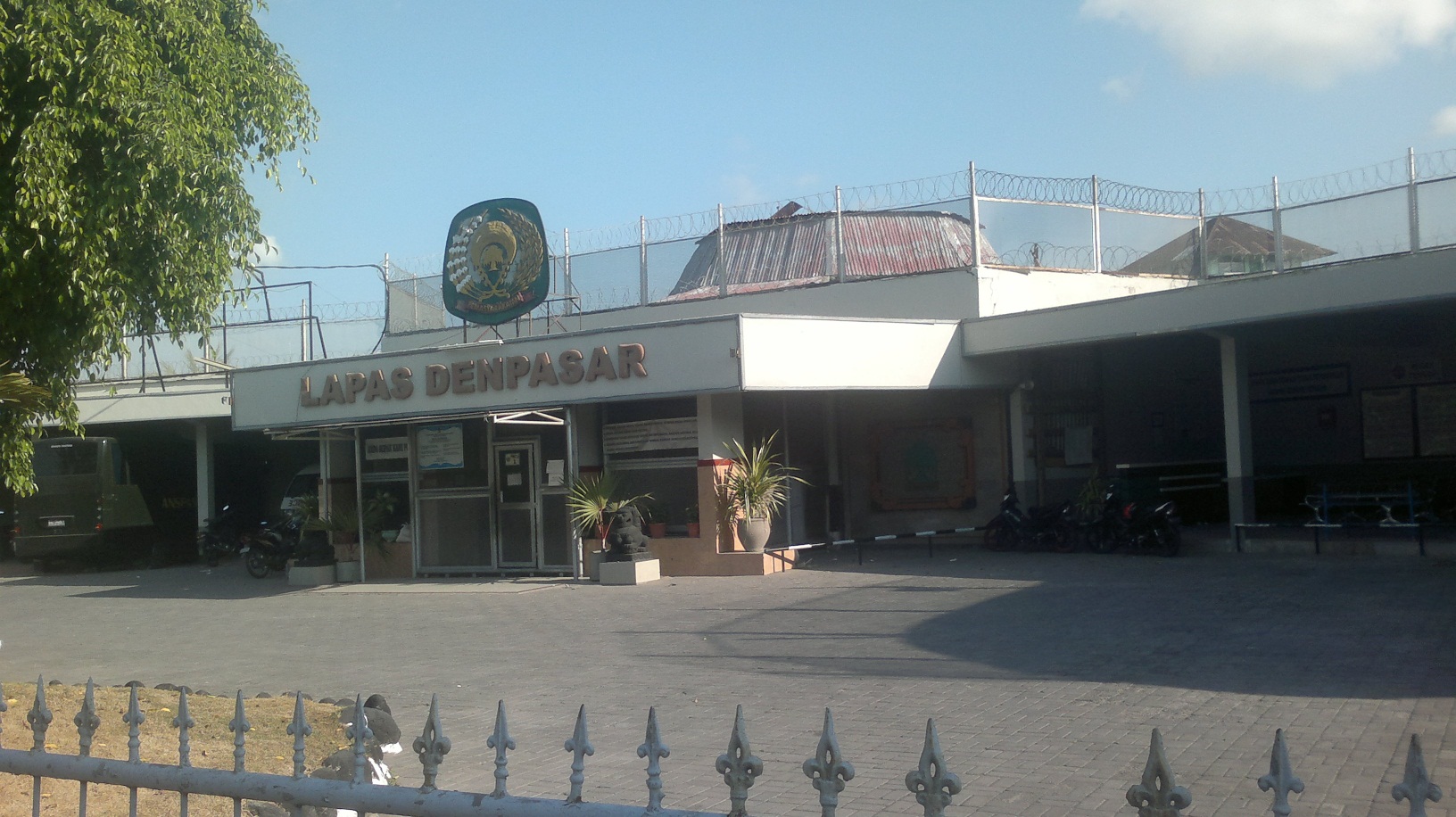
Hotel K
The nickname says it all. Inmates call it Hotel K, and the irony cuts both ways. Kerobokan Prison sits just four kilometers from the surf breaks of Canggu, in the heart of Bali's tourist belt, on an island that millions visit each year for its temples, rice terraces, and beach clubs. Behind its concrete walls, a different Bali persists: overcrowded cellblocks, gang territories, and a population dominated by drug offenders serving sentences that range from months to death. More than 90 percent of the prisoners are Indonesian, and roughly four out of five were convicted on drug charges. The daily budget for each inmate is 15,000 rupiah, barely more than a dollar.
The Names That Made the Headlines
Kerobokan's notoriety owes less to its architecture than to the foreigners who have passed through its gates. Schapelle Corby, the Australian woman convicted in 2005 of smuggling marijuana into Bali, served nine years of a twenty-year sentence before her parole in February 2014. Her case became a national obsession in Australia, dividing public opinion on whether she was guilty at all. The Bali Nine, a group of Australians arrested in 2005 for attempting to smuggle heroin through Denpasar Airport, brought a different kind of attention. Two of them, Andrew Chan and Myuran Sukumaran, were executed by firing squad in 2015 despite international appeals for clemency. Sukumaran had become a respected artist during his imprisonment, and his paintings from Kerobokan became symbols of the broader debate over the death penalty. Lindsay Sandiford, a British woman convicted of trafficking cocaine, received a death sentence in 2013 and remains on death row. And before any of them, the 2002 Bali bombers Amrozi bin Nurhasyim and Imam Samudra were held here before their execution for the Kuta nightclub attacks that killed 202 people.
A Compound Under Pressure
Built in 1979, Kerobokan was never designed for the population it now holds. The prison's history of violence is long and complicated, involving clashes between rival gangs and confrontations between inmates and guards. In December 2015, a riot between rival factions left two inmates dead and prompted police to transfer more than a hundred prisoners to other facilities across Bali. The overcrowding fuels tensions that simmer beneath a surface of uneasy daily routine. Drugs circulate inside the walls despite the severe sentences handed down for trafficking outside them. Foreign prisoners, a small minority of the total population, navigate a world shaped by hierarchies they did not build, in a language many of them do not speak.
Tunnels, Ladders, and Hacksaws
Kerobokan's escapes read like the plot outlines of films no one would believe. On 19 June 2017, four prisoners from four different countries tunneled their way out. Shaun Davidson of Australia, Dimitar Nikolov Iliev of Bulgaria, Saye Mohammed Said of India, and Tee Kok King of Malaysia crawled through a passage just 50 centimeters by 75 centimeters wide and 15 meters long, dug beneath the prison wall. Davidson was never recaptured. Later that year, an American prisoner named Christian Beasley and another inmate reportedly scaled the wall with a ladder, though some accounts claim they cut through the roof with a hacksaw instead. The conflicting reports only add to the prison's reputation as a place where the official story and the actual story rarely align.
Paradise and Its Shadow
Kerobokan exists in a kind of geographic absurdity. Tourists on rented scooters pass its walls on the way to beach clubs and yoga retreats. The prison's proximity to Bali's most popular neighborhoods makes it impossible to ignore, yet easy to overlook. It is a reminder that the island's economy, so dependent on tourism and its image of tropical serenity, also contends with the drug trafficking that tourism corridors attract. Indonesia's drug laws are among the harshest in the world, and Kerobokan is where those laws become tangible. For the families of foreign inmates, the prison is not a headline but a visiting room, a legal appeal, a collect call from the other side of paradise.
From the Air
Located at 8.673°S, 115.168°E in the Kerobokan district of northern Kuta, Bali. The prison compound is visible from low altitude as a walled rectangular complex amid dense residential development. Nearest airport: Ngurah Rai International Airport (WADD), approximately 7 nm south. Best viewed below 2,000 ft AGL approaching from the coastline. The nearby surf beaches of Canggu and Seminyak provide orientation landmarks.