Keumalahayati
In 1599, the English explorer John Davis recorded a curious detail about the Aceh Sultanate: 'a woman is Admiral, for [the sultan] will trust no men.' That single sentence, buried in a period account of Southeast Asian trade, is the only contemporary European source confirming what Acehnese tradition has long celebrated -- that a woman commanded one of the most powerful navies in the region during an era when European women could not hold military rank at all. The figure who emerged from this historical thread is Keumalahayati, or Malahayati, now honored as a National Hero of Indonesia. Her story blends documented events, oral tradition, and literary invention in ways that scholars still work to untangle. What is clear is that someone remarkable stood at the center of Aceh's naval power at the turn of the seventeenth century.
History, Legend, and a 1935 Novel
Honesty about the sources matters here. The name 'Keumalahayati' does not appear in any period document. Its earliest known appearance is in a 1935 work of fiction, Oude Glorie, written by Marie Van Zeggelen, the Dutch wife of a colonial official. Decades after that novel's publication, claims surfaced that the name had survived in Acehnese oral tradition. What the historical record does confirm is that a female admiral existed -- John Davis noted it, and the events attributed to her align with documented encounters between Aceh and European powers. The daughter of Admiral Machmud Syah, she is said to have graduated from the Aceh Royal Military Academy before being appointed First Admiral by Sultan Alauddin Mansur Syah. Her forces were known as the Inong Balee -- an army drawn from Aceh's widows, women who had already lost husbands to the sultanate's wars.
The Dutchman Who Did Not Leave Alive
Cornelis de Houtman arrived at the port of Aceh in 1599 already carrying a reputation for trouble. His earlier expedition had clashed violently with the Banten Sultanate in northwest Java. The Sultan of Aceh initially received him peacefully, but de Houtman insulted his host -- the sources do not specify exactly how -- and decided to attack. According to Acehnese accounts, Malahayati led the Inong Balee in response. After several battles, de Houtman was killed on September 11, 1599. His death is documented in Dutch records, though those records do not name his killer. The following year, another Dutch commander, Paulus van Caerden, robbed an Acehnese merchant vessel of its pepper cargo. Malahayati responded by ordering the arrest of Dutch Admiral Jacob van Neck. The escalation forced the Netherlands to negotiate, and Maurits van Oranje -- the Dutch head of state -- sent emissaries with a formal letter of apology and 50,000 gulden in compensation.
A Queen's Letter and an Admiral's Negotiation
England took notice. In June 1602, rather than risk the fate of de Houtman, the English chose diplomacy. James Lancaster carried a letter from Queen Elizabeth I to the Sultan of Aceh, seeking permission to trade through the Malacca Strait. According to tradition, it was Malahayati who led the negotiations with Lancaster -- the admiral of Aceh's navy sitting across the table from the representative of one of Europe's rising powers. The agreement opened the English trade route to Java and allowed England to establish merchant offices in Banten. Elizabeth I rewarded Lancaster with a knighthood for his successful diplomacy. The encounter illustrates Aceh's position in the late sixteenth century: a kingdom powerful enough that European nations needed its permission to access Asian trade routes, and confident enough to delegate that authority to a woman.
Death at Krueng Raya
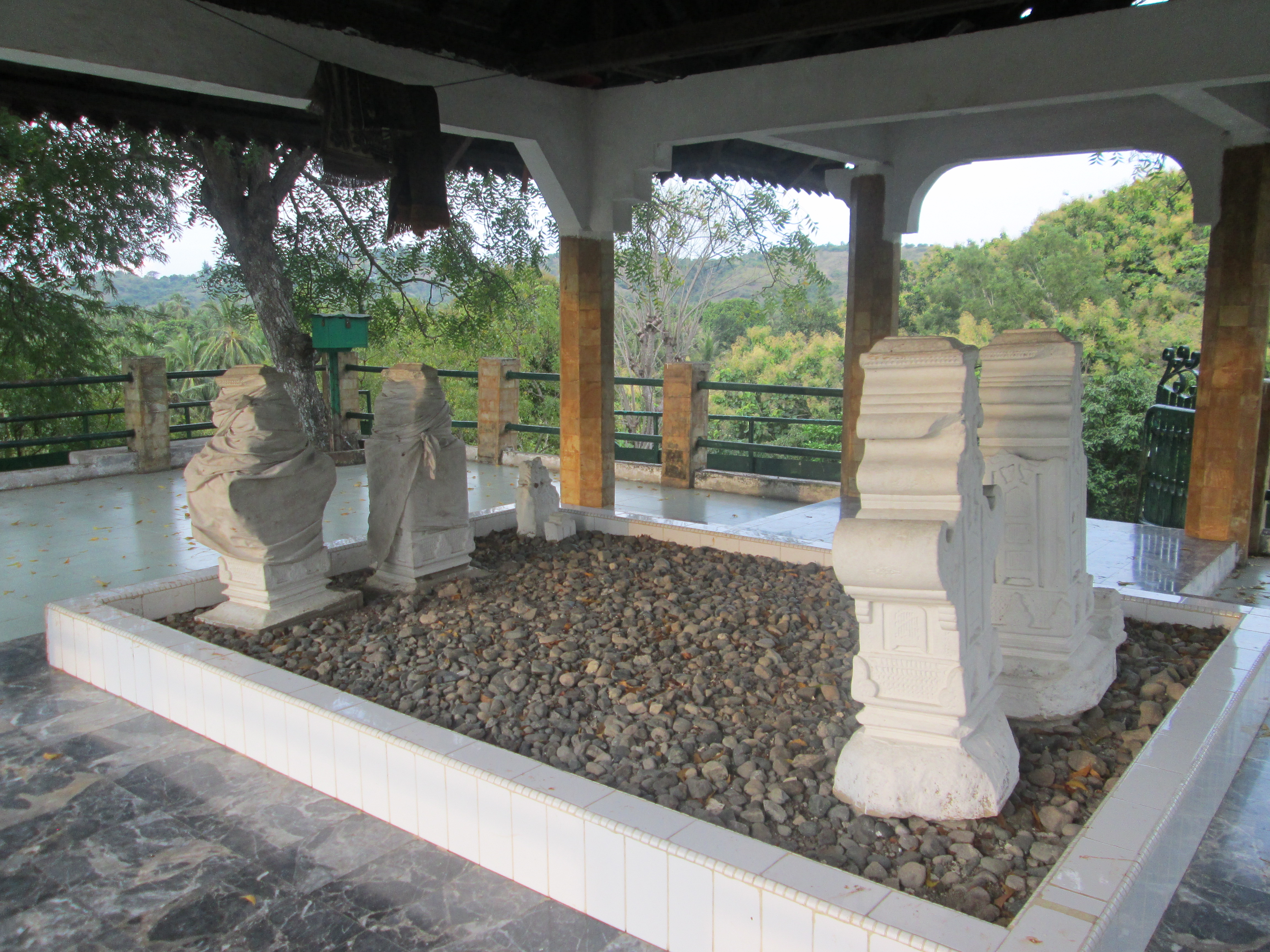
Malahayati's death came in combat, defending Teuluk Krueng Raya against a Portuguese fleet. She was buried on the slope of Bukit Kota Dalam, near a small fishing village about 34 kilometers from Banda Aceh. The site, in Desa Lamreh within Aceh Besar district, is near what is now called Malahayati Port -- a naval installation that bears her name. Across Sumatra, universities, hospitals, and roads have also been named for her. The Indonesian navy's KRI Malahayati carries her legacy to sea. In November 2017, President Joko Widodo formally designated her a National Hero of Indonesia, cementing a figure whose historical contours remain partially obscured into the official narrative of Indonesian identity.
The Weight of What We Cannot Confirm
Malahayati's story raises a question that runs through much of Southeast Asian history: how do you honor a figure when the written record was kept largely by the colonizers who had every reason to minimize her? John Davis's offhand remark -- 'a woman is Admiral' -- survives because a European wrote it down. The Acehnese oral traditions that may have preserved more detailed accounts were not transcribed until centuries later, after a Dutch novelist had already fictionalized the story. None of this diminishes the documented facts: a female admiral commanded Acehnese naval forces during a period of active warfare against European powers, Dutch records confirm their commander was killed at Aceh in 1599, and diplomatic negotiations followed. Whether every detail attributed to Keumalahayati is historically precise, the broader reality she represents -- women holding genuine military authority in a sixteenth-century Islamic kingdom -- is extraordinary enough on its own terms.
From the Air
Located at 5.59N, 95.53E on the coast of Aceh, northern Sumatra. The area around Krueng Raya and Desa Lamreh, where Malahayati's burial site is located, lies approximately 34 km east of Banda Aceh along the coast. Malahayati Port is visible from altitude as a naval installation along the bay. Nearest airport: Sultan Iskandar Muda International Airport (WITT), approximately 40 km west. Best viewed from 3,000-5,000 feet AGL, where the coastline, the bay at Krueng Raya, and the fishing villages along the shore are visible. The Strait of Malacca stretches to the northeast.