Key West: The End of the Road and the Beginning of Everything
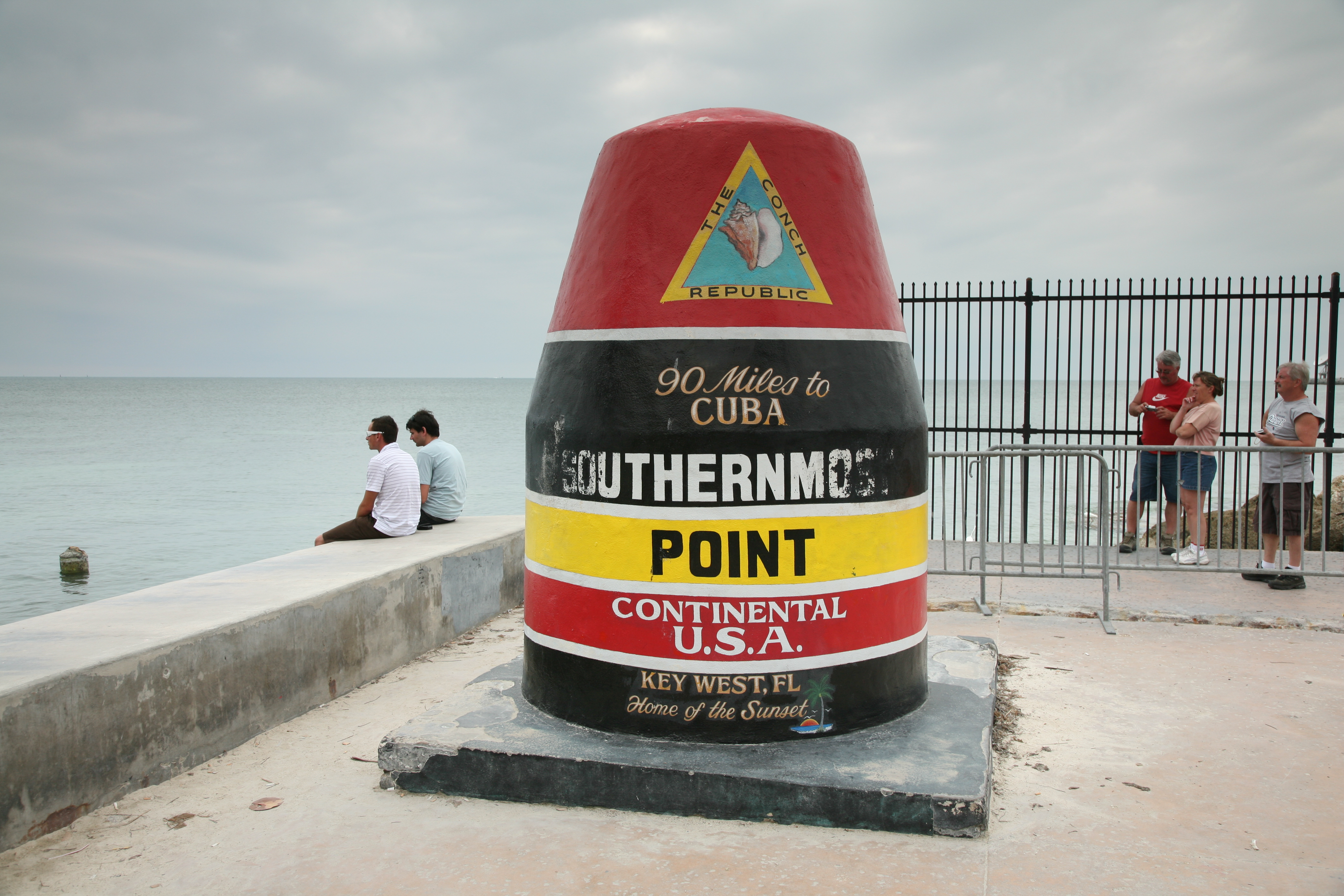
Key West is as far as you can drive in the continental United States and still be in the United States. The island sits 90 miles from Cuba, closer to Havana than to Miami, at the end of the Overseas Highway that crosses 42 bridges to connect the Florida Keys. The isolation created a culture unlike anywhere else in America: tolerant, eccentric, vaguely Caribbean, thoroughly committed to enjoying life. Writers came - Hemingway, Tennessee Williams - drawn by the light and the liberty. Presidents came too, seeking fishing and escape. The island has been pirate haven, wrecking capital, naval base, and tourist destination. The southernmost point, marked by a concrete buoy perpetually surrounded by tourists waiting for photos, represents one ending and many beginnings.
The Island
Key West is a coral and limestone island four miles long and one mile wide, the last inhabited key before the empty Dry Tortugas. The Spanish called it Cayo Hueso (Bone Key) for the indigenous remains found there; English speakers corrupted this to Key West. The location made it strategic - controlling the Florida Straits meant controlling Caribbean shipping lanes. The settlement grew from wrecking (salvaging shipwrecks on the treacherous reef), sponging, fishing, cigar manufacture, and eventually naval presence. When the rest of Florida was swamp and scrub, Key West was a city - briefly the largest in Florida, wealthy from the sea's misfortunes.
The Characters
Ernest Hemingway lived here from 1931 to 1939, writing 'For Whom the Bell Tolls' and 'To Have and Have Not' in a studio above his garage. His house is now a museum; descendants of his polydactyl cats still roam the grounds. Tennessee Williams wrote much of 'A Streetcar Named Desire' here. Harry Truman established the 'Little White House' where he spent 175 days during his presidency. The list continues: Jimmy Buffett built an empire on Key West's vibe; treasure hunter Mel Fisher recovered the Atocha's gold; writers, artists, and escapists of every type found permission to be themselves. Key West's tolerance attracted those unwelcome elsewhere.
The Culture
Key West was accepting of gay residents decades before most of America. The 'Conch Republic' - declared in 1982 as a protest against federal roadblocks - expresses the island's separatist streak. The nightly sunset celebration at Mallory Square has evolved into organized tourism but began as hippie happening. Fantasy Fest in October rivals New Orleans for uninhibited costume revelry. The mix is Caribbean-influenced, nautical, humid, and slightly seedy - Duval Street combines tourist shops, bars, and galleries in cheerful chaos. The culture is tolerance as economic strategy: everyone's money is welcome, and everyone's identity accepted.
The Connection
The Overseas Highway, completed in 1938, finally connected Key West to the mainland. Henry Flagler's railroad had reached the island in 1912, an engineering miracle of bridges across open water, only to be destroyed by the 1935 Labor Day Hurricane. The highway used the railroad's route and bridges, enabling auto traffic that transformed Key West from isolated outpost to accessible destination. Today the four-hour drive from Miami crosses 42 bridges, including the Seven Mile Bridge whose original span is now a pedestrian fishing pier. The highway made Key West accessible while preserving its sense of arrival at somewhere genuinely different.
Visiting Key West
Key West is located at the end of U.S. Route 1, approximately 160 miles southwest of Miami via the Overseas Highway. The drive is scenic and slow - allow four hours minimum. Flights serve Key West International Airport from several mainland cities. The island is walkable; bicycles and scooters are popular. Duval Street runs the island's length, concentrating tourist activity. The Hemingway Home, Truman Little White House, and Fort Zachary Taylor offer historical context. Sunset at Mallory Square is obligatory. Hotels range from luxury to basic; reservations are essential in high season. The experience is heat, humidity, tolerance, and the strange satisfaction of having reached the end of the road.
From the Air
Located at 24.56°N, 81.78°W at the end of the Florida Keys. From altitude, Key West appears as the largest island in a chain arcing southwest from the Florida mainland. The Overseas Highway is visible as a thread connecting islands, the bridges spanning blue water dramatically apparent. Cuba lies 90 miles to the south, invisible beyond the horizon but geographically closer than Miami. The reef system parallels the keys offshore, visible as lighter water. The Naval Air Station occupies part of the island. The cruise ship terminal shows large vessels when ships are docked. What appears from altitude as a modest island at the end of a remarkable road is, at ground level, the end of continental America and the beginning of something stranger.