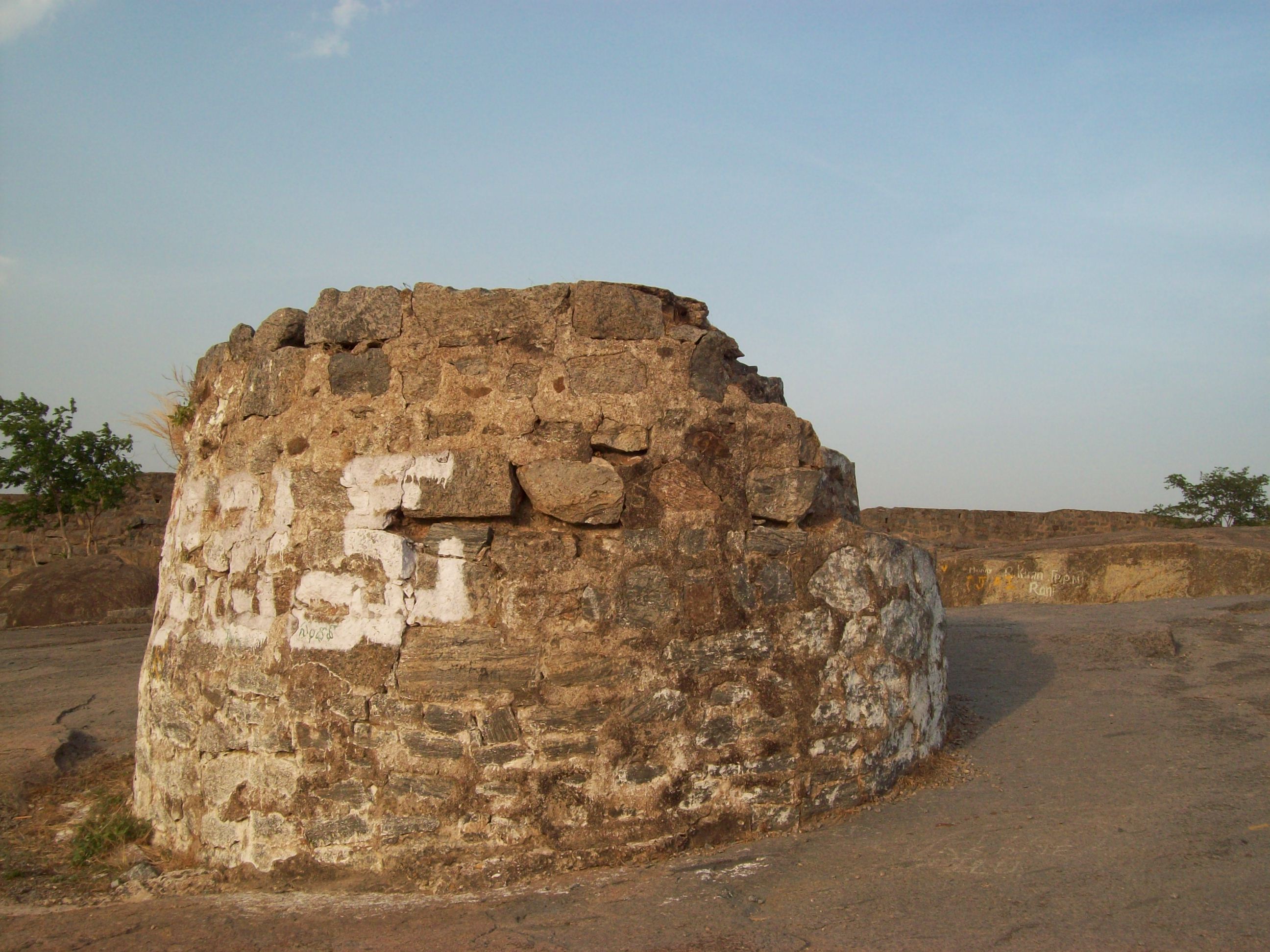
Khammam Fort
Three farmers digging in a field near the village of Velugumatla struck something unexpected -- a buried treasure. With permission from their Kakatiya overlords, Ranga Reddy, Laxma Reddy, and Velma Reddy used that fortune to build a fort on a massive granite hill. The year was 950 CE, and the structure they raised in mud would grow over the next millennium into one of Telangana's most formidable strongholds. Known in ancient inscriptions as "Khammamettu" -- from "Kambham mettu," meaning hill in Telugu -- Khammam Fort has been besieged, conquered, rebuilt, and contested by nearly every power that swept across the Deccan.
Stone Upon Stone, Dynasty Upon Dynasty
The mud fort that the three farmers built was completed by 1006 CE, and the Reddy dynasty held it for three hundred years. What followed reads like a relay race of conquest. After the fall of the Kakatiya Empire, seventy-four feudal kings fought for a decade under the leadership of Musuruli, attempting to reunify Telugu lands. Odra Gajapathi Raja captured the fort in 1424, and warriors like Kapa Naidu and Pola Naidu of the Musunuri Nayaks took over its administration. By the early sixteenth century, a ruler named Sitapati Raju -- who also bore the Muslim title "Shitab Khan" -- governed from the fort and served as regent of Warangal with Bahmani support. According to the Krishnazilla Manual of 1883, he commanded a force of twelve thousand archers. Sultan Quli Qutb Mulk defeated him in 1531, bringing the fort under Qutb Shahi control. Aurangzeb seized it in 1687, and by 1722, the Nizams claimed it for themselves.
A Fortress Built to Endure
Khammam Fort sprawls across four square kilometers atop its granite hill, surrounded by walls that rise between forty and eighty feet high and measure fifteen to twenty feet thick. Invading armies considered it practically impregnable. The fort has ten large gates, the most imposing being the Khilla Darwaza -- a thirty-foot-tall entrance flanked by cannons -- and the Pattar Darwaza, a lion gate that serves as the largest. Balconies and windows along the walls once provided artillery positions; the fort could mount sixty cannons simultaneously. Fifteen bastions, constructed with double walls to absorb cannonball impacts, guard the perimeter. The massive stone blocks used in construction -- some as long as ten feet -- were fitted without mortar or limestone, their weight and precision alone holding them in place. Elephants and men hauled them into position, and the result still astonishes visitors a thousand years later.
Water, Worship, and Secret Passages
Survival during a siege depends on water, and the builders of Khammam Fort understood this well. During the Qutb Shahi period, Zafar-ud-Doula constructed a massive stepped well -- sixty feet long and twenty feet wide, with a bridge across it for men and horses. Known today as the Zafar Well, it anchored an elaborate rainwater catchment system with channels, stone steps, and guard towers designed to capture and store monsoon rains. Inside the fort walls, Hindu and Islamic heritage share space without contradiction. The Ganapeshwara Temple preserves idols of Shiva, Vishnu, and Surya that Sitapati Raju buried to protect them from destruction -- unearthed centuries later during excavations. The Lakshmi Narasimha Swami temple and Sri Ramalingeshwara temple predate the fort itself, ranking among Telangana's oldest Hindu shrines. Alongside them stands the Khilla Masjid, built during Qutb Shahi rule. Local folklore insists that secret tunnels run all the way to Warangal Fort, with passages ten feet in diameter whose entrances have been sealed by time.
A Heritage in the Balance
From the top of Khammam Fort, the modern city spreads out below in every direction, a reminder that the hill which once made the fortress impregnable has become prime real estate. Encroachment presses against the fort walls. Houses crowd into areas that were once defensive perimeters. The seven iron cannons that once guarded the ramparts lie scattered and neglected atop the hill. A stone gallows platform -- which locals call "Nethi Bhavi," meaning ghee well, because of its well-like shape -- stands visible from across the city, a stark reminder of the justice once administered here. In 2005, the Tourism Department and Archaeological Survey of India installed railings and carved steps for the fort's thousandth anniversary celebrations. Rock climbing events are held on Tourism Day, and festivals mark national holidays. But the fort's survival depends on something more sustained than annual celebrations -- it requires the kind of commitment that three farmers with a buried treasure showed a millennium ago.
From the Air
Located at 17.245N, 80.147E in the heart of Khammam city, Telangana. The fort sits atop a prominent granite hill visible from altitude. The surrounding terrain is relatively flat Deccan plateau with the Munneru River nearby. Nearest airport: Vijayawada Airport (VOBZ), approximately 130 km south. Rajahmundry Airport (VORY) is about 180 km east. The fort's hilltop position and surrounding city are identifiable from cruising altitude in clear conditions.