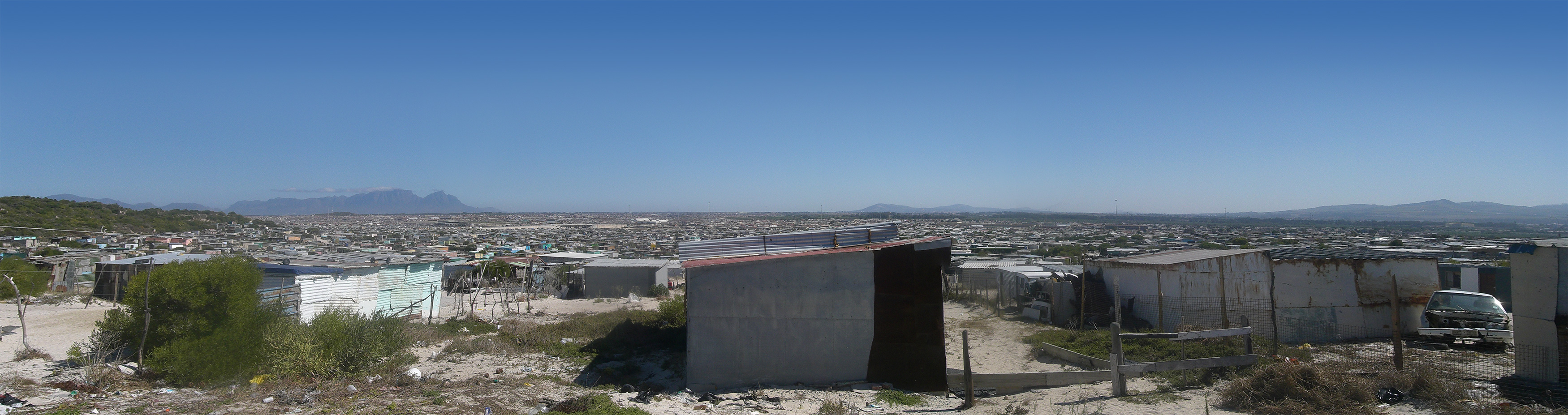
Khayelitsha
The name means "new home" in isiXhosa, and it was chosen with the particular cruelty of bureaucratic euphemism. Khayelitsha was established in 1985, during the last decade of apartheid, as a designated area for Black labourers working in Cape Town -- people who were forcibly relocated to the windswept Cape Flats, far from the city centre and the economic life they helped sustain. What the apartheid planners did not anticipate was that the community they tried to contain would build something of its own. Today, Khayelitsha is one of the largest townships in South Africa, home to an estimated 400,000 or more residents, and it pulses with an energy that no amount of historical injustice has managed to suppress.
Built on Sand, Built to Last
Khayelitsha sprawls across the Cape Flats southeast of Cape Town, next to the N2 highway that connects the city to George and the Garden Route. Cape Town International Airport is nearby, and the irony is not lost on residents: planes carrying tourists to wine country pass directly over a community that was deliberately placed out of sight. The township sits on the sandy, low-lying terrain of the Flats, where winter rains bring flooding and summer brings the relentless southeasterly wind that Capetonians call the Cape Doctor. The landscape is flat, the housing dense, a mix of formal brick structures and corrugated-iron shacks that has evolved organically as the population has grown. Metrorail's Central Line connects Khayelitsha to central Cape Town, though the journey takes just under an hour and trains suffer from extreme overcrowding, with commuters sometimes forced to sit on rooftops or hang between carriages.
Lookout Hill and the View That Tells the Story
The highest point in Khayelitsha is Lookout Hill, a wooden viewing platform built on the largest sand dune on the Cape Flats. From here, the full scope of the township unfolds: the dense grid of Khayelitsha stretching in one direction, the neighbouring township of Mitchell's Plain in another, and the shoreline of False Bay glinting in the distance. The adjoining Lookout Centre houses a Cape Town Tourism information office, locally owned art and craft shops, an exhibition room, and an amphitheatre for cultural events. It has become a gathering point for township tours that bring visitors into Khayelitsha, offering a starting point for understanding the community's scale and complexity. The platform itself sometimes lacks a few planks, but the view is undiminished -- and what it reveals is not just a township, but a city within a city.
The Township Economy at Street Level
Walk through Khayelitsha and the informal economy is everywhere. Street vendors sell amagwinya -- the deep-fried dough balls known in Afrikaans as vetkoek -- alongside chicken feet and cold drinks. The smell of cooking oil and spiced meat drifts from roadside stalls. Khayelitsha Mall provides a more formal retail anchor, but it is the sidewalk entrepreneurs who define the commercial rhythm of the place. Minibus taxis, recognizable by their insistent hooting, provide the connective tissue of daily transport, weaving through the township's streets in a system that is cheap, surprisingly reliable, and occasionally hair-raising. Township bed and breakfasts have begun to emerge, offering tourists the chance to stay overnight and experience Khayelitsha from the inside, sleeping in redecorated structures that blend local hospitality with basic tourist comforts.
Resilience as Culture
Khayelitsha's story cannot be told without acknowledging both its origins in forced removal and the vibrant community that exists despite them. The township has produced musicians, artists, activists, and entrepreneurs who have shaped South African culture far beyond the Cape Flats. Community organizations work on everything from youth development to HIV/AIDS response to crime reduction. Cultural events at the Lookout Centre amphitheatre bring together musicians, dancers, and storytellers. The challenges are real -- poverty, crime, inadequate infrastructure, and the lingering spatial injustice of apartheid planning -- but so is the creativity with which residents navigate them. Khayelitsha is not a place defined solely by its difficulties. It is a place where people have taken a forced relocation and, across two generations, turned it into a home that is genuinely their own.
From the Air
Located at 34.04S, 18.68E on the Cape Flats southeast of Cape Town. The dense urban grid of the township is clearly visible from altitude, distinct from the surrounding sandy terrain. Cape Town International Airport (FACT) is immediately to the northwest. False Bay coastline is visible to the south. The N2 highway runs along the northern edge. Recommended viewing altitude: 3,000-5,000 ft to appreciate the township's scale against the Cape Flats landscape.