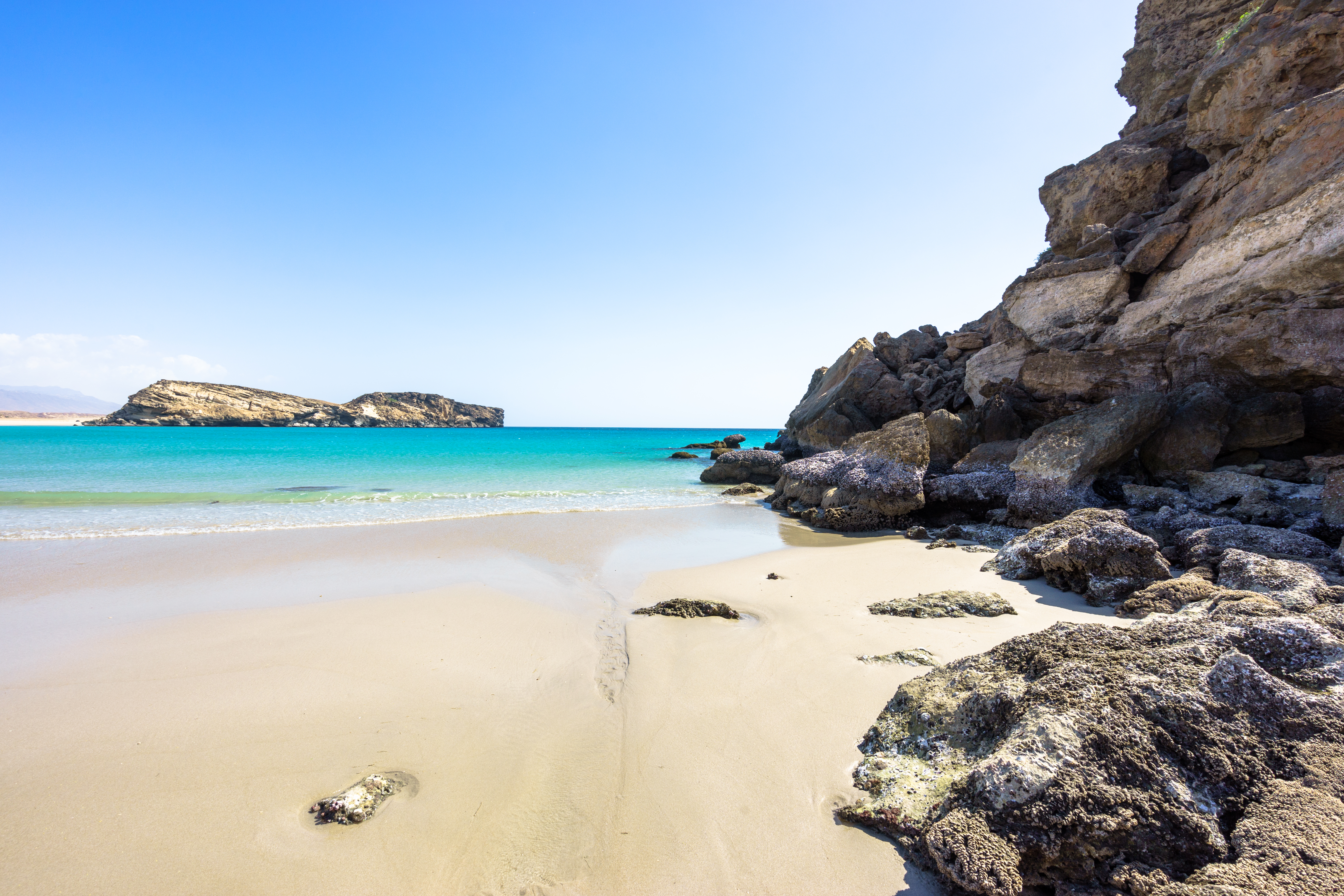
Khor Rori
Frankincense was the oil of the ancient world -- burned in Roman temples, Egyptian embalming chambers, and Mesopotamian palaces, so valuable that the Magi carried it alongside gold. And for centuries, much of it left the Arabian Peninsula from a single fortified port on Oman's Dhofar coast. Khor Rori, known in antiquity as Sumhuram, was founded in the 3rd century BC by the Kingdom of Hadramaut for one purpose: to control the export of the most precious resin on earth. Today its limestone walls overlook a shallow lagoon where greater flamingos stand in pink clusters, and frankincense trees still grow among the ruins.
A Port Built on Resin and Ambition
The Kingdom of Hadramaut, based in what is now eastern Yemen, established Sumhuram as a colonial outpost on the Dhofar coast. The motivation was strategic: the hills of Dhofar were the primary source of Boswellia sacra, the frankincense tree, and whoever controlled the port controlled the export. Inscriptions found at the site confirm the town was founded on royal initiative and settled by Hadrami emigrants who built a fortified settlement on the eastern bluff overlooking the khor -- the Arabic word for a coastal inlet. The port gave Hadramaut direct access to Indian Ocean trade routes, connecting it to markets in India, the Mediterranean, and East Africa. For roughly seven hundred years, from the 3rd century BC to the 5th century AD, Sumhuram was one of the most important nodes in the global frankincense trade.
The Port the Romans Knew
Most scholars identify Khor Rori with Moscha Limen, the frankincense-exporting harbor described in the Periplus Maris Erythraei, a 1st-century Greek maritime guide to the trade routes of the Red Sea and Indian Ocean. The Periplus described a port in this region where frankincense was gathered and loaded onto ships bound for distant markets. Archaeological evidence supports the identification: excavations by the American Foundation for the Study of Man in the early 1950s, and by the Italian Mission to Oman since 1994, have uncovered the full ground plan of the settlement and artifacts attesting to maritime contacts stretching from the Hadrami homeland to India and the Mediterranean. Roman and Indian goods have been found in the ruins, confirming that Sumhuram was not an isolated outpost but a hub in a web of long-distance commerce that linked empires.
Stone Walls Above a Dying Lagoon
What makes Khor Rori visually striking today is the contrast between its ruined walls and the natural landscape surrounding them. The fortified settlement sits on a bluff above the khor, a shallow lagoon that was once an open estuary connecting to the Arabian Sea. Over the centuries, a sandbar gradually sealed the inlet, cutting off the port from the ocean that had been its reason for existence. By the 5th century, the estuary had silted up enough to strangle maritime access, and the city was gradually abandoned. The lagoon that remains is now a haven for birdlife -- greater flamingos being the most conspicuous residents -- and the narrow channel to the sea often runs dry. Frankincense trees, descendants of the groves that once generated fortunes, still grow among the limestone foundations.
Legends and Archaeology
Sumhuram has attracted more than its share of mythological associations. Tourism literature has occasionally promoted the site as the summer palace of the Queen of Sheba, the legendary ruler of the Sabaean Kingdom said to have lived in the 10th century BC. Some members of the Church of Jesus Christ of Latter-day Saints have identified the area with the "land Bountiful" described in the Book of Mormon. Current archaeological evidence, however, firmly places the founding of Sumhuram in the 3rd century BC, some seven centuries after the Queen of Sheba's supposed era. What the ruins actually reveal is compelling enough without embellishment: a planned colonial settlement with monumental gates, fortified walls, and a layout that speaks to careful urban design by a kingdom projecting power across the sea.
World Heritage on the Frankincense Coast
In 2000, UNESCO inscribed Khor Rori as part of the "Land of Frankincense" World Heritage Site, alongside other sites along the ancient incense route in Oman. The designation recognized not just the archaeological remains but the entire cultural landscape connecting frankincense groves to the ports that shipped their harvest across the ancient world. Today, visitors can walk the excavated ruins of Sumhuram, read information boards that trace its history, and stand on the bluff where Hadrami merchants once watched ships arrive from India and depart for Egypt. The Italian Mission to Oman continues archaeological work at the site, and each season's excavation adds new detail to the picture of a port that, for seven centuries, helped perfume temples from Rome to the Ganges.
From the Air
Located at 17.04N, 54.43E on the Dhofar coast of Oman, approximately 40 km east of Salalah. The khor (coastal lagoon) is visible from moderate altitude as a distinctive inland water feature near the coastline. Nearest major airport is Salalah International (OOSA). The Dhofar coast experiences the khareef monsoon from June to September, bringing low clouds and fog. Outside monsoon season, visibility is typically excellent. The Arabian Sea coastline and the contrast between green coastal plain and arid interior mountains provide strong visual navigation references.