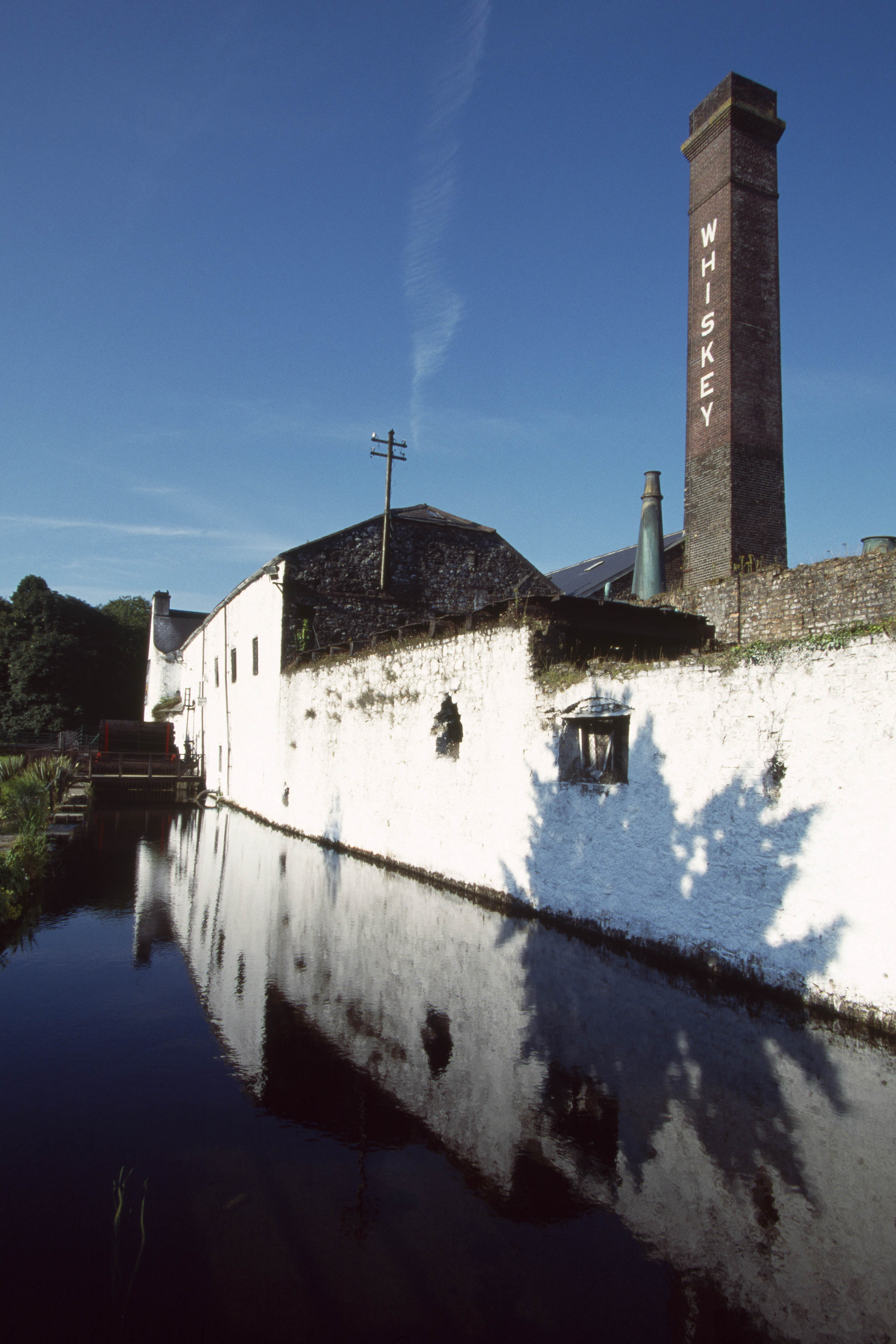
Kilbeggan Distillery
The license to distill dates from 1757. The pot still in the corner is 180 years old. And the whiskey being made today at Kilbeggan Distillery in County Westmeath is the first to be fully distilled and matured on-site since the place went dark in 1953, when the owners could not afford the duty to release Christmas whiskey from bond. Kilbeggan holds the oldest distilling license in the world, but keeping it alive has required a kind of stubbornness that borders on the unreasonable.
Matthew MacManus and the First Still
Matthew MacManus founded the distillery in 1757, on the banks of the River Brosna in the small town of Kilbeggan. In its earliest years, the operation was modest: a 232-gallon still producing about 1,500 gallons annually. By the early 19th century, under the stewardship of John and William Codd, the distillery had grown into a substantial complex with a brew house, a still house running three pot stills, a run-room with five receivers, a malt house, and corn stores capable of holding 5,000 barrels. The River Brosna powered the oat-meal mills and provided the water that ran through every stage of production. It was, by the standards of its era, a proper industrial operation in a town that depended on it.
The Locke Years
In 1843, John Locke took over the distillery, and under his management Kilbeggan flourished. Locke was that rare figure in 19th-century Irish industry: a proprietor who treated his workers well and was beloved for it. He provided cottages for employees, offering them either rental arrangements or an in-house mortgage scheme. When a fire in the distillery destroyed a steam boiler in the 1870s, the people of Kilbeggan did something extraordinary -- they bought him a new one. In a published address, they praised Locke for maintaining "a manufacture which affords such extensive employment to our poor" at a time when distilleries across Ireland were closing. Locke, visibly moved, called it "the proudest day of my life." His sons John Edward and James Harvey expanded the operation, more than doubling output and planning to install electric lighting.
A Century of Calamity
The 20th century hit Irish whiskey like a series of body blows: American Prohibition cut off the largest export market, the Anglo-Irish Trade War of the 1930s hampered access to the British Empire, world wars disrupted shipping, and blended Scotch stole customers who might have remained loyal. Kilbeggan was forced to cease production for seven years between 1924 and 1931. A failed sale to suspicious foreign investors in the 1940s -- the supposed English buyer turned out to be an impostor wanted by Scotland Yard -- became a political scandal that contributed to Fianna Fail's defeat in the 1948 election and scared off other potential investors. By November 1953, the distillery could not pay the duty to release its own whiskey. Production stopped. The stocks were sold off -- roughly 100,000 gallons -- and with them went a rare Mercedes Benz owned by the company. The buildings went quiet.
The Leviathan Stirs Again
The license was never surrendered. In 2007, after half a century of silence, distilling recommenced at Kilbeggan. One of the two pot stills installed for the revival was a 180-year-old vessel originally used at the Old Tullamore Distillery in the early 1800s -- a deliberate nod to the deep roots of distilling in the Irish midlands. By 2014, whiskey produced entirely on-site had matured enough for market. The distillery has since launched a Small Batch Rye, double-distilled from a mash of malt, barley, and about 30 percent rye, reviving a traditional Irish practice that had virtually disappeared. Winston Churchill was reportedly a devotee. So was Myles na gCopaleen, the Irish writer known to appreciate both good prose and good whiskey. Today Kilbeggan is owned by Suntory Global Spirits of Osaka, Japan -- a journey from the banks of the Brosna to the other side of the world. The 1757 license, still valid, still in force, has outlasted empires.
From the Air
Kilbeggan Distillery is located at 53.369N, 7.502W in County Westmeath, on the banks of the River Brosna in the town of Kilbeggan. The distillery buildings are visible from the air near the town center along the river. Nearest airports: Athlone Aerodrome approximately 30 km west; Dublin Airport (EIDW) about 100 km east. The N6 motorway passes just north of Kilbeggan. Recommended viewing altitude: 2,000-3,000 ft for best visibility of the distillery complex and river setting.