Kilchurn Castle
When J. M. W. Turner painted Kilchurn Castle in the early nineteenth century, the ruin was already more romantic than functional -- a crumbling tower mirrored in the still waters of Loch Awe, framed by mountains that seemed to guard it from forgetting. But Kilchurn was never built for beauty. It was built for dominance, and for two and a half centuries, the Campbells of Glenorchy wielded it like a stone fist across the central Highlands.
A Castle on an Island
Sir Colin Campbell, 1st of Glenorchy, established Kilchurn around 1450 on a small island in Loch Awe scarcely larger than the castle itself. Access came via an underwater or low-lying causeway, a natural defense that rendered siege ladders pointless. The original structure was a five-storey tower house enclosed by a courtyard wall -- austere, vertical, and unmistakably a statement of territorial ambition. Colin had been granted Glen Orchy and other lands by his father in 1432, and Kilchurn was the first of several castles that would anchor the Campbells' expansion through the region. The land had previously belonged to Clan Gregor, who lost it to Campbell hands around 1440. What began as one family's loss became another's dynasty.
Generations in Stone
Each laird left his mark in masonry. Sir Duncan Campbell added the 'laich hall,' a single-storey dining hall running along the south curtain wall -- a room for feasting and alliance-building. Duncan was among the many Scottish nobles killed at Flodden in 1513, and his architectural ambitions died with him for a time. Half a century later, the 6th Laird transformed the castle's profile by adding circular corner turrets adorned with corbels and remodelling the parapet, giving Kilchurn the silhouette that painters would later prize. This same Colin Campbell also built Balloch Castle, now Taymouth Castle, by Loch Tay, consolidating territorial gains that had come largely at the expense of their former allies, the Clan MacGregor of Glenstrae.
Barracks and Betrayals
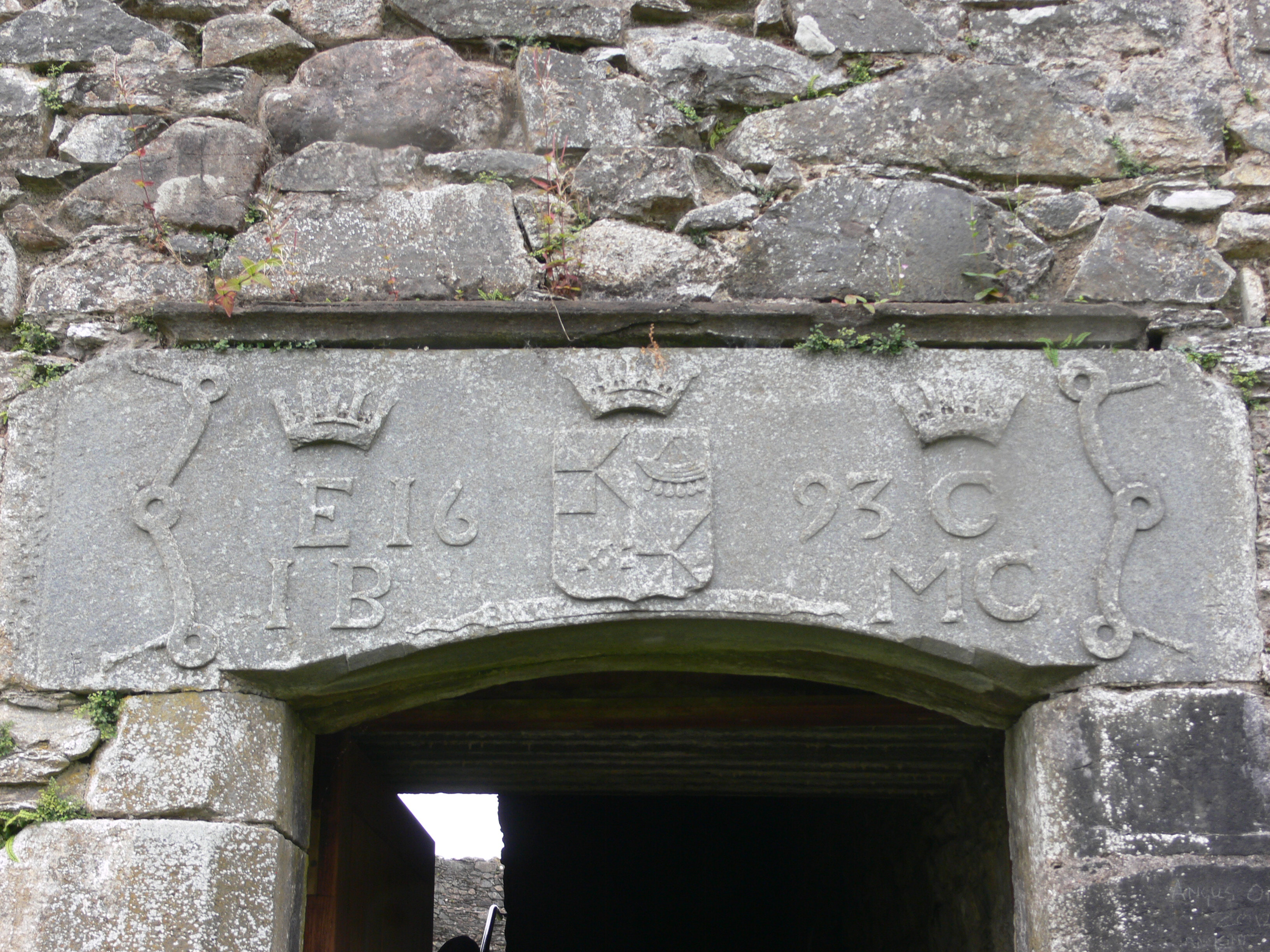
In 1681, Sir John Campbell became Earl of Breadalbane and Holland, and his political instincts proved as flexible as his loyalties. He negotiated with Jacobite rebels while serving William III, played every side against the middle, and in 1693 began converting Kilchurn into a barracks capable of housing 200 troops. The three-storey L-shaped block along the north side dates from this period. When Queen Anne died in 1714, Breadalbane hosted a conference of Jacobites at Kilchurn before joining the Earl of Mar's rising. After that rebellion collapsed, pro-government members of his own household surrendered the castle to Alexander Campbell of Fonab. Breadalbane spent his remaining days under house arrest at Taymouth. The castle saw its final military use as a government garrison during the 1745 Jacobite rising.
From Stronghold to Ruin
Once the Campbells consolidated power at Taymouth, Kilchurn became surplus to their ambitions. By 1770 it stood in ruins, its walls open to wind and rain. In 1817, alterations to Loch Awe's water level transformed the castle's island into a long peninsula, connecting it permanently to the mainland for the first time in nearly four centuries. Turner and other artists found the ruin irresistible -- its towers silhouetted against Highland skies, its reflection shimmering on the loch. Today the castle is a scheduled monument in the care of Historic Environment Scotland. Security fencing currently surrounds the structure due to falling masonry, though visitors can walk the grounds and absorb a landscape that three centuries of Campbells once commanded.
From the Air
Kilchurn Castle sits at 56.4037N, 5.0274W on a peninsula at the northeastern end of Loch Awe. Easily spotted from the air as a rectangular ruin jutting into the loch. Best viewed at 2,000-3,000 ft. Nearest airport: Oban (EGEO), approximately 20 nm southwest. The loch stretches 41 km, providing a strong visual reference. Expect low cloud and rain; the area averages over 2,000 mm of precipitation annually.