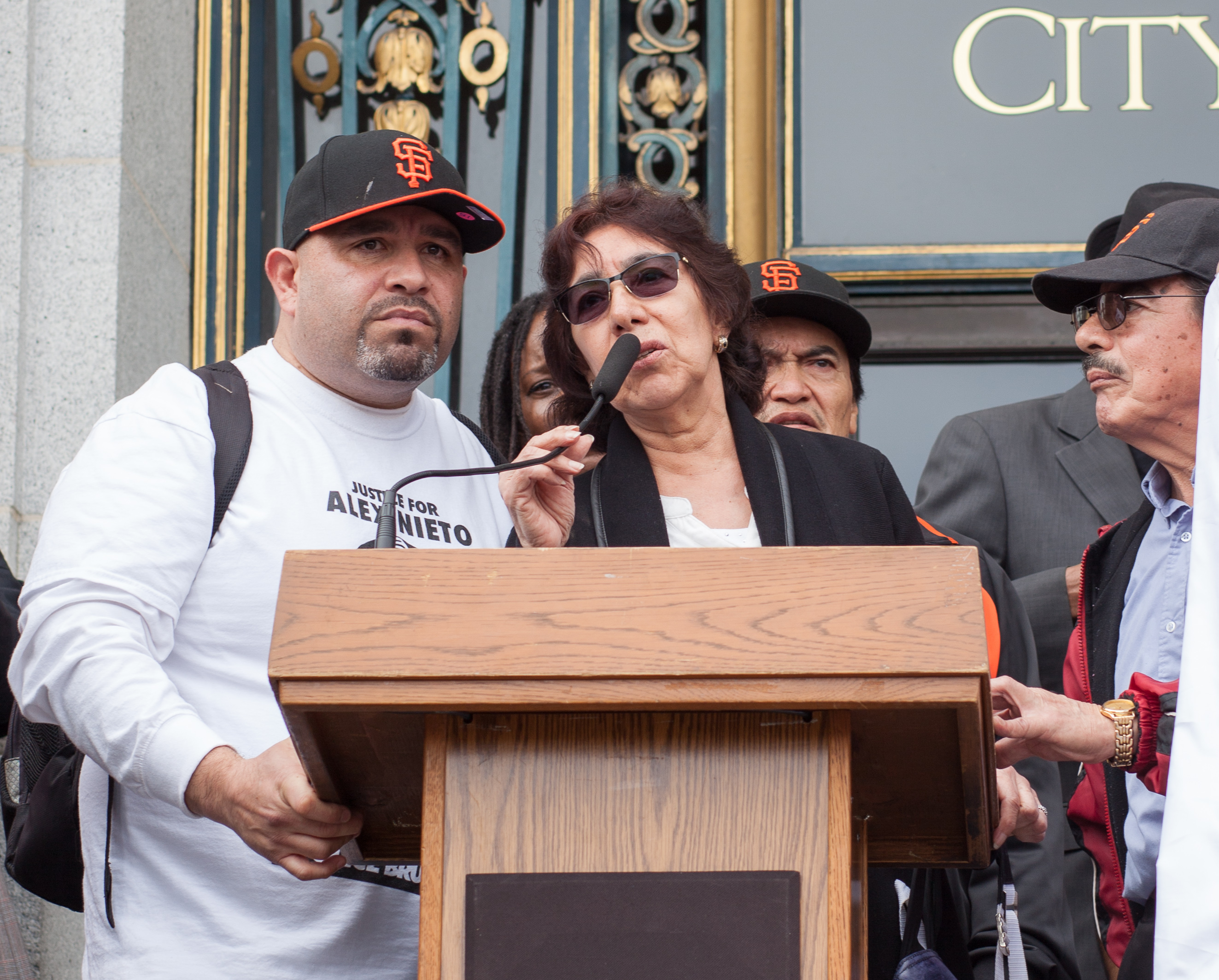
Killing of Alex Nieto
On the evening of March 21, 2014, Alejandro Nieto sat on a bench at Bernal Heights Park, eating a burrito before his shift as a nightclub bouncer. He was 28 years old, born and raised in this neighborhood, the son of Mexican immigrants from Tarimoro, Guanajuato. He was wearing the taser he carried for his licensed security guard work. A couple walking in the park saw the holstered weapon, called 911, and within minutes four San Francisco police officers had fired their weapons. Nieto died on the hillside where he had grown up.
The Hillside
Bernal Heights Park sits on a grassy hilltop in one of San Francisco's most rapidly gentrifying neighborhoods. The views from its slopes sweep across the Mission District, downtown, and the bay. It was the kind of place Nieto had known his entire life, a neighborhood park where he walked and sat and ate before work. He had obtained his California security guard license in 2007 and carried a taser as part of his job. The couple who called police reported seeing what they believed was a gun. The responding officers said Nieto pointed the taser at them. They said they believed it was a firearm. The exact sequence of events on that hillside became the subject of a federal lawsuit, community protests, and a trial that divided the city.
Justice Sought and Denied
The San Francisco District Attorney's office declined to file criminal charges against the four officers. Nieto's parents, Refugio and Elvira Nieto, retained attorney John Burris and filed a federal civil rights lawsuit alleging wrongful death and excessive force. The trial ended on March 10, 2016, with a jury unanimously clearing all four officers. Evidence presented included the taser's internal clock, which showed its trigger had been pulled. Nieto's mental health history was discussed, including two 2011 incidents that resulted in 72-hour psychiatric holds. Toxicology reports showed he was not on medication at the time of his death. The family argued that contradictory evidence and inconsistent details undermined the officers' account. The jury disagreed.
A City Responds
Nieto's death became a symbol of larger tensions tearing at San Francisco. His case was not just about policing but about who gets to occupy public space in a city where longtime Latino residents were being displaced by rising rents and tech-industry wealth. The day before the trial began, San Francisco public school students staged a walkout. After the verdict, the ACLU of Northern California published a statement pointing to racial bias within the SFPD and calling for urgent reform. On April 21, 2016, five protesters began a 17-day hunger strike in the Mission District, demanding accountability for recent police killings including Nieto's. The hunger strikers became known as the Frisco Five, and their action drew national attention to the intersection of police violence and gentrification in San Francisco.
Ripple Effects
Less than two months after the verdict, on May 19, 2016, SFPD Chief Greg Suhr resigned following the officer-involved killing of 29-year-old Jessica Williams during a car chase in the Bayview-Hunters Point neighborhood. The string of incidents had made Suhr's position untenable. For the Nieto family and their supporters, the resignation was too late and too disconnected from their son's case to bring comfort. Singer Chuck Prophet memorialized Nieto in a song bearing his name. A mural in the Mission District depicts his face. On Bernal Heights, where the park still offers those sweeping views, the bench where Nieto ate his last meal is just a bench. But in a neighborhood where belonging has become contested ground, it carries the weight of everything that followed.
From the Air
Bernal Heights Park is located at 37.74°N, 122.41°W, on a prominent hilltop in San Francisco's southeastern quadrant. The park's open grassland summit is visible from altitude. Nearest airports: SFO (KSFO, 9 nm south), Oakland (KOAK, 10 nm east). The hill rises distinctly above the surrounding residential neighborhoods of Bernal Heights and the Mission District.