Killing of Trayvon Martin
On the evening of February 26, 2012, seventeen-year-old Trayvon Martin walked to a 7-Eleven near the Retreat at Twin Lakes, a gated townhouse community in Sanford, Florida. He bought a bag of Skittles and an Arizona watermelon drink, then started back toward the townhouse where his father's fiancee lived. He never made it. George Zimmerman, a 28-year-old neighborhood watch volunteer, spotted Martin, called the Sanford police non-emergency line to report a suspicious person, and then, despite the dispatcher telling him "we don't need you to do that," left his vehicle. What happened in the minutes that followed ended with Martin shot dead on the wet grass between the townhouses, unarmed, twenty-one days after his seventeenth birthday.
A Quiet Suburb, a Loud Silence
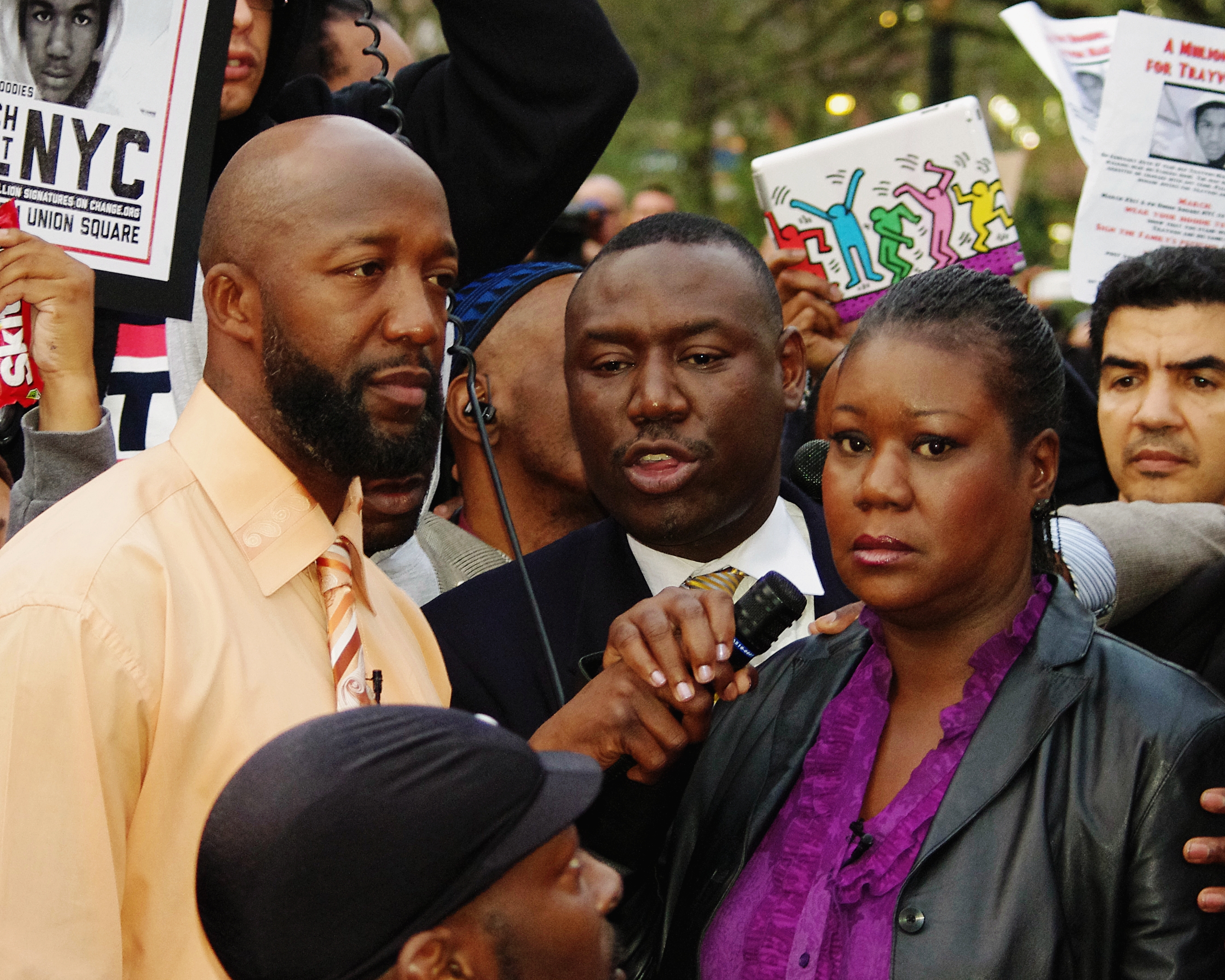
Sanford police arrived to find Zimmerman with a bloody nose and lacerations on the back of his head. He told them he had acted in self-defense. Under Florida's Stand Your Ground law, which removes the legal duty to retreat before using deadly force, the police said they lacked probable cause to arrest him. For weeks, no charges were filed. Martin's parents, Sybrina Fulton and Tracy Martin, retained attorney Benjamin Crump and went public, demanding an arrest. As national media picked up the story, Sanford's police chief came under intense scrutiny. He temporarily stepped aside in March 2012 and was later fired. The lead detective on the case was reassigned. It took forty-four days, a special prosecutor appointed by Governor Rick Scott, and nationwide protests before Zimmerman was charged with second-degree murder on April 11, 2012.
The Trial and Its Fault Lines
The trial in June and July 2013 exposed deep divisions. Prosecutors argued that Zimmerman had profiled and pursued Martin. The defense countered that Zimmerman had been attacked and feared for his life. Legal scholars later noted that the prosecution's decision to charge second-degree murder, rather than manslaughter, set a high evidentiary bar that was difficult to clear given Florida's self-defense statutes. Harvard Law Professor Alan Dershowitz was sharply critical of State Attorney Angela Corey's handling of the case. On July 13, 2013, a jury of six women found Zimmerman not guilty. In February 2015, the U.S. Department of Justice announced there was insufficient evidence to bring federal hate crime charges.
A Nation Responds
The verdict ignited protests and vigils in more than 100 cities. President Barack Obama spoke personally, saying, "Trayvon Martin could have been me, 35 years ago." The NAACP posted a petition requesting a federal civil rights investigation; within hours, 130,000 people signed it. In Florida, activists known as the Dream Defenders camped outside Governor Rick Scott's office in Tallahassee, demanding a special legislative session to repeal Stand Your Ground. Democratic leaders in the Florida legislature echoed the call. A Washington Post/ABC News poll found that nearly 90 percent of African Americans called the shooting unjustified, compared with 33 percent of whites. Gallup noted the racial divide was "almost exactly the opposite" of reactions to the O.J. Simpson verdict two decades earlier.
Three Words That Became a Movement
During and after the trial, Facebook users began posting a phrase that would outlast the case itself: "black lives matter." What started as a social media expression grew into the Black Lives Matter movement, one of the largest civil rights mobilizations of the twenty-first century. The Retreat at Twin Lakes, a nondescript cluster of tan and brown townhouses along Oregon Avenue in Sanford, became one of those American places where ordinary geography acquired extraordinary weight. A sidewalk, a patch of grass, a rainy evening. The killing of Trayvon Martin did not begin or end the American conversation about race and justice, but it forced that conversation into living rooms, courtrooms, and legislatures in a way that could not be ignored.
From the Air
The Retreat at Twin Lakes is located in Sanford, Florida, at 28.79°N, 81.33°W, a suburban gated community visible from the air as a cluster of townhouses with shared green spaces along Oregon Avenue, west of U.S. Route 17-92. Sanford sits along the southern shore of Lake Monroe. Nearest airports: Orlando Sanford International Airport (KSFB) approximately 4nm northeast, Orlando Executive Airport (KORL) 14nm south, Orlando International Airport (KMCO) 20nm south-southeast. Recommended viewing altitude: 2,000-3,000 ft AGL to see the community layout and surrounding Sanford neighborhoods.