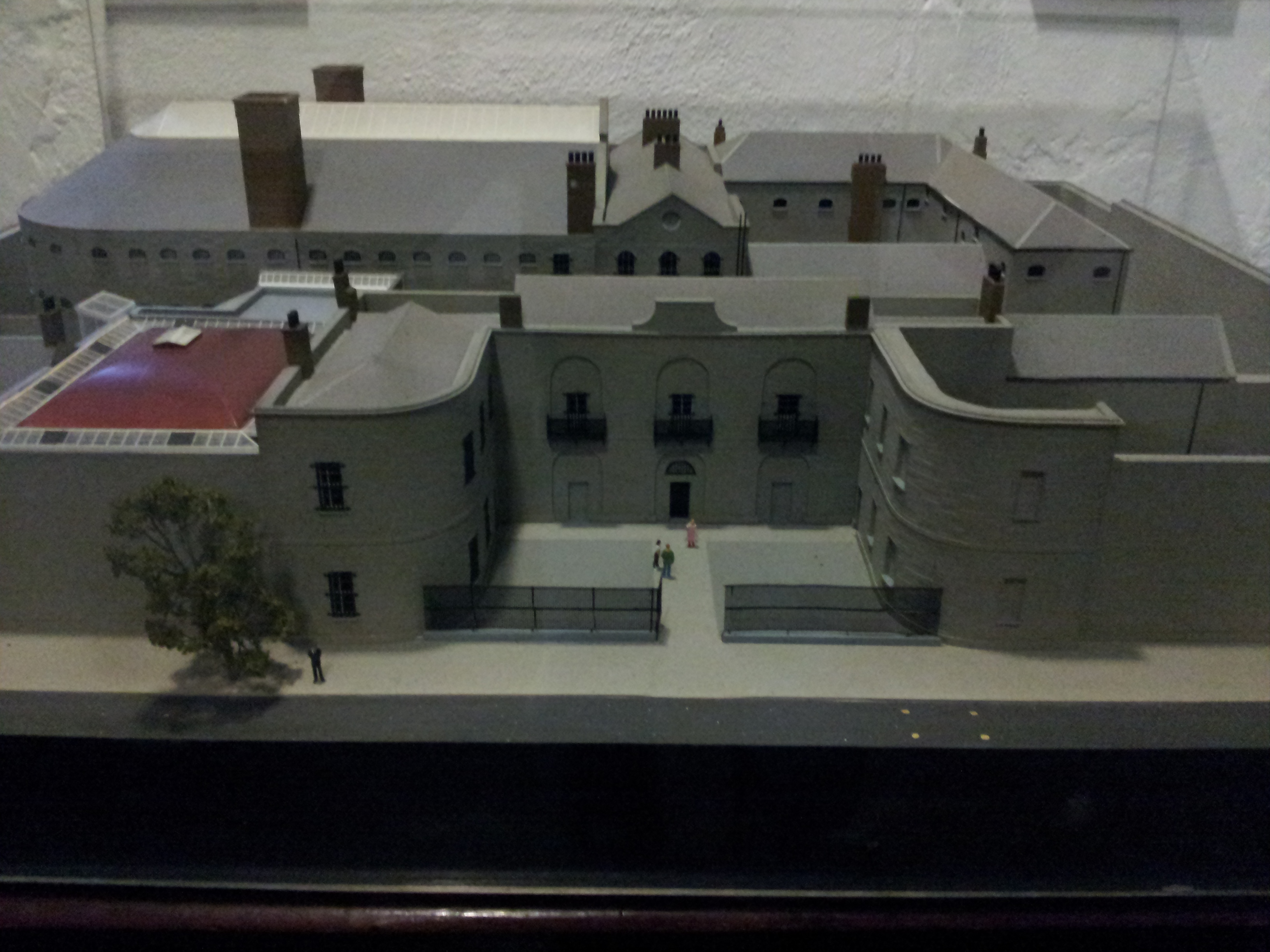
Kilmainham Gaol
Joseph Plunkett married Grace Gifford in the prison chapel at two o'clock in the morning, by candlelight, with soldiers holding bayonets standing as witnesses. Hours later, on May 4, 1916, he was taken to the stone-breakers' yard and shot by firing squad. He was one of fourteen leaders of the Easter Rising executed at Kilmainham Gaol over nine days in May -- a sequence of killings that transformed a failed military rebellion into the founding myth of the Irish Republic. No place in Ireland carries the weight of national memory quite like this grey limestone prison in Dublin's Kilmainham district.
The New Gaol
When Kilmainham opened in 1796, it was called the 'New Gaol' to distinguish it from the dungeon it replaced just a few hundred metres away. The County of Dublin Gaol, as it was officially known, was designed to hold common criminals, debtors, and the desperate. Public hangings took place at the front entrance. But history had other plans for the building. Within two years of opening, it held Henry Joy McCracken and other rebels of the 1798 Rising. Robert Emmet passed through its doors in 1803. The Great Famine overwhelmed it with starving prisoners in the 1840s. By the time Charles Stewart Parnell was imprisoned here in 1881 -- negotiating the Kilmainham Treaty with William Gladstone from behind its walls -- the gaol had become inseparable from the story of Irish resistance to British rule.
Nine Days in May
The Easter Rising of April 1916 was militarily disastrous, and its leaders knew before it began that it would be. But they also understood something about sacrifice that the British authorities did not. When the Rising collapsed after six days, most Dubliners were hostile to the rebels whose actions had devastated the city center. Then the executions began. Patrick Pearse was shot on May 3. Thomas MacDonagh and Thomas Clarke the same day. Over the following week, twelve more men faced the firing squad in the stone-breakers' yard, including James Connolly, who was so badly wounded he had to be strapped to a chair to be shot. Public opinion reversed almost overnight. The men who had been condemned as reckless became martyrs, and Kilmainham became sacred ground.
A Prison Too Painful to Remember
The Irish Free State decommissioned Kilmainham in 1924, and for decades the new nation seemed eager to forget it. The gaol's function as a site of national memory was complicated by the fact that the first four Republican prisoners executed by the Free State government during the Civil War had also been shot in its yard. Remembering Kilmainham meant remembering not only the unified struggle against Britain but also the fratricidal war that followed independence. The government considered demolition in 1936 but found the cost prohibitive. Through the 1940s and 1950s, the building deteriorated. Trees grew through the cell blocks. Birds nested in the corridors where Pearse and Connolly had spent their final hours.
Rescued by Volunteers
In 1958, a young engineer named Lorcan C.G. Leonard formed the Kilmainham Gaol Restoration Society after learning that the Office of Public Works was accepting tenders for the building's demolition. Leonard and a small group of nationalists devised a plan to restore the prison using volunteer labor and donated materials. The Irish Congress of Trade Unions agreed not to oppose them. The notoriously tight-fisted Department of Finance approved the plan in February 1960, charging the trustees one penny per year in rent. Sixty volunteers began clearing decades of overgrown vegetation, fallen masonry, and bird droppings. By 1962, the symbolically crucial execution yard had been cleared of rubble and weeds. The society agreed to avoid any mention of the Civil War, focusing instead on a narrative of unified national struggle -- a diplomatic omission that made the restoration politically possible.
Stone and Silence
Today Kilmainham Gaol is one of the most visited museums in Ireland and one of the largest unoccupied prisons in Europe. Guided tours lead visitors through the Victorian east wing, where tiers of cells rise around a vaulted atrium flooded with pale light from overhead skylights. Patrick Pearse's cell can be entered. A Madonna painted on the wall by Grace Gifford Plunkett during the Civil War survives. The stone-breakers' yard, where the executions took place, is marked by a simple cross. Outside the main entrance, Rowan Gillespie's Proclamation sculpture commemorates the fourteen leaders. The silence in the execution yard is not emptiness. It is the accumulated weight of what happened there, held in place by limestone walls and the knowledge that the men who died in this courtyard changed the course of a nation.
From the Air
Kilmainham Gaol is located at 53.3417N, 6.3094W in Dublin's Kilmainham district, on the south side of the River Liffey. From altitude, the prison complex is identifiable by its distinctive cross-shaped Victorian wing and enclosed courtyards. Near the Irish National War Memorial Gardens and the Royal Hospital Kilmainham (IMMA). Nearest airports: Dublin Airport (EIDW) 12km northeast, Casement Aerodrome (EIME) 7km southwest.