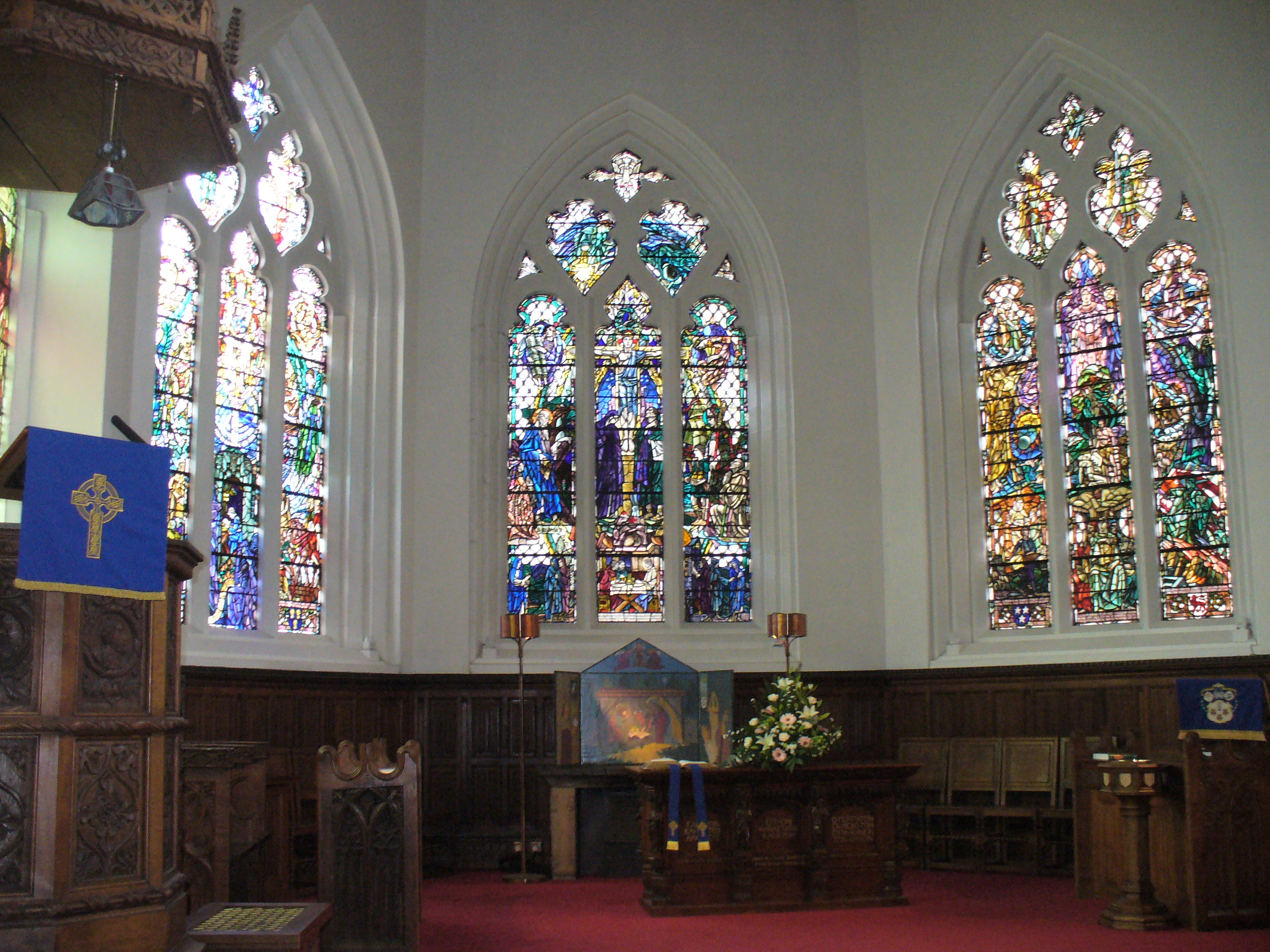
King's College Chapel, Aberdeen
Only two medieval crown towers survive in Scotland, and one of them sits atop King's College Chapel in Old Aberdeen. The crown is not a later addition or a Victorian fantasy -- it was part of the original design, described in 1522 by Hector Boece, the university's first principal, as a steeple of great height surrounded by stonework arched in the form of an imperial crown. The current crown is a replacement, installed after a storm blew down the original in 1633, but the intent has remained unchanged for five centuries: this chapel would announce the University of Aberdeen's ambitions to anyone who could see the skyline.
Golden Stone from Moray
Construction began on 2 April 1500, though preparations had started two years earlier, slowed by the marshy ground. The chapel was built from golden Moray sandstone, shipped to Aberdeen at great expense -- a choice that distinguished it from the grey granite buildings surrounding it. The architect may have been Alexander Gray or John Grey. Consecrated in 1509 and dedicated to the Trinity and the Blessed Virgin Mary in her Nativity, the chapel was designed to be the centrepiece of King's College, which had been founded in 1495. The warm colour of the sandstone still sets the chapel apart from its granite neighbours, a deliberate mark of distinction that survives changes in fashion and five centuries of Scottish weather.
Reformation and Resilience
The Reformation hit the chapel hard but did not destroy it. Stained glass windows were smashed, Catholic staff purged in 1569, and the six choir boys dismissed. Yet the building itself survived -- and more importantly, so did its interior woodwork. The wooden canopy, stalls, and screen are considered among the finest surviving examples of early 16th-century woodwork in Scotland. The pulpit, originally constructed for St Machar's Cathedral in 1530, found its way here and remains. The college library, housed in the nave, burned in 1772, but the university's books were saved. The chapel has endured by adapting, losing some elements to violence and time while preserving others through luck and care.
Names Without Rank
After the First World War, the university reconstructed the Antechapel as a memorial. The Senatus Academicus made a decision that still resonates: the 342 names of the university's war dead would be listed without rank or title, from all four nations of the university, equal in death regardless of station. The memorial was unveiled on Remembrance Sunday 1952 in its extended form, rededicated by Rev. Dr William Neil. It remains one of the most democratic war memorials in Scotland, a place where generals and privates share the same typeface.
Five Hundred Years of Worship
In the year 2000, to mark the chapel's 500th anniversary, the university organised a traditional Latin Mass -- only the second time since the Reformation that a Catholic service had been held in the building. The moment carried weight: a university founded to train clergy for the pre-Reformation church briefly returning to the form of worship its founders would have recognised. Today, the chapel continues to serve the university as a place of worship, ceremony, and quiet reflection. Its whitewashed walls, its medieval woodwork, and its crown tower visible above the rooftops of Old Aberdeen make it one of the most recognisable symbols of the city -- a building that has managed to remain both ancient and alive.
From the Air
Located at 57.16N, 2.10W in Old Aberdeen. The distinctive crown tower is visible from moderate altitude and is one of Aberdeen's most recognisable landmarks from the air. Nearest airport: Aberdeen (EGPD), approximately 4 miles northwest.