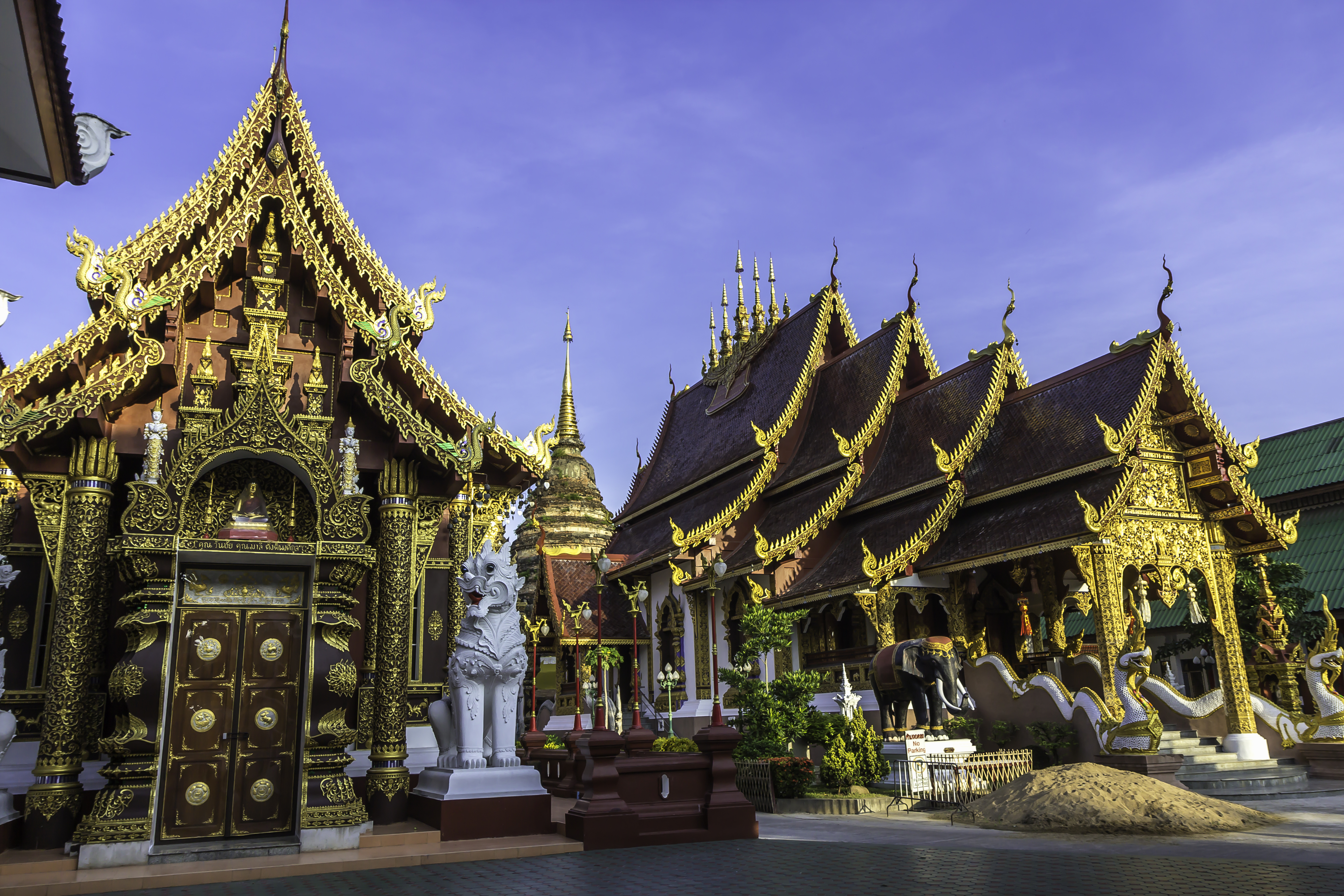
Kingdom of Chiang Mai
Chiang Mai was not conquered once. It was conquered repeatedly -- by the Burmese in 1558, recaptured by the Siamese in 1775, and finally absorbed by Bangkok's bureaucracy in 1899. Between those dates, the Kingdom of Chiang Mai existed as something rare in Southeast Asian history: a tributary state with real autonomy, governed by its own dynasty, fighting its own wars, and managing its own forests. That it vanished not through military defeat but through administrative reform makes its story no less dramatic.
Liberators from Lampang
After two centuries of Burmese rule over the Lanna region, the Konbaung dynasty's grip began to draw resistance. In Chiang Mai, the Burmese governor Thado Mindin ruled through oppression and forced cultural assimilation, holding the ruler of Lampang's father as a political hostage. When Siamese King Taksin marched north in December 1774, a Lanna nobleman named Phaya Chaban Boonma joined forces with Kawila of Lampang to cooperate with the invading army. The Siamese generals Chaophraya Chakri and Chaophraya Surasi took Chiang Mai in January 1775. But the victory was pyrrhic in one sense: Chiang Mai was so devastated that it ceased to function as a city. Its population scattered, and the jungle began reclaiming its streets. Kawila, appointed nominal governor in 1782, could not even occupy the city for fifteen years. He based himself at Pasang instead, methodically driving out remaining Burmese influence and rebuilding the population through campaigns that resettled captured peoples from surrounding Tai Lue and Shan states.
Three Princes and a Tightrope
The Kingdom of Chiang Mai was really a federation of three princedoms -- Chiang Mai, Lampang, and Lamphun -- all ruled by branches of the Chet Ton dynasty. Succession was determined not by primogeniture but by Bangkok, which appointed rulers and bestowed ranks. This arrangement held so long as the branches cooperated. They often did not. When King Kawila died in 1816, his brother Thammalangka succeeded him. But after Thammalangka, rivalries between dynastic branches plagued the kingdom for decades. In 1822, the ruler of Lampang marched on Chiang Mai to press his claims. In 1825, he did it again. Cousins fled to Bangkok seeking royal intervention. One ruler, Phutthawong, was such an outsider that he refused to live in his predecessors' palace and built his own. His reign, however, proved largely peaceful -- earning him the epithet "Lord of the Peaceful Reign." The only military mobilization during his tenure came in 1827, when Bangkok called on Lanna lords to help suppress the Lao Rebellion.
Teak, Treaties, and a Lord Called Life-Taker
Lanna's vast northern teak forests made the kingdom wealthy and vulnerable in equal measure. As British interests expanded from Burma, teak drew European logging companies deeper into Chiang Mai's territory. The British Borneo Company and Bombay Burmah Company competed for forest leases, with enormous sums at stake. Meanwhile, King Kawilorot Suriyawong, who ruled from 1856 to 1870, governed with an absolutist hand that earned him the epithet "Lord Taker of Life." He exchanged gifts with the Burmese king at Ava, prompting Bangkok to summon him for trial -- he was acquitted. In 1869, he executed two Lanna converts to Protestantism, since abandoning Buddhism was punishable by death under Lanna law. The American missionary Daniel McGilvary filed the case with Bangkok, which found itself unable to intervene in Chiang Mai's internal affairs. Kawilorot's independence illustrated the central tension: Chiang Mai was nominally Siamese, but its rulers behaved like sovereigns.
Death by Paperwork
The end came not through invasion but through administration. In 1892, Prince Damrong Rajanubhab became Minister of Interior and proposed the Monthon Thesaphiban system -- replacing traditional tributary allegiances with centrally-governed administrative units. The Franco-Siamese crisis of 1893 accelerated the urgency; Bangkok could not afford ungoverned frontiers. In 1894, Monthon Lao Chiang was formed, encompassing all of modern Northern Thailand. A supreme commissioner arrived from Bangkok. Lanna's financial autonomy ended; revenue flowed to the central government, which distributed salaries back to Lanna rulers and princes. In 1896, a modern Department of Forestry was established to regulate the lucrative teak trade. By 1899, Monthon Phayap -- the Northwestern Circle -- replaced all indigenous institutions with direct central administration. Centuries of Lanna autonomy ended with a bureaucratic decree. The last titular ruler, Prince Kaew Nawarat, held the title until 1939, when the government of General Plaek Phibunsongkhram abolished it in pursuit of national unity. The modern descendants bear the surname Na Chiangmai, granted by King Vajiravudh under his 1912 Surname Act.
From the Air
The Kingdom of Chiang Mai centered on the city of Chiang Mai at 18.79N, 98.98E in the Ping River valley of northern Thailand. Chiang Mai International Airport (VTCC) serves the area. From the air, the old city's square moat is clearly visible, surrounded by mountains on all sides. The kingdom's territory extended across what is now Lampang (VTCL), Lamphun, and surrounding provinces. Best viewed at 3,000-5,000 feet AGL where the moated old city contrasts with the modern sprawl beyond.