Kingdom of Dagbon
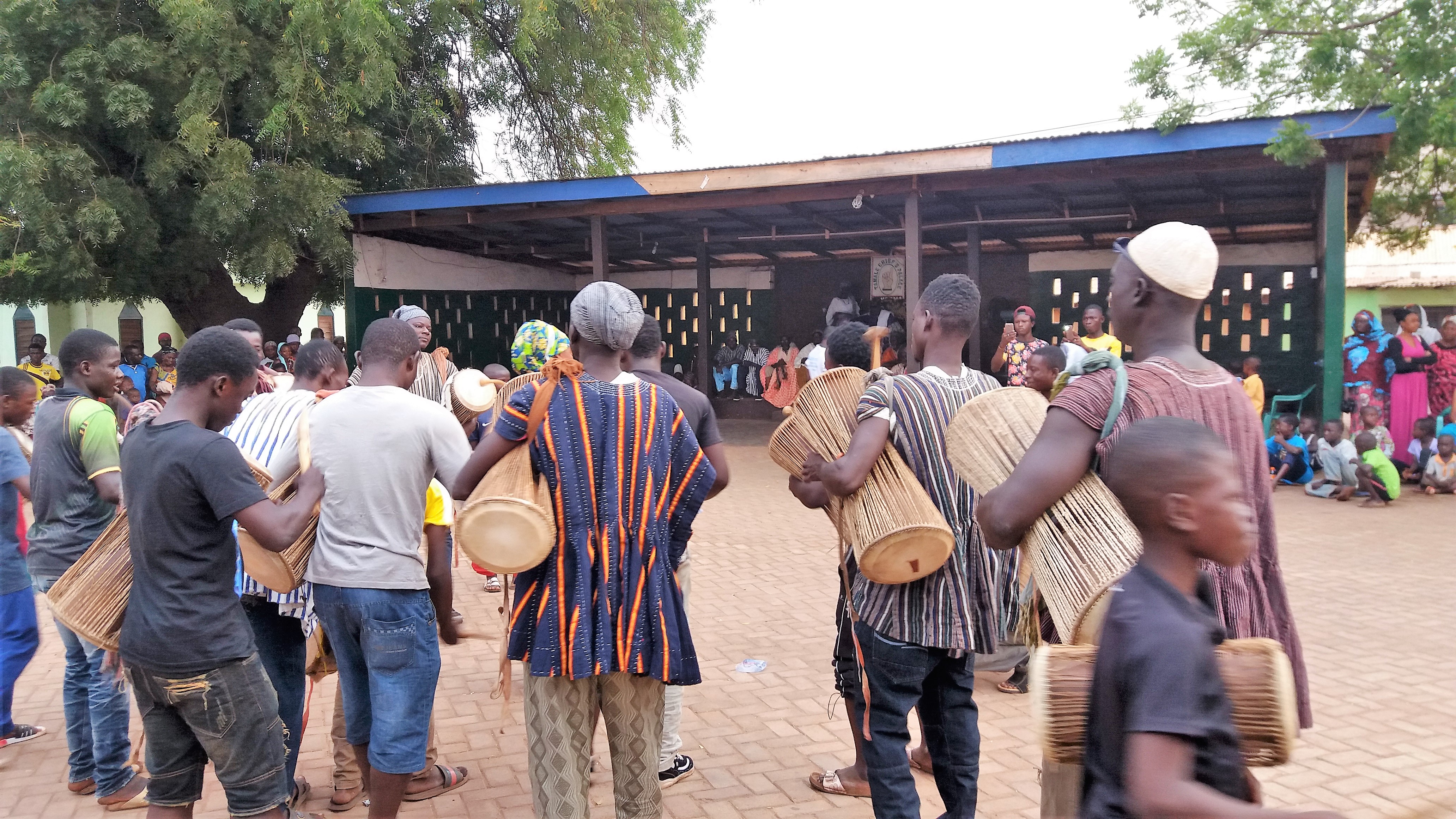
When a new Yaa Naa -- king of strength -- takes his seat on lion skins at the court in Yendi, the Lunsi drummers begin. Their rhythmic proverbs recount a lineage that stretches back centuries, from Tohazhie the Red Hunter who rode west from Lake Chad, through Naa Gbewaa who settled at Pusiga in northeastern Ghana, to the Dagomba warriors who unified the savannah peoples into a kingdom covering 8,000 square miles. The Kingdom of Dagbon is the oldest traditional kingdom in Ghana, and the Lunsi are its living archive -- historians who carry the past not in books but in the cadence of goatskin drums.
From Lake Chad to the Savannah
The founding story of Dagbon reads like an odyssey. Tohazhie, a warrior described as the Red Hunter, left the region east of Lake Chad with a small cavalry band, passing through Zamfara in present-day northern Nigeria before reaching the Mali Empire, where he married the daughter of the Malian king. His grandson Kpogonumbo clashed with the rising Songhai Empire and was driven southward into Gurma. It was Kpogonumbo's son, Naa Gbewaa, who crossed into what is now northeastern Ghana and settled at Pusiga, founding the dynasty from which the kingdoms of Dagbon, Mamprugu, and Nanumba all trace their royal lines. After Gbewaa's death, his son Shitobu moved south to Namburugu, near Karaga, unifying indigenous Dagombas, Konkomba, and other peoples under the title Yaa Naa. By the late 18th century, Yendi, the capital, had grown into a trade hub larger than Kumasi.
Daughters Who Ruled and Founded Nations
Dagbon is one of the few African kingdoms where chieftaincy titles are reserved for women. The Gundo Naa heads all female chiefs, and women in these roles rule over subjects, own regal lands, and wield genuine authority. The kingdom's most celebrated daughter is Yennenga -- known in Dagbani as Yemtori -- a warrior princess who, according to tradition, traveled northward and married a hunter named Rialle. Their son Ouedraogo founded the Mossi Kingdoms, the people who today constitute nearly half the population of Burkina Faso. Dagbon also produced Susanna Al-Hassan, Ghana's first female government minister and widely recognized as Africa's first female cabinet minister. These are not symbolic honors. In Dagbon, the tradition of female leadership is structural, embedded in the constitutional fabric of the kingdom itself.
Drums Against Gunpowder
In 1896, the Germans decided that Yaa Naa Andani II had disrupted trade routes to their colonial station at Sansanne-Mangu. Andani's reply was blunt: he believed it was the white man who made the roads unsafe. The confrontation that followed was grotesquely unequal. At the Battle of Adibo, roughly 4,600 Dagomba fighters -- including gunmen, horsemen, and archers -- engaged a German Schutztruppe force of nearly 370 soldiers equipped with modern rifles. The result was a massacre, and Yendi was destroyed. In 1899, the British and Germans split Dagbon between German Togoland and the Gold Coast, separating the Yaa Naa from his own people. The Gbewaa Palace was burned, and archives housed at the University of Moliyili -- Ghana's oldest learning institution, which had pioneered a modified Arabic writing system -- were destroyed. Some manuscripts were later transported to Denmark, where they remain.
The Unfinished Succession
Succession in Dagbon rotates between two royal houses: the Andani and the Abudu. Historically, the competition was intense but governed by custom. Colonial interference destabilized the system. In March 2002, Yaa Naa Yakubu Andani II and forty-two of his elders were murdered in a conflict between supporters of the two houses -- a tragedy that shook Ghana and left Dagbon without a settled king for years. In November 2018, a Mediation Committee of three eminent chiefs brokered a resolution. Both houses performed the necessary funeral rites at the old Gbewaa Palace in Yendi, and on 18 January 2019, Yaa Naa Abubakari Mahama was elected by Dagbon's kingmakers. The drumming resumed. The Lunsi recited the proverbs that link every king to Tohazhie and Gbewaa, and the kingdom's story continued.
Where the Drums Carry
Dagbon covers the Northern Region of Ghana -- a flat, dry savannah landscape of shea and baobab trees, red earth, and seasonal grasslands. Yendi, the capital and seat of the Yaa Naa, lies in the eastern portion, while Tamale, the region's largest city, anchors the west. From altitude, the territory is a patchwork of small farming settlements connected by laterite roads, with the Black and White Volta rivers threading through the woodland. Tamale International Airport (DGLE) provides access to the region. The kingdom holds Ghana's largest iron ore reserves, but its real wealth has always been cultural -- the festivals like Damba and Bugum Chugu, the Lunsi drumming tradition, and the living continuity of a political system older than any European contact with this part of Africa.
From the Air
Coordinates: 9.50N, 0.25W. The Kingdom of Dagbon covers approximately 8,000 square miles of Guinea savannah in northern Ghana. Yendi, the capital, is in the east; Tamale, the largest city, is in the west. Tamale International Airport (ICAO: DGLE) is the primary airport serving the region. Flat terrain at roughly 150-250m elevation. The Black and White Volta rivers are visible from altitude. Dry season (Nov-Mar) offers best visibility. Baobab and shea trees dot the landscape.