Kingdom of Nagpur
In Bengal, mothers still sing a lullaby that translates roughly as: "When the children fall asleep, silence sets in, the Bargis come to our lands. Bulbuls have eaten the grains, how shall I pay the nawab's tax demands." The Bargis were light cavalry mercenaries unleashed by the Bhonsle rulers of Nagpur during their invasions of Bengal in the 1740s. The destruction they wrought was so thorough that it entered the folk memory of a people who lived a thousand kilometers away. That is the kind of kingdom Nagpur was: ambitious, ruthless, and far-reaching - until the British dismantled it piece by piece.
Gond Foundations
Before the Marathas, there were the Gonds. The kingdom's story begins in the early 18th century, when this territory formed part of the Gond Kingdom of Deogarh. Bakht Buland Shah, its ruler, visited Delhi and returned determined to transform his domain. He invited Hindu and Muslim artisans and cultivators to settle the plains and founded the city of Nagpur itself. His successor, Chand Sultan, continued the development and moved the capital there. The Gond rulers built something worth taking, which is precisely what happened next.
After Chand Sultan's death in 1739, the Bhonsle clan of the Maratha Empire seized control. The transition was not gentle. The Marathas were military chiefs with the habits of rough soldiers - effective administrators in peacetime, formidable conquerors always. Nagpur's Gond foundations would support a Maratha superstructure that stretched from the Narmada valley to the Bay of Bengal.
The Bhonsle Ascendancy
Raghoji I Bhonsle, who ruled from 1739 to 1755, was the archetype of a Maratha leader: bold, decisive, and unembarrassed by the absence of a pretext for invasion. His armies invaded Bengal twice, securing the cession of Cuttack. Between 1745 and 1755, he absorbed Chanda, Chhattisgarh, and Sambalpur into his dominions. The kingdom grew through force and opportunism.
His successor Janoji played both sides in the wars between the Peshwa and the Nizam of Hyderabad, betraying each in turn. The combined wrath of both was predictable: they united against him and sacked Nagpur in 1765. After Janoji's death in 1772, his brothers fought for succession until Mudhoji Bhonsle settled the matter by shooting the other at the Battle of Panchgaon, six miles south of Nagpur. He then governed as regent for his infant son Raghoji II, adding Mandla and the upper Narmada valley by 1785.
The British Collision
Raghoji II initially courted the British East India Company, acquiring Hoshangabad and the lower Narmada valley. But in 1803, he joined Daulat Rao Sindhia of Gwalior in war against the British. The alliance was crushed at the battles of Assaye and Argaon - the former one of Arthur Wellesley's most celebrated victories. The Treaty of Deogaon stripped Raghoji of Cuttack, southern Berar, and Sambalpur, roughly a third of his territories.
The loss was catastrophic in ways beyond geography. Raghoji tried to extract the same revenue from his diminished kingdom, rack-renting villages mercilessly and imposing new taxes. Troops went unpaid and turned to plundering the cultivators they were meant to protect. Pindari raiders grew bold enough to burn Nagpur's suburbs in 1811. Peasants built village forts and retreated inside them when marauders approached, fighting for bare survival while everything outside the walls was already lost.
Betrayal, Escape, and Extinction
The final act played out swiftly. After Raghoji II's death in 1816, Appa Sahib seized the throne and signed a treaty of alliance with the British - then promptly broke it when war erupted between the British and the Peshwa. His forces were defeated at the Battle of Sitabuldi and again near Nagpur. Berar and the Narmada territories were ceded. Appa Sahib was deposed and sent to Allahabad in custody, but he bribed his guards, escaped to the Mahadeo Hills, fled to the Punjab, and finally took refuge at the court of Man Singh of Jodhpur, who sheltered him against British wishes.
Raghoji III, a grandchild of Raghoji II, was placed on the throne but governed in name only until 1830. When he was finally permitted to rule, he managed until his death without a male heir in 1853. The British invoked the doctrine of lapse and annexed the kingdom outright. A dynasty that had terrorized Bengal and rivaled European armies simply ceased to exist.
What the Kingdom Left Behind
Nagpur became a province administered by a commissioner under the Governor-General of India, eventually folding into the Central Provinces in 1861. During the revolt of 1857, a regiment of irregular cavalry conspired to rise, but the plot was discovered and crushed. The aged princess Baka Bai, Raghoji II's widow, used her influence to keep the Maratha districts loyal to the British.
The Bhonsles left a military legacy that extended beyond their borders. They raised two infantry brigades with modern training, employed Pindari irregulars, and followed the example of Mahadaji Shinde in building French-trained artillery battalions under officers like the Frenchman Benoit de Boigne. Their most enduring cultural mark may be the Bargi lullaby, still sung in Bengal - a reminder that the Bhonsles of Nagpur were feared by people who never saw their fort, never met their rulers, and never forgot the cavalry that came to their villages in the night.
From the Air
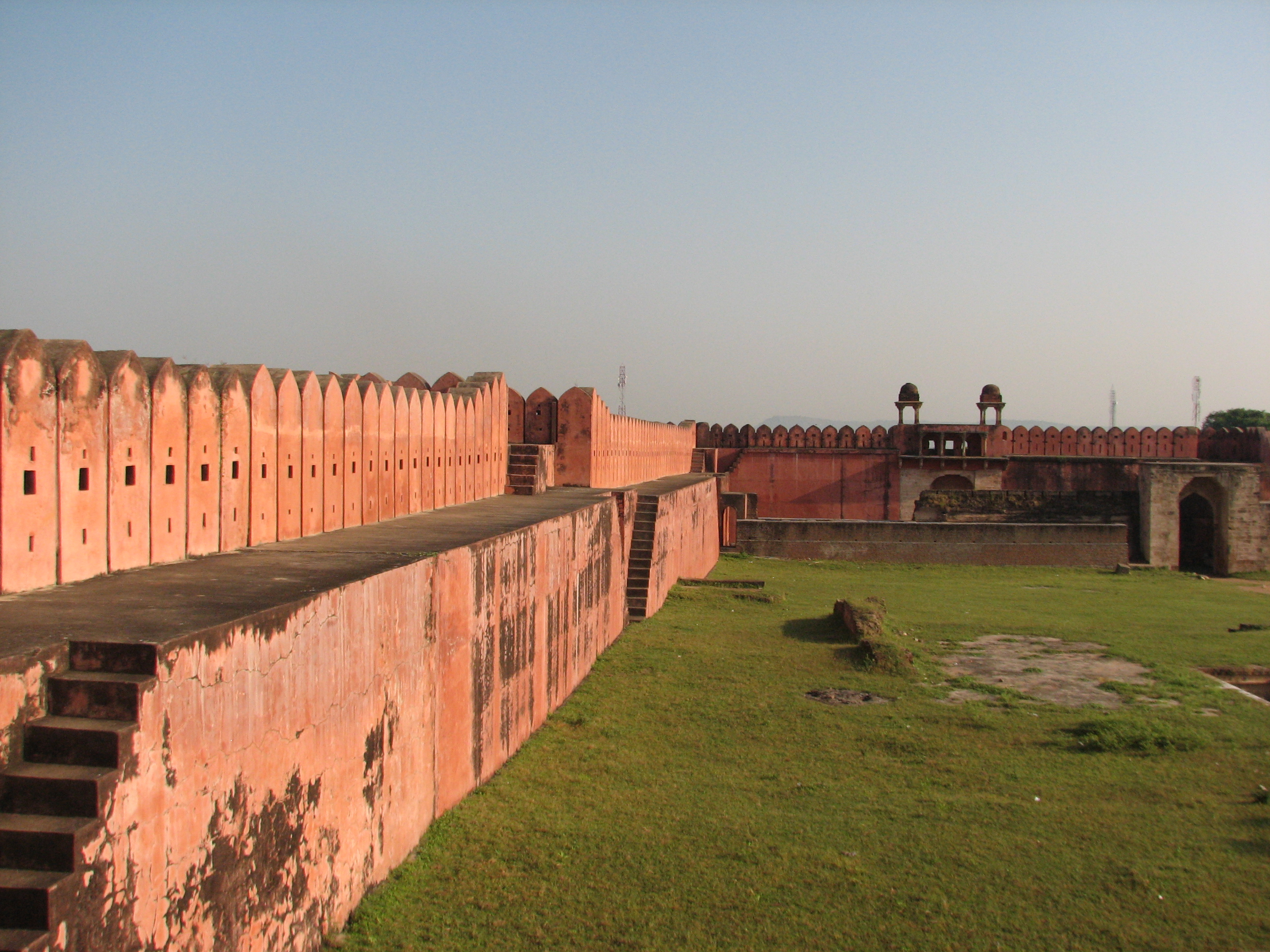
The Kingdom of Nagpur was centered on the city of Nagpur at 21.15N, 79.09E, in what is now central Maharashtra. The Nagardhan Fort, commissioned by Raghoji I, lies in the Nagpur district and is visible from the air. Sitabuldi Fort, site of the 1817 battle, sits in the heart of modern Nagpur. Dr. Babasaheb Ambedkar International Airport (VANP/NAG) serves the city. The terrain is flat Deccan Plateau, with the Narmada valley extending to the north and west. At its greatest extent, the kingdom stretched from Cuttack on the Bay of Bengal coast to Hoshangabad in the Narmada valley. Best viewed at 3,000-5,000 feet to identify the historic fort sites within the modern city.