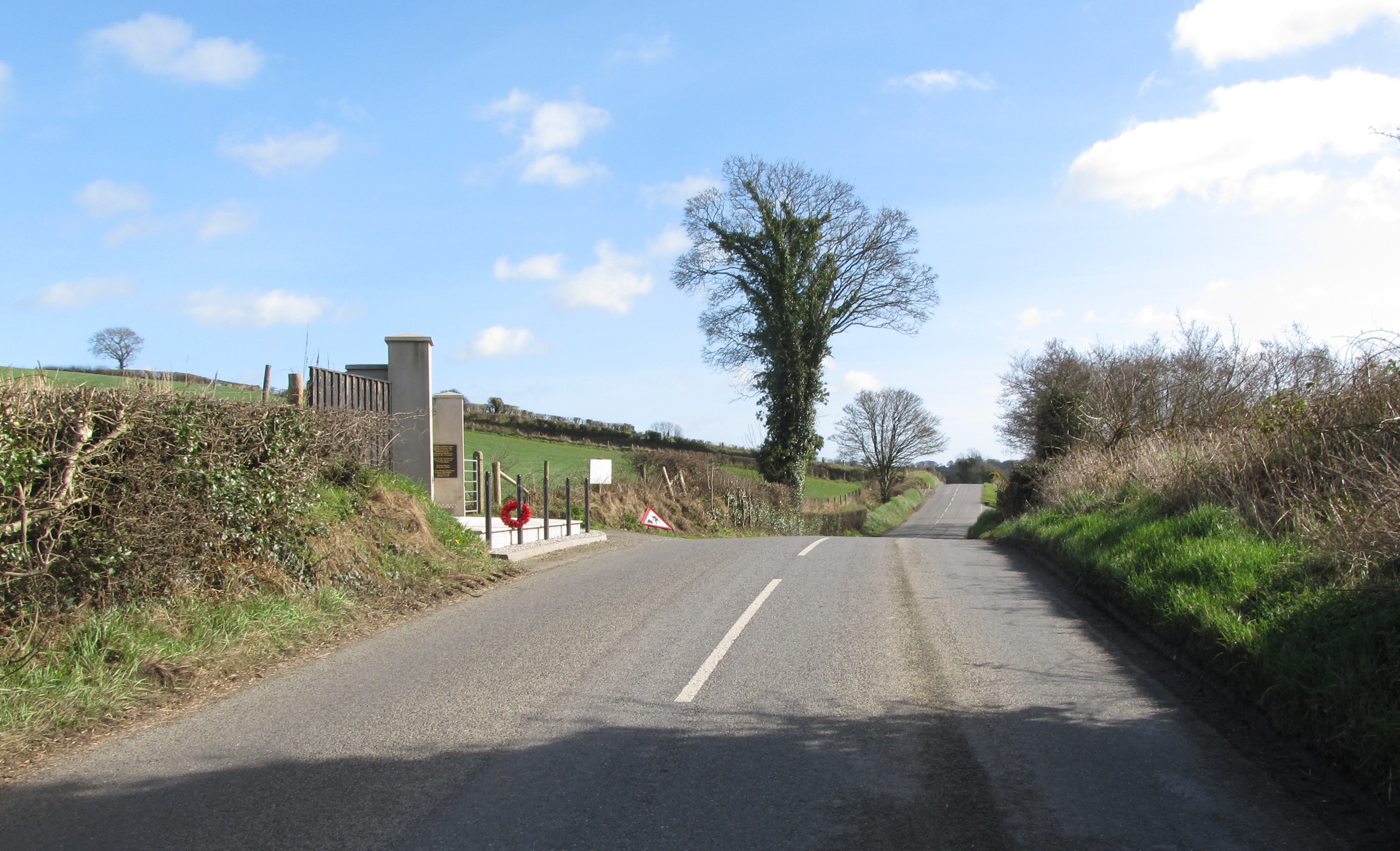
Kingsmill Massacre
The minibus was carrying eleven men home from work at a textile factory on the evening of January 5, 1976. They were tradesmen and laborers -- weavers, drivers, mechanics -- heading through the dark countryside of south County Armagh near the village of Whitecross. When a figure in combat uniform stepped into the road and flagged them down, they assumed it was a routine British Army checkpoint. It was not.
A Cycle No One Could Stop
The Kingsmill massacre did not happen in isolation. It was the terrible climax of a cycle of sectarian violence that had been escalating in South Armagh throughout 1975. Between February 1975 and January 1976, loyalist paramilitaries killed thirty-five Catholic civilians in County Armagh or on its borders. In the same period, republican paramilitaries killed sixteen Protestant civilians and seventeen members of the security forces in the same area. The night before Kingsmill, loyalists shot dead six Catholic civilians in two coordinated attacks -- three members of the Reavey family in Whitecross and three members of the O'Dowd family in Ballydougan. Each atrocity bred the next. The community was trapped in a spiral of revenge that decent people on both sides were powerless to break.
Five Minutes Past Dark
When the minibus stopped, eleven gunmen with blackened faces emerged from the hedges. A man with what witnesses described as a pronounced English accent ordered the workers out and lined them up alongside the vehicle with their hands on the roof. He asked a single question: 'Who is the Catholic?' Richard Hughes, the one Catholic worker aboard, was told to leave. Then the shooting began. One hundred thirty-six rounds were fired in less than a minute from automatic rifles at close range. Ten men died where they stood: John Bryans, Robert Chambers, Reginald Chapman, Walter Chapman, Robert Freeburn, Joseph Lemmon, John McConville, James McWhirter, Robert Walker, and Kenneth Worton. They ranged in age from nineteen to fifty-eight. Alan Black, then thirty-two, survived despite being shot eighteen times. One bullet grazed his head. He lay still among the bodies of his workmates, not daring to move.
The Aftermath and the Reckoning
A group calling itself the South Armagh Republican Action Force claimed responsibility, saying the attack was retaliation for the Reavey and O'Dowd killings. A 2011 investigation by the Historical Enquiries Team concluded that Provisional IRA members carried out the massacre, operating under a cover name, and that the attack had been planned before the previous night's killings. The British government declared County Armagh a 'Special Emergency Area' and deployed hundreds of additional troops. Prime Minister Harold Wilson announced the SAS was being sent to South Armagh -- the first official acknowledgment of SAS operations in Northern Ireland. The Kingsmill massacre proved to be the last in the series of sectarian killings in south Armagh during that period. The violence stopped not because justice was served, but because the horror of what had happened finally exhausted even the appetite for revenge.
Memory and the Weight of Names
Alan Black, the sole survivor, dedicated the decades after Kingsmill to cross-community reconciliation. He was awarded an MBE in 2021 for that work. When unionist politician Ian Paisley accused Eugene Reavey -- whose brothers had been murdered the night before -- of organizing the Kingsmill massacre, Black went directly to the Reavey home and told him he knew he was innocent. The Historical Enquiries Team later exonerated the Reavey family completely. A memorial was built at the site of the massacre in 2012. It has been vandalized. The names of the ten men remain: ordinary workers who climbed onto a minibus one winter evening and did not come home. Their memory asks the hardest question the Troubles left behind -- not who was responsible, but how communities heal when the wounds cut this deep.
From the Air
The Kingsmill massacre site is near Whitecross in south County Armagh, at approximately 54.22N, 6.45W. The area is rural farmland along narrow country roads. Nearest airport is Belfast International (EGAA) about 30 nm to the northeast. The terrain is gently rolling hills typical of the Armagh countryside. Best viewed below 3,000 ft AGL.