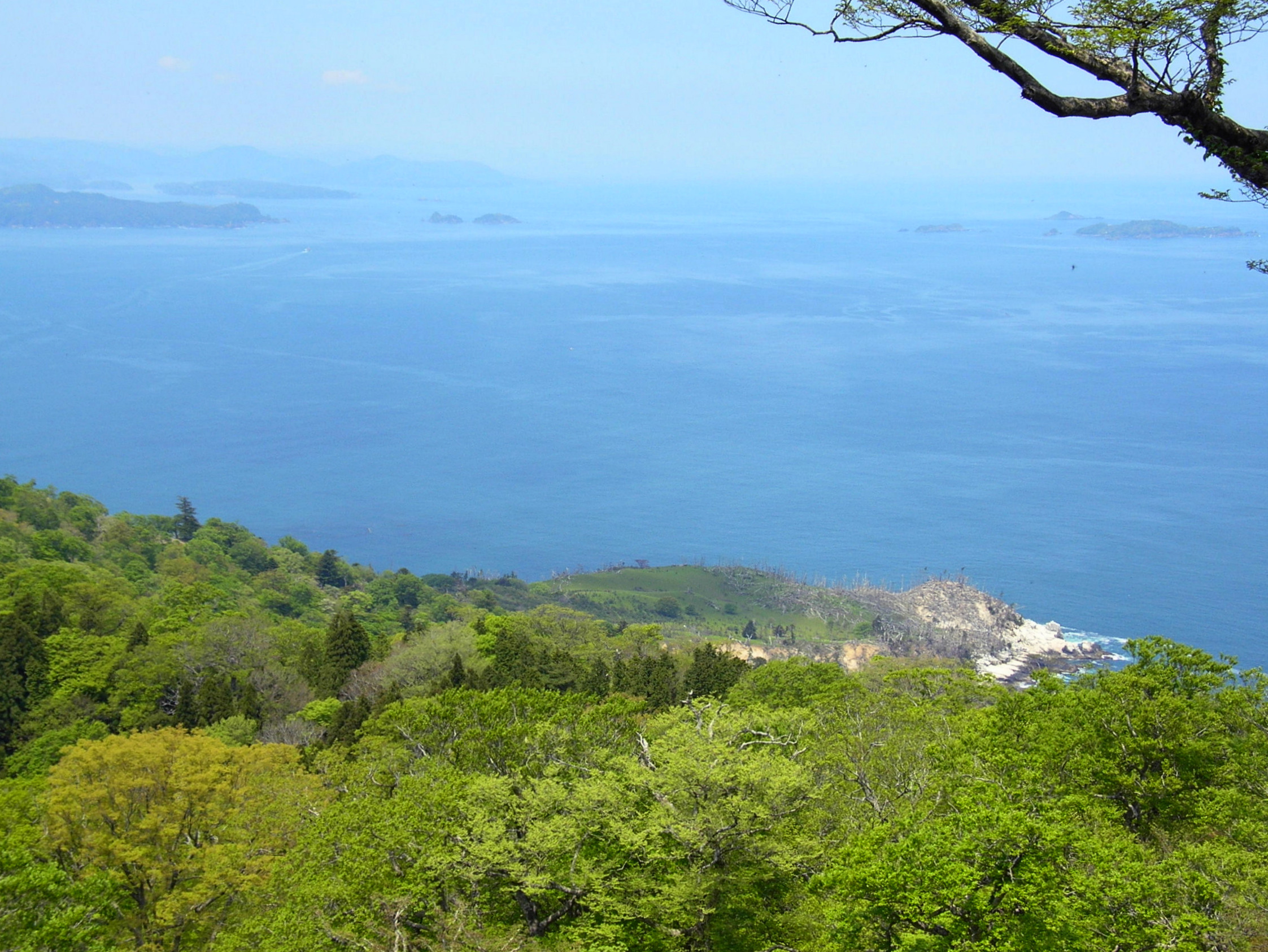
Kinkasan
Visit this island once a year for three consecutive years, and you will never face financial hardship again. That is the promise Kinkasan has made to pilgrims for centuries, and enough people have believed it to keep ferries running to this small, roadless island off the tip of the Oshika Peninsula in Miyagi Prefecture. The name means "Golden Flower Mountain" -- a reference not to metaphor but to actual gold, mined here during a brief prospecting boom that cemented the island's reputation as a place where fortune literally grows from the earth. Today, Kinkasan is one of the three holiest sites in Japan's Tohoku region, alongside Dewa Sanzan and Osorezan, and the only one you reach by boat.
Gods of Wealth on a Quiet Shore
The Koganeyama Shrine dominates the island's spiritual landscape, dedicated to Ebisu and Daikoku, two of Japan's Seven Lucky Gods associated with prosperity and abundance. The shrine stands near the ferry landing, its weathered torii gate framing views of the Pacific. For most of its history, women were banned from setting foot here -- a prohibition lifted only in the late 19th century. Today, visitors of all kinds make the crossing, many clutching the return half of their ferry ticket like a talisman, already planning next year's visit. The shrine maintains a monopoly on food, drink, and souvenirs on the island, and the seafood served at its ryokan is drawn fresh from the surrounding waters.
Trails Through a Wild Kingdom
Beyond the shrine, Kinkasan belongs to the animals. The summit trail climbs 445 meters over 2.4 kilometers through dense forest, while a longer coastal path circles the entire island for roughly 25 kilometers. Japanese macaques move through the trees in noisy troops, and sika deer patrol the lower slopes with the bold entitlement of creatures who have never been hunted. The deer and the leeches are the island's two persistent hazards -- the deer want your food, and the leeches want your blood. Veterans tuck their trousers into their boots and carry salt for the latter. Trail markings are sparse, but getting lost carries a simple remedy: walk downhill toward the coast and follow the shoreline trail back.
A Crossing Worth Making
Reaching Kinkasan requires a ferry from the mainland, and two routes compete for travelers. From Onagawa, the crossing takes 35 minutes, with ferries departing roughly every two hours. From Ayukawa -- a whaling town at the peninsula's end -- the ride is just 20 minutes, with departures as frequent as every half hour during peak season. No motorized vehicles operate on the island aside from a single van that shuttles guests between the dock and the shrine's lodgings. Everything else happens on foot. Some visitors stay overnight at the shrine's ryokan, trading the noise of the mainland for an evening of profound quiet, broken only by the calls of macaques settling into the canopy. Many pilgrims who come once find themselves marking their calendars for the return trip -- two more visits to go before the promise kicks in.
Resilience at the Edge of the Pacific
Kinkasan sits at the outer edge of the Sanriku Coast, a stretch of northeastern Japan that bore the full force of the 2011 Tohoku earthquake and tsunami. The nearby port of Ayukawa was devastated, and ferry service to the island was disrupted for months. The island itself, rising steeply from the sea, weathered the wave better than the low-lying mainland towns. The shrine survived. The macaques and deer carried on. Today, the restored ferry routes carry a mix of pilgrims, hikers, and curious travelers drawn by the island's singular promise: that the gods of wealth still reside here, rewarding the faithful with fortune, and asking only three visits in return.
From the Air
Located at 38.28N, 141.57E at the tip of the Oshika Peninsula in Miyagi Prefecture, Japan. The island rises to 445 meters and is clearly visible from altitude as a distinct mountainous landmass separated from the peninsula by a narrow strait. Nearest airports: Sendai Airport (RJSS) approximately 50nm southwest, JASDF Matsushima Air Base (RJST) approximately 25nm west. The Sanriku coastline with its deeply indented rias bays provides excellent visual navigation references. Expect maritime weather patterns with fog common in spring and early summer.