Kinshasa
From the air, the first thing you notice is scale. Kinshasa stretches in every direction, a seemingly endless expanse of concrete, corrugated roofing, and red laterite roads spreading inland from the south bank of the Congo River. Across roughly four kilometers of brown water sits Brazzaville, capital of the Republic of the Congo -- making this the only place on Earth where two national capitals face each other across a river. With nearly 15 million people, Kinshasa is the largest city proper in Africa, larger than Cairo or Lagos within city limits. It is also, by its own claim, the largest French-speaking city in the world, though the French you hear on the street is laced with Lingala, the local lingua franca that carries the city's real pulse.
Leopoldville's Ghost
The city was called Leopoldville until 1966, named for Belgium's King Leopold II, whose personal control of the Congo Free State from 1885 to 1908 left scars the country still carries. The colonial infrastructure that once made Leopoldville a showcase of Belgian ambition -- wide boulevards, Art Deco buildings, a railway linking the capital to the port at Matadi -- has spent decades deteriorating under dictatorship, war, and neglect. The Boulevard du 30 Juin, the city's main artery, still echoes that colonial grid, but the surrounding neighborhoods have grown organically and massively, far beyond anything the Belgian planners imagined. Chinese construction companies are now involved in reconstruction projects across the city, building what decades of conflict left unbuilt.
The Rhythm of the Streets
Kinshasa is a city that moves to music. Congolese rumba, born in the dance halls of mid-century Leopoldville, remains the cultural heartbeat. The neighborhood of Matonge comes alive most nights with bars and nightclubs where live bands play until dawn. Bandal and Bonmarche have emerged as newer hotspots. The art scene is equally vital -- painters like Lema Kusa, Henri Kalama, and Nshole command international reputations, and their private studios are scattered across the city. At the Marche des Valeurs, sometimes called the marche des voleurs (thieves' market), vendors hawk paintings, carvings, and textiles. The Academie des Beaux Arts on Avenue Pierre Mulele trains the next generation. Sit at a cafe off the Boulevard du 30 Juin with a cold Primus beer and the artists come to you, carrying canvases under their arms.
Navigating the Chaos
Traffic in Kinshasa is legendary. Two hours to travel 500 meters is not hyperbole. The formal bus system, Transco, operates 33 lines across the city, but the real transportation network is the informal taxi system -- small minibuses running fixed routes between recognized stops. Passengers signal their desired direction with specific hand gestures, a language unto itself that outsiders cannot easily decode. The fare between stops runs about 350 Congolese francs. Completing a cross-city journey requires transferring between multiple vehicles, and the rides are cramped and hot. For foreigners, the system demands a local guide, fluency in French or Lingala, and a tolerance for vehicles that are, as one guidebook delicately puts it, 'barely road-worthy.' The US dollar dominates larger transactions. Credit cards are almost useless outside major hotels.
River, Prawns, and Primus
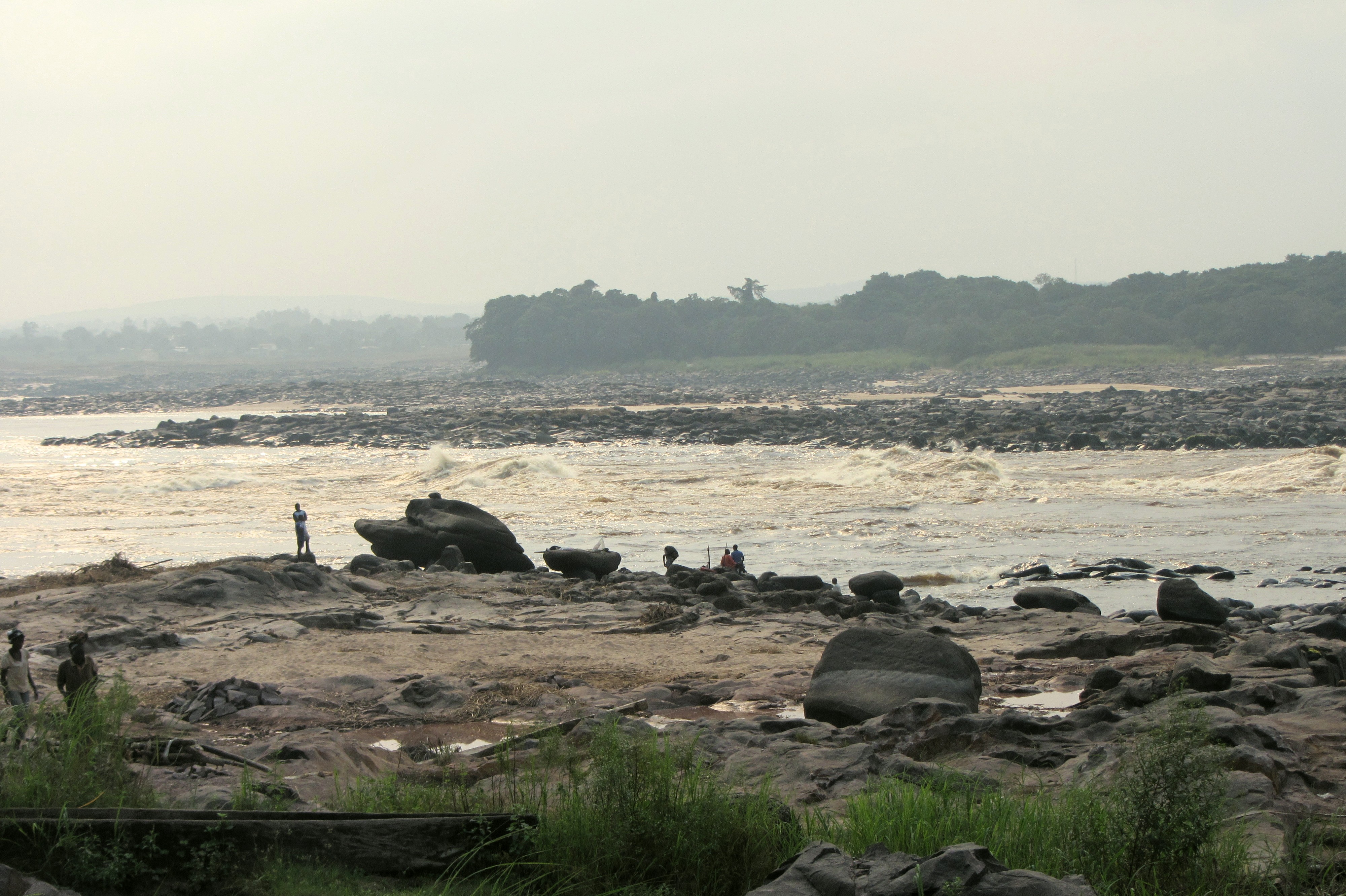
The Congo River defines Kinshasa in ways both practical and spiritual. One of the city's finest experiences requires nothing more than a rented boat, a barbecue grill, and a cooler of Primus. For around $150 at the Yacht Club Kinshasa, a boat and driver will take up to eight people to a sandbank in the river for a day of grilling meat under open sky, the water brown and wide around you. In restaurants, the dish to seek out is cossa cossa -- freshwater prawns from the Congo, served in garlic and pili-pili chili butter. The lager of choice is Primus, brewed locally by Heineken, though connoisseurs prefer Tembo, an amber ale from Simba Breweries in Lubumbashi. A darker option, Turbo King, rounds out the local selection.
A City That Demands Attention
Kinshasa does not ease visitors in gently. Yellow fever vaccination is required at the airport. The departure tax is $55, paid before entering the terminal. The drive from N'Djili Airport to the city center can take anywhere from one hour to six, depending on traffic. Bottled water is essential -- never drink from the tap. Malaria medication is strongly advised. Photography invites suspicion from police and soldiers alike. And yet Kinshasa rewards those who engage on its terms. The Sunday morning church services are spectacles of music and faith. The bonobos at Lola ya Bonobo, the world's only sanctuary for orphaned bonobos, are gentle and curious. The city's intellectual community -- writers, musicians, political thinkers -- is among the most vibrant in Central Africa. Kinshasa is not easy, but nothing this alive ever is.
From the Air
Located at 4.32S, 15.31E on the south bank of the Congo River. N'Djili International Airport (ICAO: FZAA) is the primary airport, on the eastern edge of the city. Brazzaville's Maya-Maya Airport (FCBB) is visible across the river. From altitude, the contrast between the dense urban fabric of Kinshasa and the wide brown Congo River is striking. The city extends far inland to the south and east. Best overview from 5,000-10,000 feet AGL.