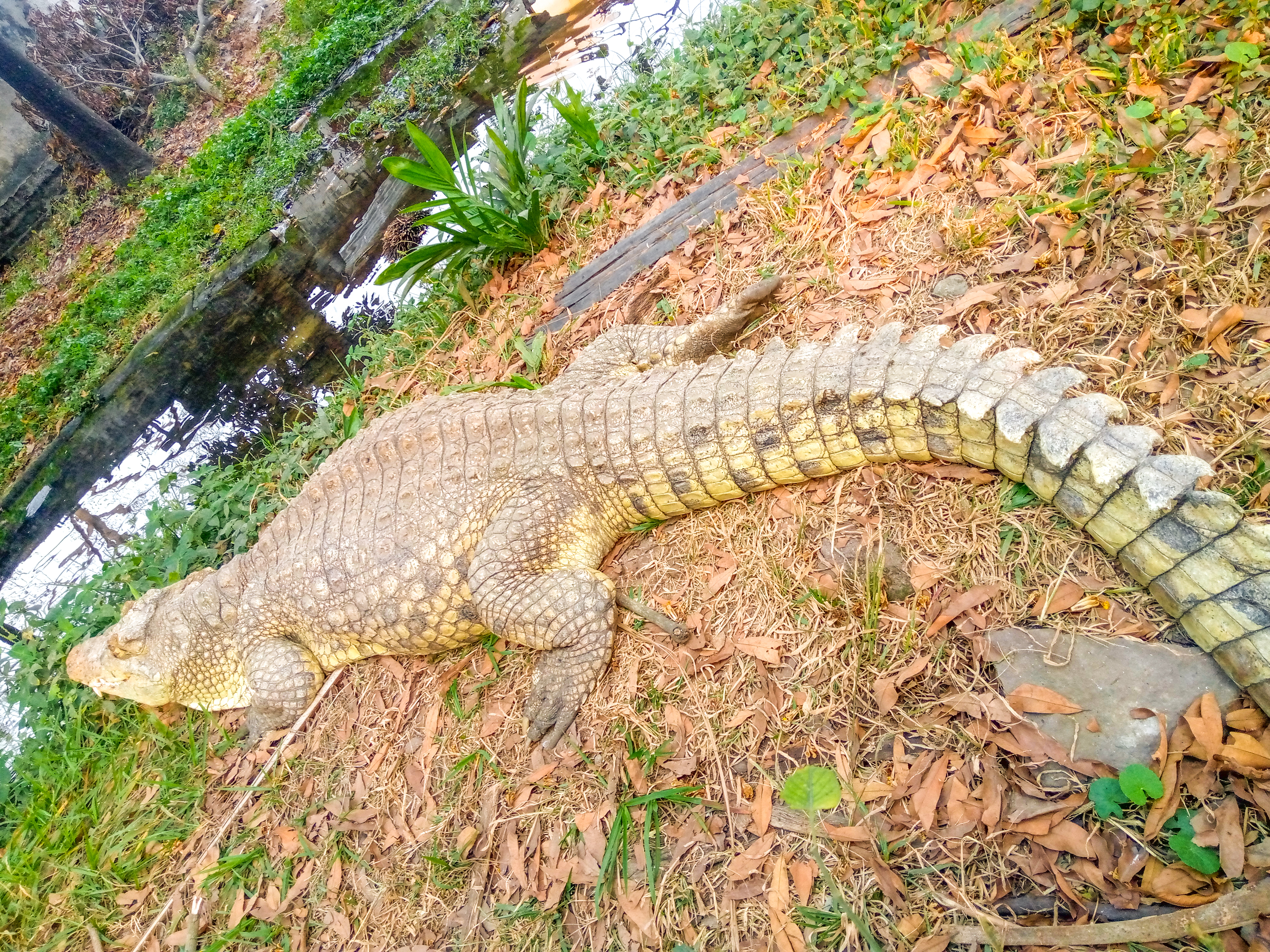
Kinshasa Zoological Garden
Simon and Antoinette have not moved much in nearly nine decades. The two Nile crocodiles arrived at the Kinshasa Zoological Garden in 1938, five years after the zoo's founding, and they still occupy opposite corners of their muddy pond in the Gombe commune. They have outlasted Belgian colonial rule, Mobutu's dictatorship, two devastating wars, and repeated plans to relocate them. They are, in their quiet reptilian way, the most enduring residents of a zoo that tells the story of the Democratic Republic of the Congo in miniature -- ambition, neglect, survival, and an uncertain future.
Colonial Showcase
The zoo was established in 1933 in what was then Leopoldville, capital of the Belgian Congo. It quickly became a point of civic pride for the colonial administration. In 1939, a series of animal postage stamps raised 300,000 Belgian francs for its upkeep. Belgian Prime Minister Hubert Pierlot attended its fifth anniversary exhibition. In August 1954, the zoo received its first okapi, the elusive forest giraffe discovered in the Ituri Rainforest in the northeastern Congo -- a creature so rare that displaying one was a genuine event. A chimpanzee that cadged cigarettes from visitors and smoked them became an attraction in its own right. King Baudouin of Belgium visited during his 1955 tour of the colony. The zoo's cultural center, which seated five hundred, hosted government meetings and conferences, including a gathering of parliamentarians organized by Premier Cyrille Adoula in 1961, a year after independence.
A Long Decline
The trouble started in 1956, when controversies over potential closure led to part of the zoo's grounds being ceded to the neighboring Kinshasa General Hospital. The decline accelerated through the decades that followed. Mobutu's regime brought renaming -- Leopoldville became Kinshasa, the Congo became Zaire -- but little investment in the zoo's aging infrastructure. The National Institute of Arts rehabilitated the cultural center in 1988, but the animals and enclosures deteriorated. Then came the wars. During the First and Second Congo Wars of the 1990s, food shortages devastated the zoo's population. Chimpanzees were reduced to drinking dirty water from bowls. By late 1999, starvation had killed several animals. The zoo that once hosted kings now struggled to feed the creatures in its care.
Survivors and Stubborn Hope
Today the Kinshasa Zoo houses over 30 species and more than 129 animals -- a modest collection by international standards, but a remarkable feat of persistence given the circumstances. Approximately 1,000 visitors come regularly, and nearly 4,000 students from schools across the capital take guided tours between December and July. The zoo remains an educational hub in a city with few alternatives for hands-on zoological learning. In 2007, officials announced plans to relocate the zoo to N'sele National Park, acknowledging that the Gombe site no longer met international standards. The ICCN, the Congolese conservation agency, released gray parrots that had been kept in quarantine-like conditions back into the wild. But relocation plans stalled.
An Uncertain Tomorrow
In November 2024, Tourism Minister Didier M'Pampia Musanga revived the relocation proposal, envisioning modern structures and enclosures at N'sele. But activists and environmentalists pushed back, arguing that uprooting the zoo could harm existing habitats and that the very concept of traditional zoos deserves rethinking. Their counterproposal is to transform the Gombe site into a research and conservation center focused on native Congolese species, with sanctuaries, species reintroduction programs, and habitat protection initiatives. The debate captures a tension playing out at zoological institutions worldwide: whether to modernize the old model or reimagine it entirely. Meanwhile, Simon and Antoinette remain in their pond, each in their own corner, unbothered by the arguments about their future.
From the Air
Located at 4.31S, 15.31E in the Gombe commune of central Kinshasa, adjacent to the Kinshasa Grand Market and Kinshasa General Hospital. The zoo is nestled in the dense urban fabric of Gombe and is not easily distinguishable from altitude. N'Djili International Airport (ICAO: FZAA) lies to the east. Best context from 2,000-4,000 feet AGL over central Kinshasa.