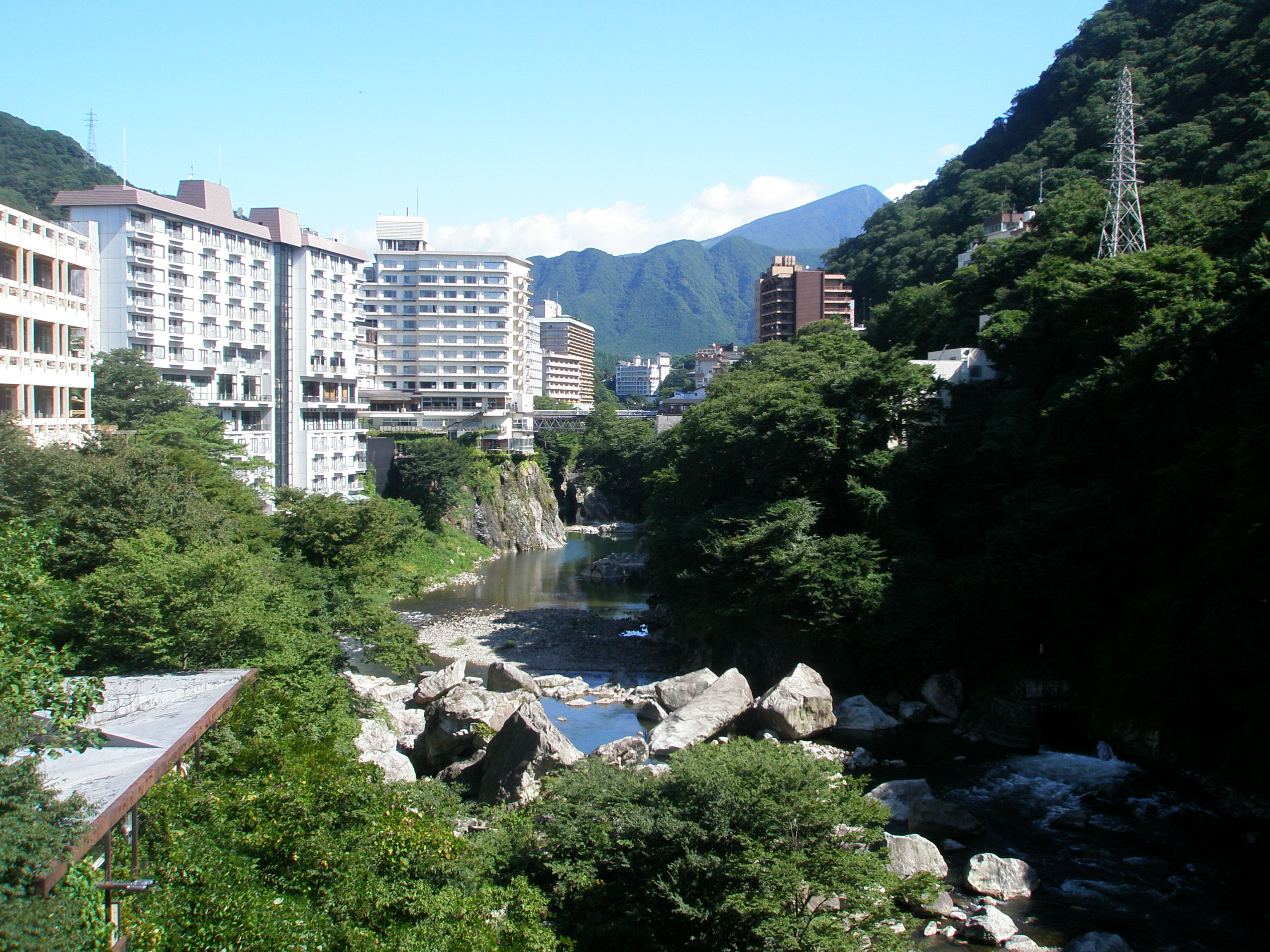
Kinugawa Onsen
The name itself carries a warning. Kinugawa means 'angry demon river,' and for centuries the volatile waterway carved its gorge through the mountains of Tochigi Prefecture with a fury that kept most people at a respectful distance. But in 1691, villagers noticed steam rising from the western riverbank, and everything changed. The hot springs they discovered would eventually draw millions of visitors, spawn dozens of towering resort hotels, and then, in one of Japan's most dramatic economic collapses, fall silent. Today Kinugawa Onsen is two places at once: a functioning hot spring town two hours by train from Tokyo, and a haunting gallery of abandoned concrete towers slowly being swallowed by cedar forest.
Waters Reserved for Warriors
The hot springs discovered along the Kinugawa River were no ordinary find. Because the area fell under the jurisdiction of Nikko Toshogu, the great Tokugawa shrine complex just downstream, access was strictly controlled during the Edo period. Only daimyo, samurai, and monks making pilgrimages to Nikko were permitted to bathe in what was then called Taki Onsen. For over a century, the mineral waters remained the exclusive privilege of Japan's ruling class. It was not until the Meiji Restoration in the late 19th century that the springs were finally opened to common travelers, merchants, and artists arriving from Tokyo and beyond.
The Bubble and the Burst
The real transformation came in the postwar decades. In 1927, two neighboring hot spring areas merged under the name Kinugawa Onsen, and by 1929 a railroad connection to Tokyo opened the floodgates. The mass tourism boom of the 1950s and 1960s brought ever-larger hotels, but nothing prepared the gorge for the building frenzy of the bubble years in the 1980s. At its peak, nearly 80 accommodations lined the riverbanks, their concrete facades rising like cliffs above the water. Then the bubble burst. Japan's economic crisis of the early 1990s devastated the resort. The collapse of Ashikaga Bank, a major local lender, accelerated the decline. By 1999, Kinugawa Kan declared bankruptcy with over three billion yen in debt, the first major ryokan to fall. Others followed in rapid succession, their doors closing for the last time.
Frozen in Time
What makes Kinugawa Onsen extraordinary is not just that hotels closed, but that they were simply abandoned in place. Lobbies remain furnished, arcade machines stand idle, drinks sit on tables where guests left them decades ago. Traditional onsen baths collect dust instead of bathers. In 2005, a Waseda University professor's survey of Japan's ugliest landscapes ranked Kinugawa Onsen third in the country. The judgment stung, but it captured something real: the surreal collision of crumbling concrete and encroaching forest, of grand ambitions reduced to ruins. Urban explorers and photographers now seek out these frozen time capsules, documenting interiors that look as though everyone simply walked out one morning and never returned.
Echoes of Edo, Glimpses of the World
Not everything in Kinugawa exists in the past tense. The town's surviving attractions offer a peculiar contrast to its abandoned hotels. Edo Wonderland Nikko Edomura recreates a full Edo-period village, populated by actors playing samurai, ninja, geisha, and merchants who perform in theaters and stage elaborate ninja shows. An eight-minute walk from Kinugawa Station, Tobu World Square takes a different approach to spectacle, displaying 102 meticulously crafted 1:25 scale models of UNESCO World Heritage Sites, complete with 140,000 tiny figurines. Between the ghost hotels and the miniature Taj Mahal, Kinugawa Onsen has become an unlikely capital of surreal juxtapositions.
A River Still Running
Revival efforts are underway. Rising fuel costs in 2008 pushed travelers back toward train-accessible destinations, and recent campaigns to attract international visitors have brought new energy to the surviving ryokan and hotels. The hot springs themselves remain as potent as ever, the same mineral-rich waters that once soothed feudal lords still flowing from deep beneath the gorge. The Tobu Kinugawa Line and Yagan Railway Aizu Kinugawa Line both stop at Kinugawa Onsen Station, maintaining the rail connection that made the resort possible in the first place. The angry demon river still carves its path through the mountains, indifferent to the human drama playing out along its banks.
From the Air
Located at 36.82N, 139.72E in the mountainous interior of Tochigi Prefecture, about 120 km north of Tokyo. The Kinugawa River gorge is visible from altitude, with the town's surviving and abandoned hotel buildings clustered along the riverbanks. Nearest airports: Utsunomiya (RJTU) approximately 40 km south, Ibaraki Airport (RJAH) approximately 120 km southeast, and Tokyo Narita (RJAA) approximately 190 km south. Best viewed at 3,000-5,000 feet AGL to see the contrast between forest-covered mountains and the narrow resort strip along the river.