Kita-in: The Temple That Saved Edo Castle
Somewhere in the suburbs of Kawagoe, behind sliding wooden doors in a Tendai Buddhist temple, stands the room where the third Tokugawa shogun is believed to have been born. Not a replica. Not a reconstruction. The actual room, with its original tatami layout and painted screens, transplanted plank by plank from Edo Castle in 1638 on the orders of Tokugawa Iemitsu himself. When the Great Kanto Earthquake leveled Edo Castle in 1923, these transplanted rooms at Kita-in became the only surviving structures from the original seat of Tokugawa power. A temple founded in 830 AD had accidentally become the last physical witness to the shogunate's birthplace.
The Monk Who Named a Dynasty
Kita-in traces its origins to 830 AD, when the monk Ennin -- one of the most traveled Buddhist scholars in East Asian history -- founded a temple here under orders from Emperor Junna. He named it Muryoju-ji, after Amitabha Buddha, and dedicated it to the Tendai sect. The temple was originally divided into three parts: Kita-in (north), Naka-in (middle), and Minami-in (south). War destroyed the complex in 1202. It rose again in 1296, and by 1300 Emperor Go-Fushimi had elevated it to a head temple of the Tendai sect, granting it authority over 580 temples across eastern Japan. But its greatest transformation came through a single relationship: the bond between the priest Tenkai and the Tokugawa shoguns. Tenkai served as spiritual advisor to the first three Tokugawa rulers -- Ieyasu, Hidetada, and Iemitsu -- and his influence was so great that it reshaped both the temple and its name. The Chinese characters were changed to mean 'great happiness,' a fitting title for a place that had become the spiritual anchor of the most powerful family in Japan.
A Castle Crosses the Kanto Plain
In 1638, fire swept through Kita-in and reduced it to ash. The shogun Iemitsu, devoted to the memory of Tenkai and to the temple where he was believed to have been born, responded with an extraordinary act: he ordered sections of Edo Castle itself dismantled and transported to Kawagoe to rebuild Kita-in. The reception hall where Iemitsu entered the world was reassembled here, along with his study, kitchen, toilet, and bathroom. The dressing room of Kasuga no Tsubone -- his wet-nurse who rose to become mistress of the inner palace at Edo Castle -- was also relocated. These were not ceremonial gestures. These were the actual living quarters of the Tokugawa household, loaded onto carts and hauled across the Kanto Plain. Nearly three centuries later, when the 1923 earthquake and its fires consumed Edo Castle, the rooms in Kawagoe suddenly became irreplaceable. Today they stand as Japan's only surviving structures from the original castle, designated National Important Cultural Properties.
540 Faces in Stone
Beyond the historic buildings, Kita-in is famous for its Gohyaku Rakan -- 540 stone statues of disciples of the Buddha, each one carved with a distinct expression. Some laugh. Some weep. Some press their fingers to their lips as if guarding a secret. Some cradle sake cups. Legend holds that if you visit the statues at night and touch them in the dark, the one you find warm is said to resemble your own face. The statues date to the early Edo period and sit in orderly rows on a hillside within the temple grounds, weathered by centuries of rain and moss. Visitors walk slowly among them, searching for the face that mirrors their own. It is a quiet, strange, deeply human experience -- hundreds of stone expressions staring back at you in a temple that a shogun loved enough to rebuild with pieces of his own home.
Layers of Reverence
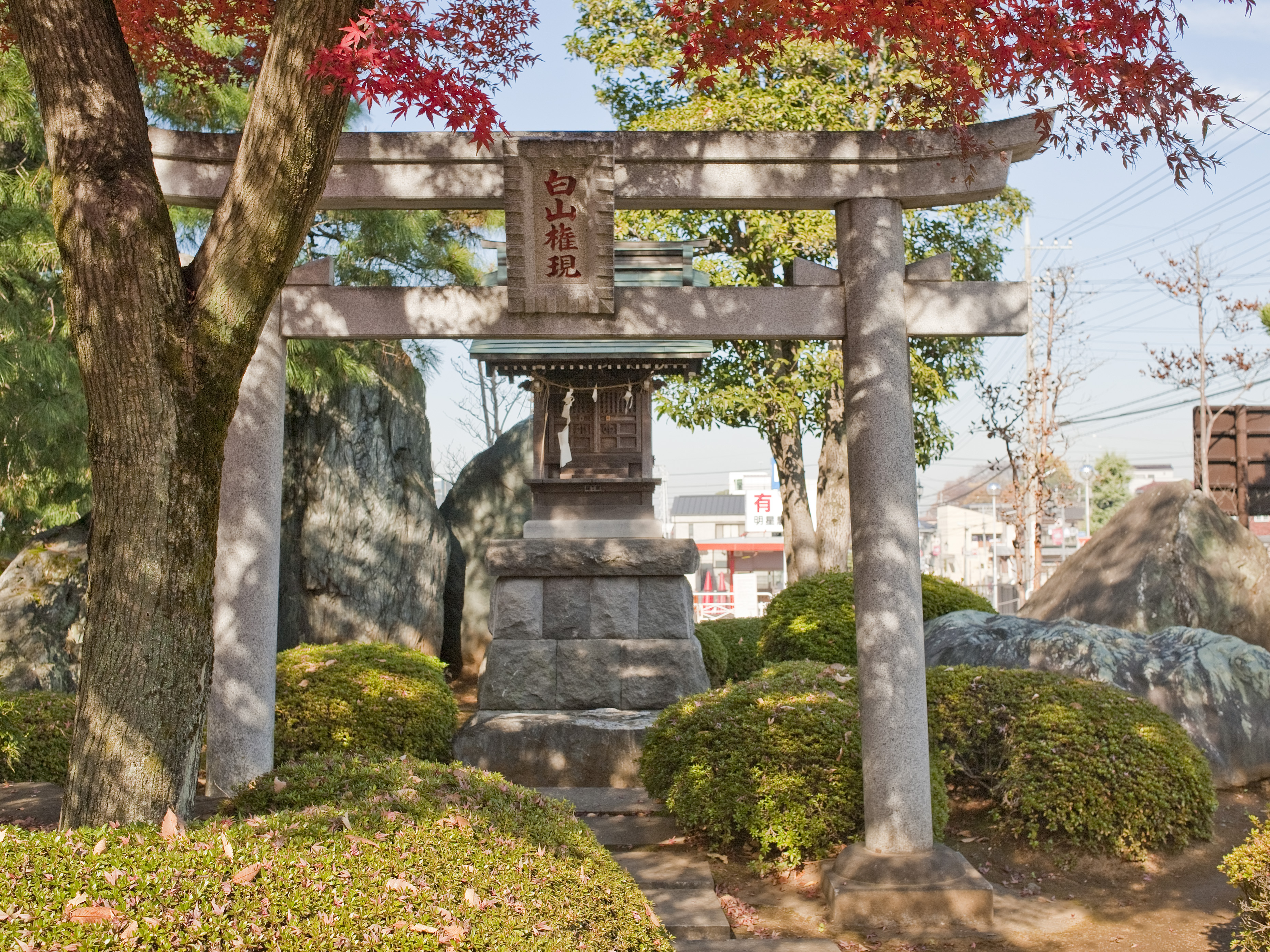
The temple grounds hold a remarkable density of National Important Cultural Properties. The sanmon gate dates to 1632. The priest's quarters and the shoro bell tower were rebuilt in 1638 and 1702, respectively. Jigen-do, a chapel dedicated to the priest Tenkai, was built in 1645 as a memorial to the man whose influence had made all of this possible. The Senba Toshogu shrine within the complex enshrines the spirit of Tokugawa Ieyasu himself. Destroyed in the same 1638 fire, it was rebuilt by 1640 on Iemitsu's orders in a style closely resembling the famous Nikko Toshogu. Kawagoe earned its nickname 'Little Edo' in part because of places like Kita-in -- fragments of old Tokyo preserved in a city that time treated more gently.
From the Air
Located at 35.92°N, 139.49°E in Kawagoe, Saitama Prefecture, on the Kanto Plain northwest of Tokyo. From the air, the temple grounds appear as a dense cluster of traditional rooflines and mature trees within the urban fabric of Kawagoe. Best viewed at 2,000-3,000 feet AGL. Yokota Air Base (RJTY) lies approximately 15 nautical miles to the southwest. Tokyo Haneda Airport (RJTT) is roughly 25 nautical miles to the south-southeast. The Kawagoe historic district with its distinctive clay warehouse streetscape is visible nearby to the north.