Kitadani Formation
Somewhere around 120 million years ago, a river system wound through what is now Fukui Prefecture, depositing sand, mud, and volcanic ash across a floodplain where dinosaurs hunted, crocodilians basked, and primitive birds left three-toed tracks in soft sediment. That ancient landscape compressed into the Kitadani Formation, a unit of Lower Cretaceous rock that crops out along the Kuzuryu River district near the city of Katsuyama. It is, by any measure, the most important dinosaur-bearing geological formation in Japan, the single richest source of Cretaceous-aged non-marine vertebrate fossils anywhere in the country. Nearly every specimen ends up at the Fukui Prefectural Dinosaur Museum, built just kilometers from the quarry face.
A Window in the Tetori Group
The Kitadani Formation sits within the Tetori Group, a major sequence of Lower Cretaceous sedimentary rocks distributed across Fukui, Ishikawa, and Gifu prefectures in western-central Honshu, in the region surrounding Mount Haku. The Tetori Group varies dramatically from one area to another, and the Kitadani Formation crops out only in Fukui Prefecture's Kuzuryu River district. The local stratigraphic sequence stacks four formations in ascending order: the Gomijima Formation, the Kuwajima Formation, the Akaiwa Formation, and at the top the Kitadani Formation. Biostratigraphic dating, using the occurrence of the charophyte gyrogonite Clavator harrisii reyi, places part of the formation in the Barremian Age. Radioisotopic dating of volcanic tuff layers using zircon fission tracks brackets the formation between 127 and 115 million years ago, though more recent uranium-lead zircon dating of the overlying Akaiwa Formation suggests a late Aptian age is more likely.
The Bestiary in Stone
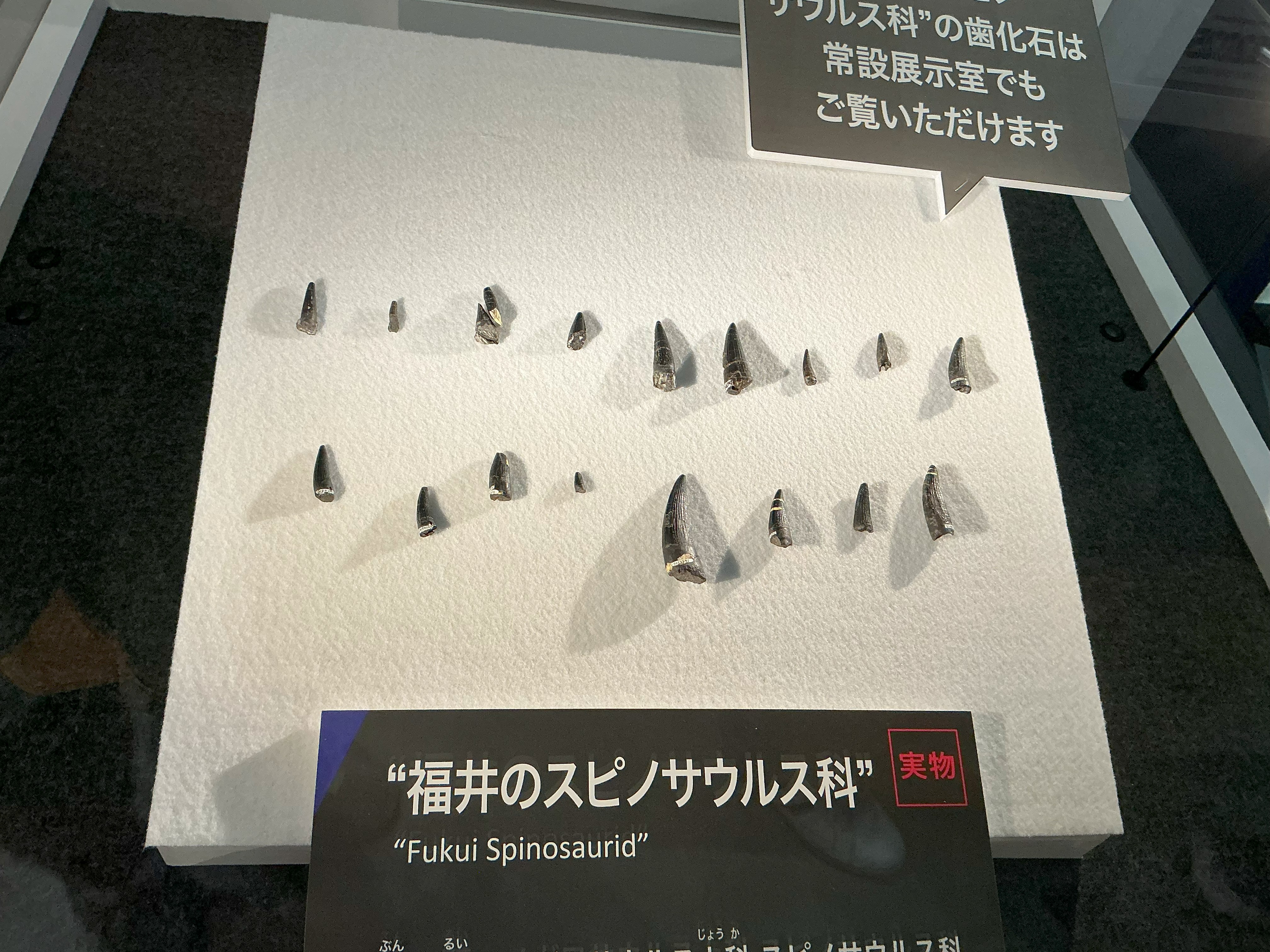
The fossil record of the Kitadani Formation reads like an inventory of an entire Cretaceous ecosystem. Dinosaurs dominate the headlines: all three major clades, Theropoda, Sauropodomorpha, and Ornithischia, are represented. Six named dinosaur species have been formally described from these rocks, including Fukuiraptor, Fukuisaurus, Fukuititan, Fukuivenator, Koshisaurus, and Fukuipteryx. A nearly complete skeleton of a goniopholidid crocodylomorph has been recovered but remains formally undescribed. Freshwater and brackish-water mollusks, both bivalves and gastropods, make up most of the invertebrate assemblage. The formation has also yielded early mammals, ray-finned fish, and a palynological record of more than 40 species of spores, pollen grains, and plant fragments representing gymnosperms and freshwater algae. Notably absent: angiosperm pollen. Flowering plants had not yet colonized this corner of Cretaceous Eurasia.
Footprints of Ghosts
Beyond bones and teeth, the Kitadani Formation preserves something rarer: the traces of living animals caught in motion. Ichnofossils, fossilized tracks and traces, have been recovered from multiple horizons. Ornithopod tracks record the passage of herbivorous dinosaurs. Small to medium-sized three-toed theropod prints classified as Asianopodus mark where predators walked. Most striking are the pterosaur tracks classified as Caririchnium, the first pterosaur ichnofossil ever reported in Japan. Bird tracks assigned to Aquatilavipes document early avian presence. And two-toed tracks classified as Velociraptorichnus, with a troodontid suggested as the potential trackmaker, record the distinctive gait of a raptor-like predator retracting its killing claw as it walked. Even undescribed tracks of ankylosaurs and sauropods have been found, hinting at the heavy-bodied giants that shared this ancient floodplain.
Climate Written in Pollen
The Kitadani Formation tells a climate story as well as a biological one. A 2013 palynological study identified gymnosperms and freshwater algae in abundance, along with epiphyllous fungi, but found no angiosperm pollen at all. Branches of the conifer Brachyphyllum obesum recovered from the formation have been interpreted as evidence of warming and possible drying of the climate during the deposition of the upper Tetori Group. Supporting this interpretation, plant groups common in older, lower formations of the Tetori Group, such as ginkgos, are absent from the Kitadani Formation. The picture that emerges is of a landscape transitioning from cooler, moister conditions to something warmer and drier, a shift that would have reshaped the ecosystems preserved in the rock. Japan at this time sat along the northeastern margin of Eurasia, and its fossil record provides a unique window into how continental ecosystems responded to early Cretaceous climate change.
From the Air
The Kitadani Formation outcrops near Katsuyama, Fukui Prefecture, centered approximately at 36.10N, 136.60E along the Kuzuryu River district. The active excavation quarry is located northeast of the Fukui Prefectural Dinosaur Museum's silver dome (visible landmark at 36.083N, 136.507E). The terrain is mountainous, with Mount Haku (2,702 m) visible to the southeast. The Kuzuryu River valley provides a useful visual corridor. Nearest airport: Komatsu Airport (RJNK), approximately 65 km north-northwest. Fukui Airport (RJNF) is closer at roughly 35 km west but has limited service. Chubu Centrair (RJGG) lies about 185 km south. Expect mountain turbulence and variable visibility; the quarry site sits at approximately 300-400 meters elevation in a forested mountain valley.