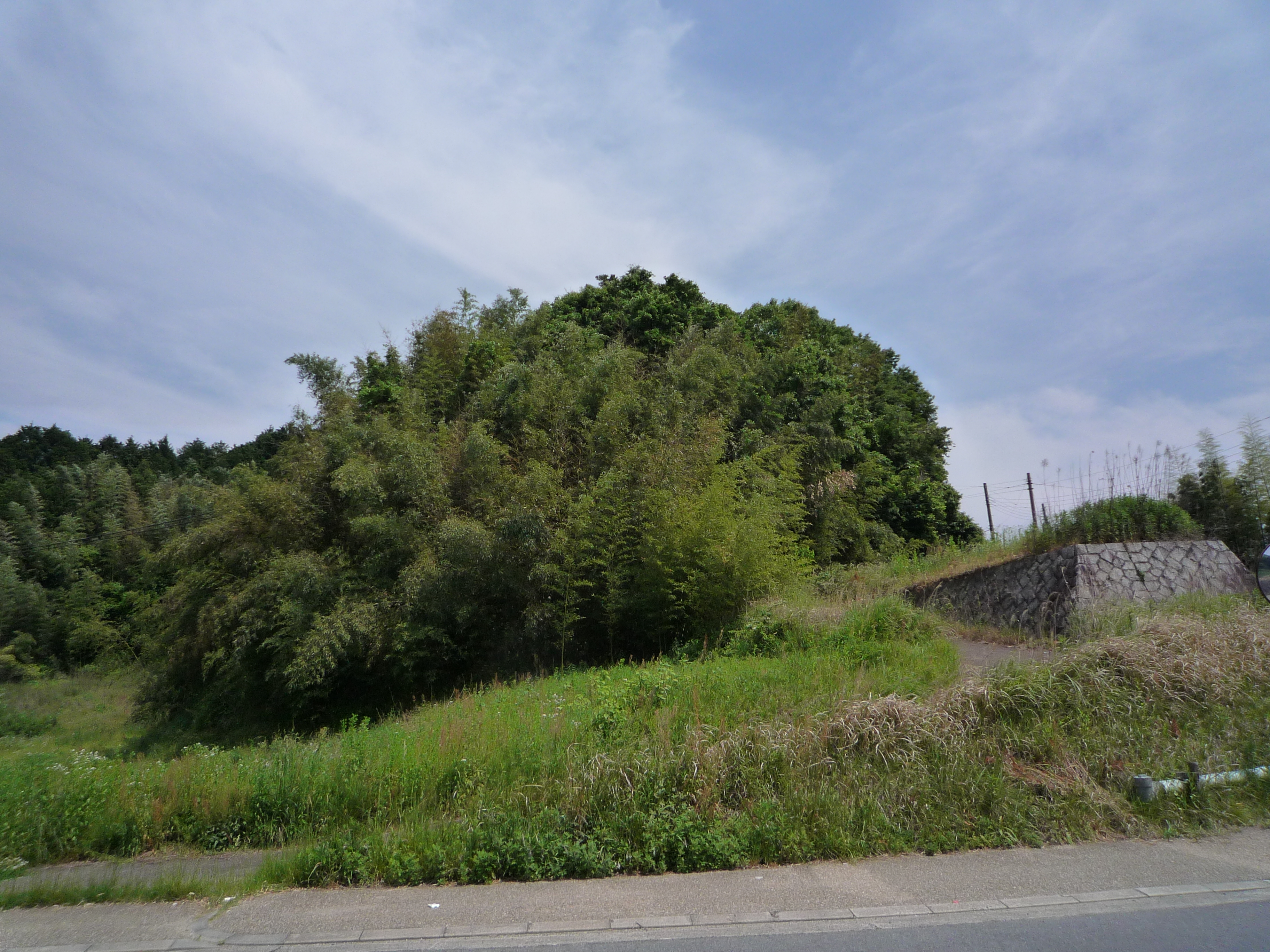
Kitora Tomb: A Star Map Buried in Stone
Four mythical creatures guard the walls of a chamber so small you could not stand upright inside it. A tortoise faces north, a dragon faces east, a phoenix faces south, a tiger faces west -- each painted more than thirteen centuries ago on dressed stone in a burial mound that nobody knew existed until 1983. The Kitora Tomb, tucked into the gentle hills of Asuka village in Nara Prefecture, is just over one meter high, one meter wide, and two and a half meters long. It held one person. But painted on its ceiling is something that reached far beyond the walls: an astronomical chart depicting the heavens as they appeared over a specific point on Earth, at a specific moment in time -- a map of the stars sealed underground in the late 7th or early 8th century, centuries before most cultures attempted anything comparable.
A Cosmos in Miniature
The ceiling chart is what makes the Kitora Tomb extraordinary. Rendered in gold leaf and vermilion paint on a plastered surface, it maps constellations with a precision that has generated decades of scholarly debate. Researchers in archaeoastronomy have analyzed the star positions to determine when and where the observations were made, with some arguing the chart reflects observations taken at a latitude around 34 degrees north -- consistent with the Asuka region itself -- while others suggest the data may have originated from Chinese or Korean astronomical records. The chart includes the sun, the moon, and constellations connected by lines, laid out in a circular pattern representing the celestial dome. Below this cosmic canopy, twelve zodiac figures line the walls: human bodies topped with animal heads, each corresponding to a sign of the Chinese zodiac. These hybrid figures may represent one of the oldest surviving zodiac murals in East Asia.
The Four Guardians
The four directional guardian paintings align the chamber with the cardinal compass points, a cosmological arrangement rooted in Chinese Taoist and Buddhist tradition. The Black Tortoise of the North, the Azure Dragon of the East, the Vermilion Phoenix of the South, and the White Tiger of the West each occupy their proper wall. These four divine beasts -- known as the Shijin -- were believed to protect the deceased and orient the soul within the cosmic order. The pigments used were mineral-based, giving the paintings a luminous quality that survived underground for over a millennium. Similar guardian murals appear in the nearby Takamatsuzuka Tomb, which was discovered earlier in 1972, but the Kitora Tomb's inclusion of both the zodiac figures and the astronomical chart makes its painted program uniquely comprehensive.
Fragments of a Life
The tomb was robbed at some unknown point in antiquity. What the thieves left behind tells a fragmentary story. The lacquered wooden coffin had been torn apart, its remains compressed into a layer roughly five centimeters thick across the chamber floor. Mixed into this debris were human bone fragments, gilded bronze fittings, and sword decorations executed with finely inlaid patterns. Analysis of the bone fragments indicates the occupant was a middle-aged or older male, and the quality of the grave goods points to aristocratic status. Who he was remains unknown. Scholars have proposed candidates ranging from imperial princes to high-ranking officials of the Asuka court, but without inscriptions or documentary evidence, the identity of the person who merited a star chart on his ceiling and four guardian deities on his walls remains one of the tomb's enduring mysteries.
Saving What Time Destroys
Designation as a National Treasure and Special Historic Site of Japan -- along with its inclusion on UNESCO's tentative list as part of the Asuka-Fujiwara nomination -- have placed the Kitora Tomb's preservation at the highest priority. The painted plaster is fragile beyond measure. Exposure to air after the tomb's discovery introduced temperature and humidity fluctuations that accelerated deterioration, and airborne mold spores and microorganisms posed a constant biological threat. The entire burial mound has been roofed over, and engineers constructed a series of adjoining antechambers to isolate the central stone chamber from the outside environment. The murals were eventually detached from the chamber walls and transferred to a purpose-built conservation facility -- the Kitora Tomb Mural Experience Hall in Asuka -- where they are displayed in carefully controlled conditions. The transfer process itself was a painstaking, years-long effort, peeling fragile painted plaster from stone one section at a time. The tomb that once sealed its treasures in darkness now shares them with the public, a few carefully managed weeks each year.
From the Air
Located at 34.45°N, 135.81°E in the Asuka village area of Nara Prefecture, Japan. The tomb site sits in rolling hills south of the Nara basin. From altitude, the area is characterized by rice paddies and scattered burial mounds (kofun) dotting the landscape -- the Asuka Historical National Government Park area. The nearby Takamatsuzuka Tomb is another prominent archaeological site. Nearest major airport is Kansai International Airport (RJBB), approximately 40 nautical miles to the northwest. Osaka Itami Airport (RJOO) is about 30 nautical miles north-northwest. Nara Heliport (RJON) is the closest facility. Expect variable visibility in the Nara basin, particularly during morning fog in spring and autumn.