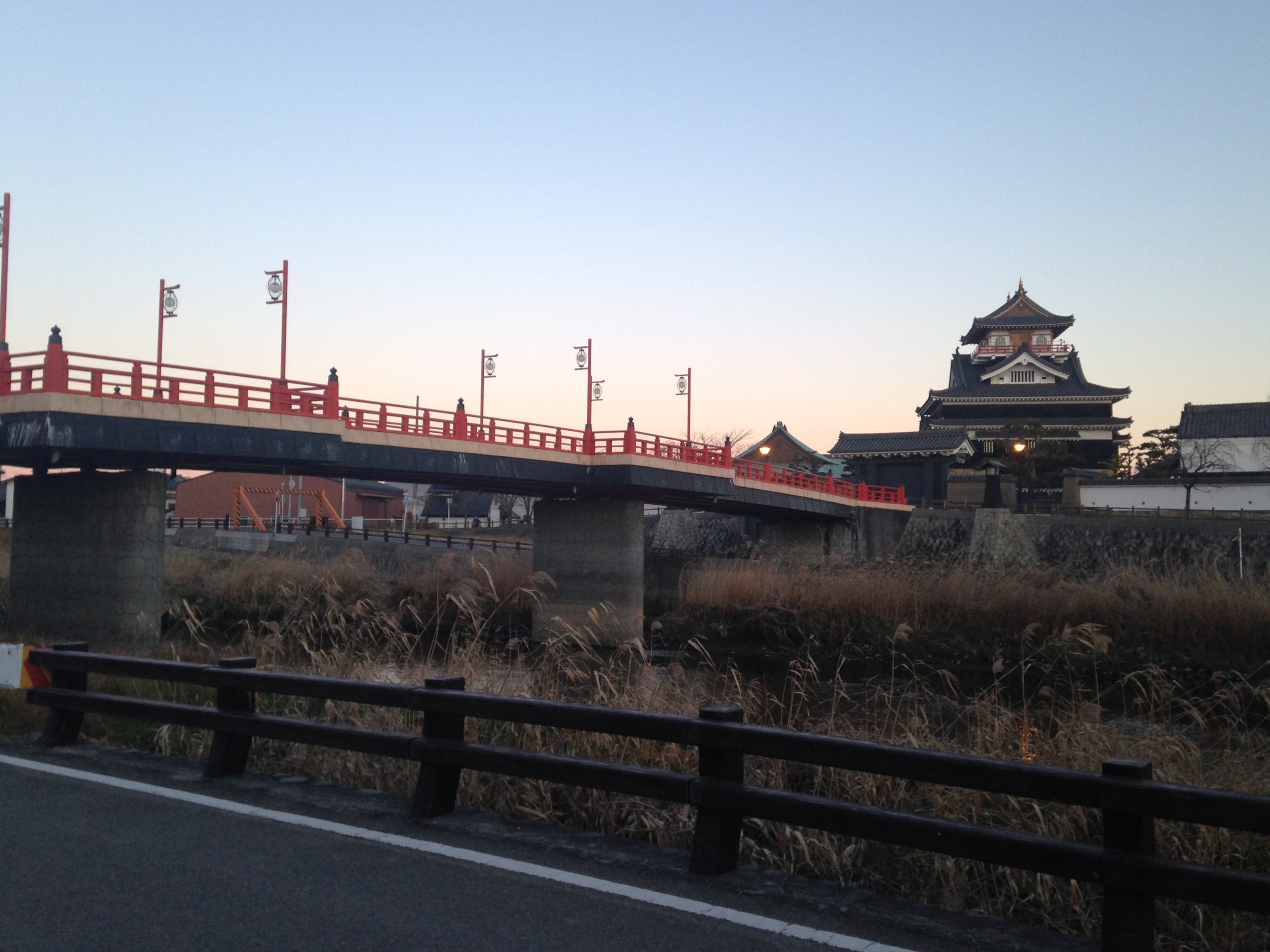
Kiyosu Castle: Where Nobunaga Seized His Destiny
The castle where Oda Nobunaga forced his uncle to commit suicide was the same castle where he later sealed an alliance with Tokugawa Ieyasu that would help reshape Japan. Kiyosu Castle, in what is now western Aichi Prefecture, has the kind of history that makes other castles seem polite. Built between 1394 and 1427 to guard the strategic junction where the Ise Kaido met the Nakasendo highway -- the great overland routes connecting Kyoto with Kamakura -- Kiyosu was always a place where power gathered and collided. For the Oda clan, it became both a family seat and a family battleground, the site of assassinations, coups, and political maneuvers that would eventually launch the most consequential warlord of the Sengoku period toward his brutal, brilliant campaign to unify Japan.
A Crossroads Fortress
Kiyosu Castle rose at the intersection of two of Japan's most important medieval highways. The Ise Kaido connected the great shrines of Ise with the interior, while the Nakasendo ran through the mountainous center of Honshu between Kyoto and Kamakura. Whoever controlled this junction controlled the flow of trade, troops, and information across Owari Province. The castle was commissioned under the authority of Shiba Yoshishige, head of the Shiba clan and governor of Owari, Echizen, and Totomi Provinces. Upon completion, Oda Toshisada was installed as vice-governor, making the castle the operational center of Oda influence in the region. Initially, Kiyosu served as a defensive outpost protecting Orizu Castle, the actual seat of provincial government. But when Orizu was destroyed in 1478 during a civil war between rival Oda factions, Kiyosu absorbed its political functions and became the center of power in lower Owari.
Blood in the Family
The Oda clan's internal politics were merciless, and Kiyosu Castle witnessed the worst of them. After Oda Nobuhide died in 1551, his son Nobunaga -- young, eccentric, and widely underestimated -- struggled to consolidate control. Nobuhide's younger brother Oda Nobutomo, backed by Shiba Yoshimune, seized Kiyosu Castle in 1553. The power play backfired spectacularly. In 1554, Yoshimune revealed an assassination plot against Nobunaga. Nobutomo responded by having Yoshimune killed. The next year, Nobunaga struck. He retook Kiyosu Castle by force, captured his uncle, and compelled him to commit suicide. The castle's violence was not finished. In 1557, Nobunaga had his own younger brother, Oda Nobuyuki, assassinated inside Kiyosu Castle's donjon -- the tower that was supposed to represent the family's strength. By the time Nobunaga invited Tokugawa Ieyasu to Kiyosu for treaty negotiations in 1562, the castle's walls had absorbed more Oda blood than enemy blood.
Alliance and Departure
The Nobunaga-Ieyasu alliance forged at Kiyosu Castle in 1562 was one of the most consequential diplomatic acts of the Sengoku period. The two warlords agreed to a pact that would endure for decades, with Ieyasu controlling the eastern flank while Nobunaga pushed westward toward Kyoto and national dominance. It was a partnership born of pragmatism -- each man needed the other's strength -- but it held, outlasting most alliances of the era. Nobunaga relocated from Kiyosu to Iwakura Castle in 1563, leaving behind the fortress that had made him. After Nobunaga's assassination in 1582, Toyotomi Hideyoshi gathered the late warlord's retainers at Kiyosu Castle and proclaimed his regency over Nobunaga's infant grandson, Oda Hidenobu. The castle passed to Nobunaga's second son, Oda Nobukatsu, who launched major renovations in 1586, adding a double ring of moats and both a large and small donjon.
Reconstruction and Memory
The original Kiyosu Castle did not survive the centuries. Like many Japanese castles, it was dismantled, its materials repurposed, its moats filled. What stands today on the banks of the Gojo River is a modern reconstruction, built as a centennial celebration for the city of Kiyosu. A bronze statue of Oda Nobunaga stands in the adjacent park, gazing out with the fierce composure of a man who murdered his way to the top and then remade a nation. Cherry trees line the riverbank, and in spring, the castle's white walls and curved rooflines rise above clouds of pink sakura blossoms -- a scene of profound tranquility at a site whose history is anything but tranquil. The reconstruction serves as a museum and cultural center, preserving the memory of the castle's role in the pivotal decades when Japan's warring provinces were hammered into a unified state. The original stone walls remain partially visible, a reminder that beneath the cherry blossoms and the tourist signage lies a place where ambition, betrayal, and genius converged.
From the Air
Located at 35.217°N, 136.844°E in Kiyosu, western Aichi Prefecture, on the banks of the Gojo River. The reconstructed castle with its white walls and traditional Japanese rooflines is visible from low altitude alongside the river, surrounded by parkland and cherry trees. Best viewed at 1,500-3,000 feet AGL from the south or east to see the castle against the river. Nagoya Airfield / Komaki (RJNA) lies approximately 6 nautical miles to the east. Chubu Centrair International Airport (RJGG) is about 28 nautical miles to the south-southeast. Nagoya Castle is approximately 5 nautical miles to the southeast and serves as a useful visual reference.